Teaching Kids About Friendship: A Character-Building Homeschool and SEL Workbook for Ages 8–12
Friendships in the middle years can be joyful, confusing, and… occasionally dramatic. Kids are learning what it means to be a good friend, how to handle conflict, and how to figure out where they fit in socially — all while their feelings and peer relationships are growing more complex.
If you’ve seen your child struggle to make friends, get left out, feel unsure how to respond when someone is unkind, or not always know the right thing to do in social situations… you are not alone. This age is full of social learning, and kids often need gentle guidance, vocabulary, and reflection to build healthy, confident connections with others.
Why Friendship Feels Big at This Age
Friendships in late elementary and early middle school shift from “we like the same toys” to deeper relationships built on shared interests, trust, and loyalty. That’s exciting, but it also means emotions run higher and social challenges feel bigger.
Kids this age are learning how to:
communicate feelings clearly
navigate changing friend groups
share power and compromise
manage hurt feelings or misunderstandings
stand up for themselves while staying kind
These bumps aren’t signs something is wrong — they’re a normal, healthy part of growing up.
Common Friendship Patterns Ages 8–12
You might notice:
Strong best friend bonds — wanting one special friend and feeling insecure without one
Shifting friend groups — interests change, and friendships change with them
Increased sensitivity — kids feel exclusion and teasing more deeply
Social comparison — noticing differences in popularity, achievements, or possessions
Big feelings about loyalty — strong loyalty… and strong reactions when trust feels shaken
Understanding what’s typical helps us respond with calm support, not panic, and gives kids confidence that they can work through friendship challenges step by step.
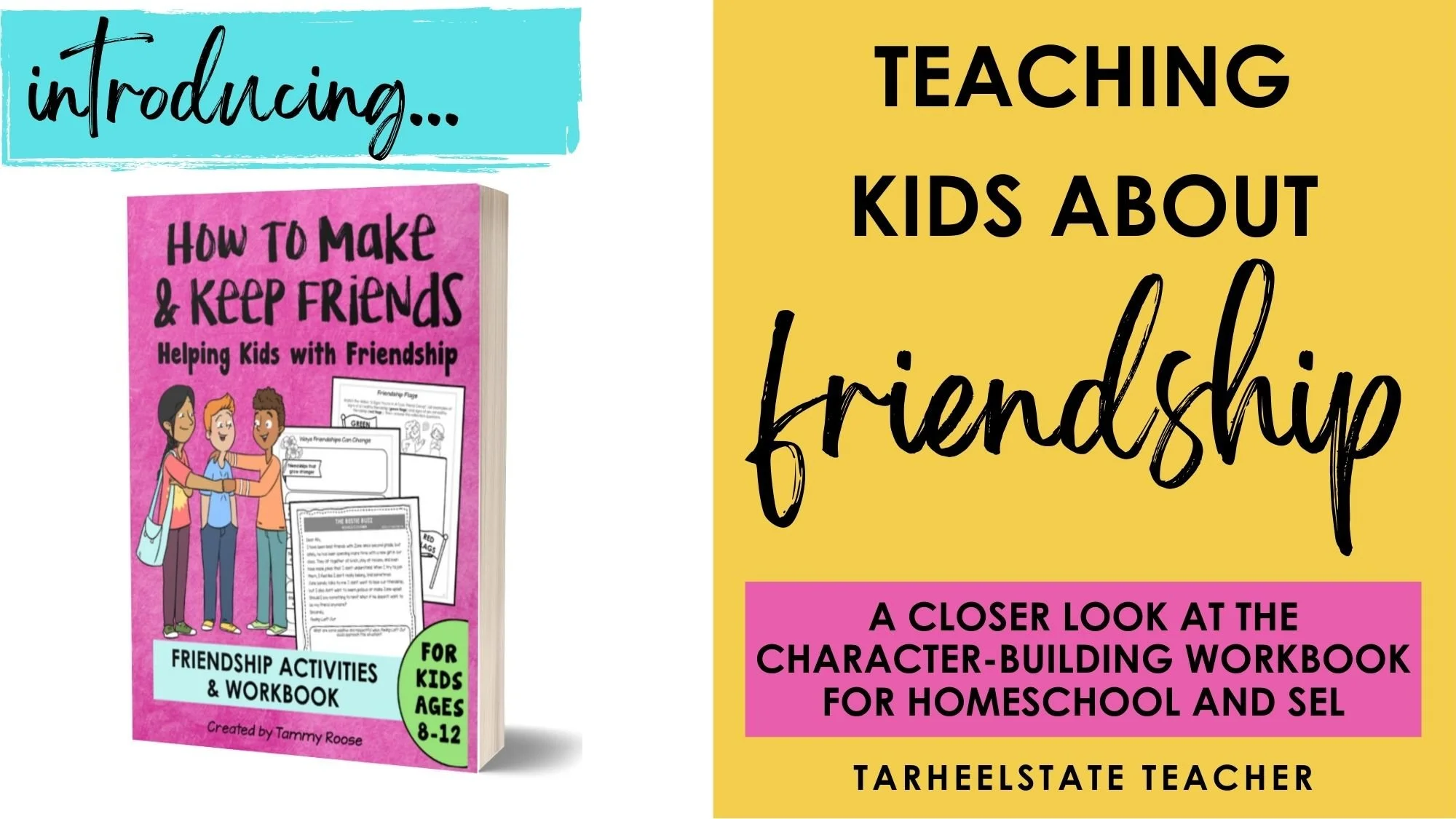
That’s why I created Navigating Friendships for Kids: Friendship Activities for Kids on Making and Keeping Friends, Being A Good Friend, and Healthy Friendships — a character-building workbook designed to help kids explore kindness, belonging, boundaries, and what it truly means to be a good friend.
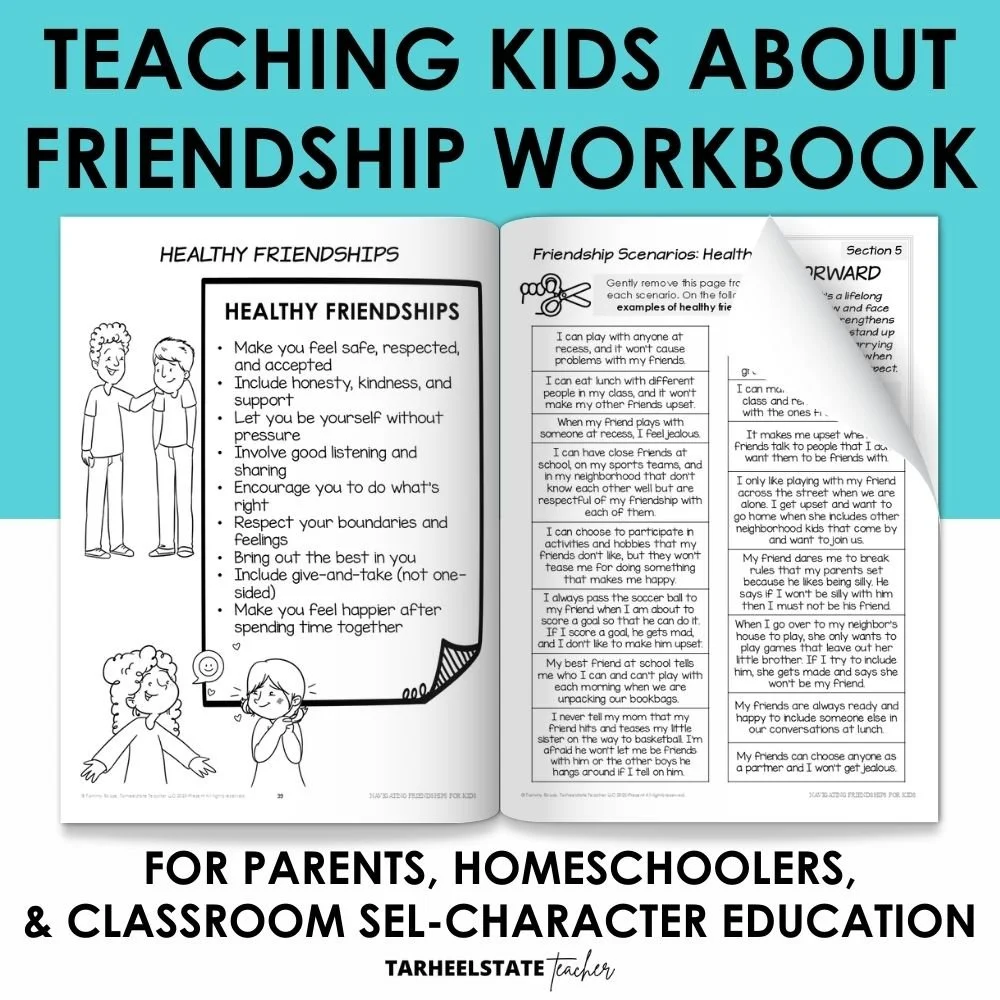
Through stories, reflection pages, hands-on activities, and real-life friendship scenarios, children learn the skills and confidence to build supportive friendships and to show up as the kind of friend they want to be.
Because friendship isn’t just something kids “figure out”, it’s something they learn.
Note: Links to suggested items in this post are affiliate links. This means that I am a participant in the Amazon’s Affiliate advertising program that allows sites to earn from qualifying purchases. These links do not increase your cost. I only recommend things I’ve used and love! Read my full disclosure here.
A Workbook That Builds Real-World Friendship Skills
Inside, kids will:
explore what makes a healthy friendship
develop empathy and active listening skills
practice kindness and assertiveness
recognize red flags in friendships
learn to navigate conflict and friendship changes
set personal goals and track growth
By the end, kids move beyond talking about friendship and practice it with confidence and intention.
Inside the Workbook: What Kids Will Learn
This workbook includes five guided sections, each building meaningful social-emotional skills.
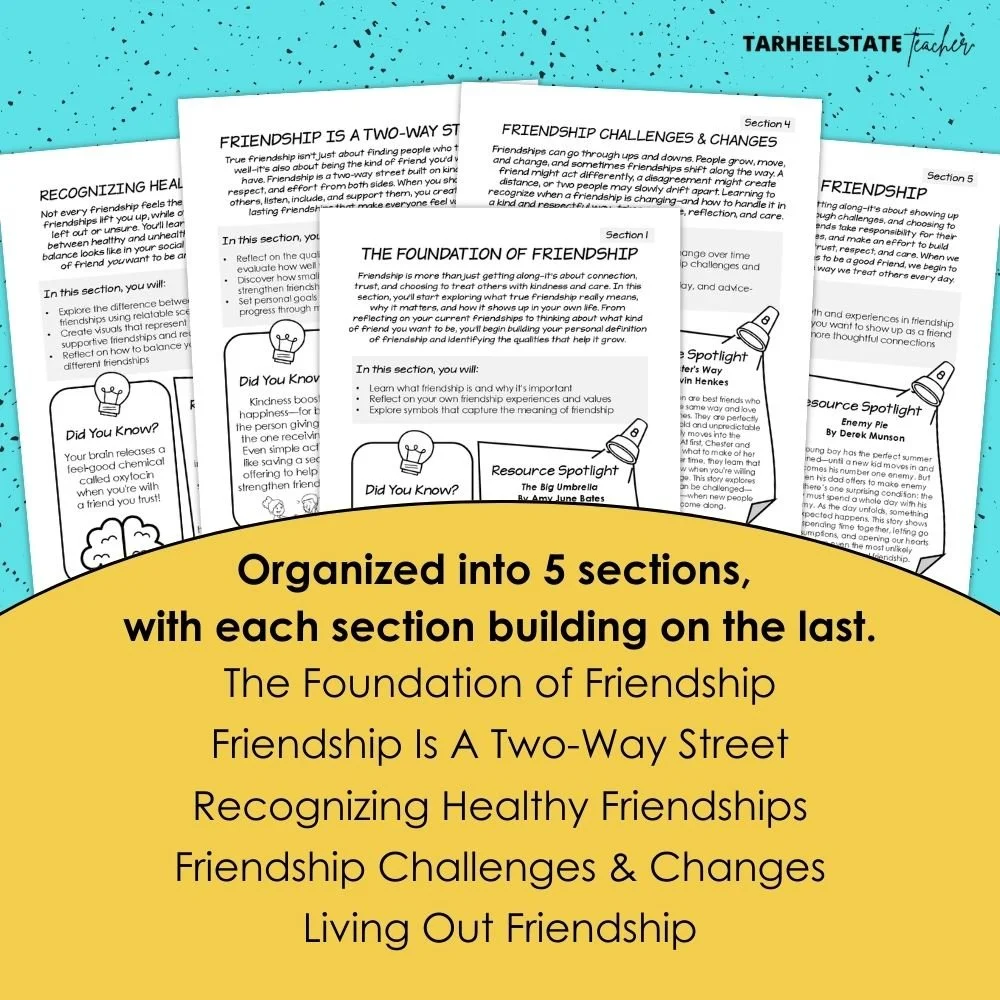
1 - THE FOUNDATION OF FRIENDSHIP
Kids begin by exploring what friendship really means and what qualities help relationships grow strong. Through reflection questions, vocabulary building, and thoughtful activities, they learn to recognize the habits that support connection — like kindness, honesty, listening, and teamwork.
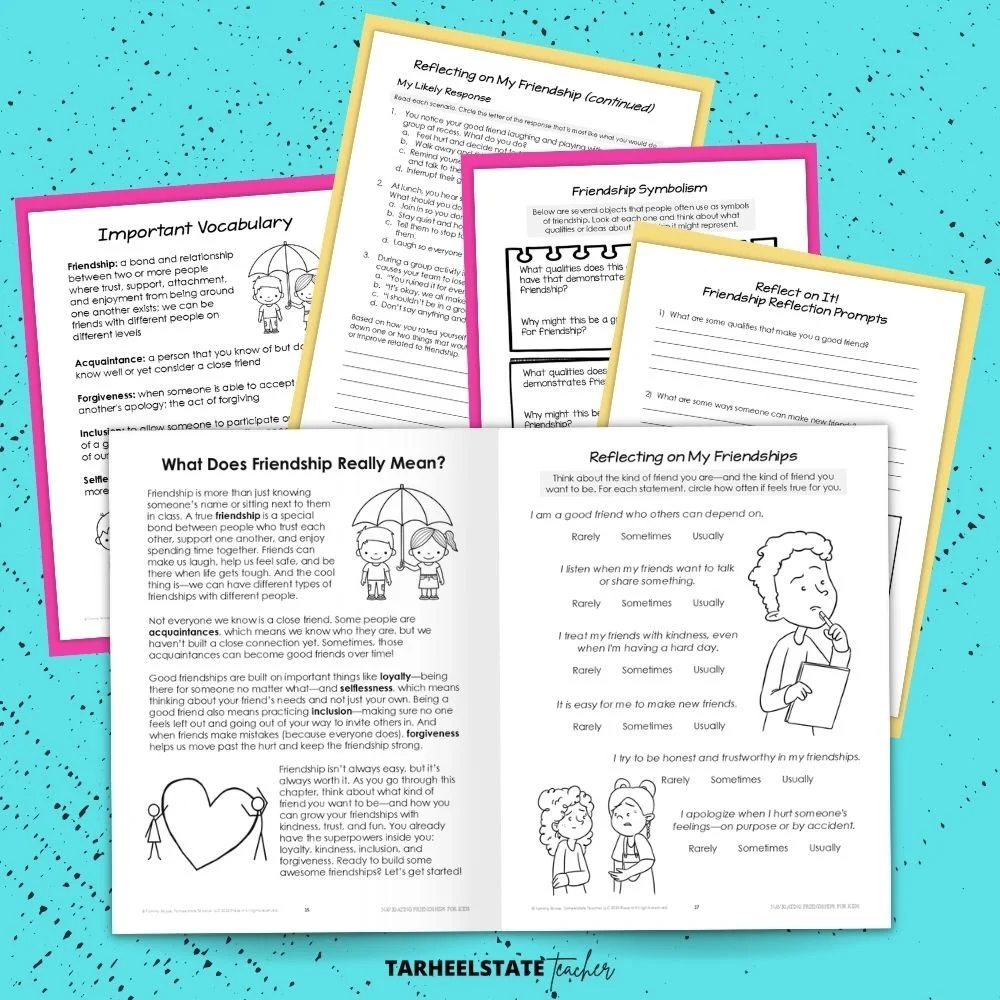
They’ll create friendship symbols, consider what makes them a good friend, and begin thinking about how their actions affect others. This section lays the groundwork for understanding how friendships are built and how to care for them with intention.
2 - FRIENDSHIP IS A TWO-WAY STREET
True friendship isn’t one-sided. It involves give-and-take, empathy, and effort. In this section, kids explore what it means to show up for others, practice kindness, and consider the feelings and perspectives of the people around them.
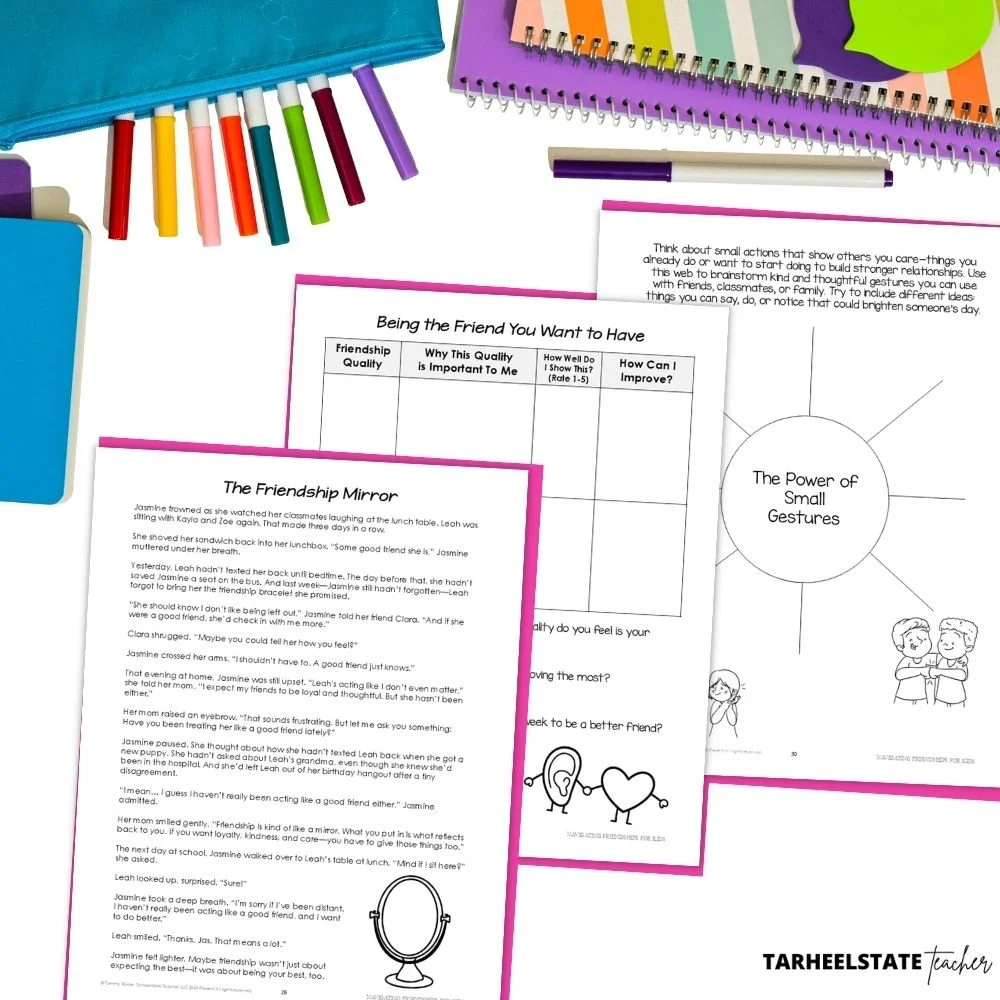
They'll reflect on the kind of friend they want to be, learn the power of thoughtful gestures, and set goals for practicing positive friendship habits. This section helps kids understand that strong friendships grow when both people care, listen, and encourage each other.
3 - RECOGNIZING HEALTHY FRIENDSHIPS
Not all friendships feel good and knowing the difference between healthy and unhealthy friendships is key. The friendship activities in this section teach children to spot positive traits in friends (trust, respect, support) and identify red flags like peer pressure, exclusion, or unkind behavior.
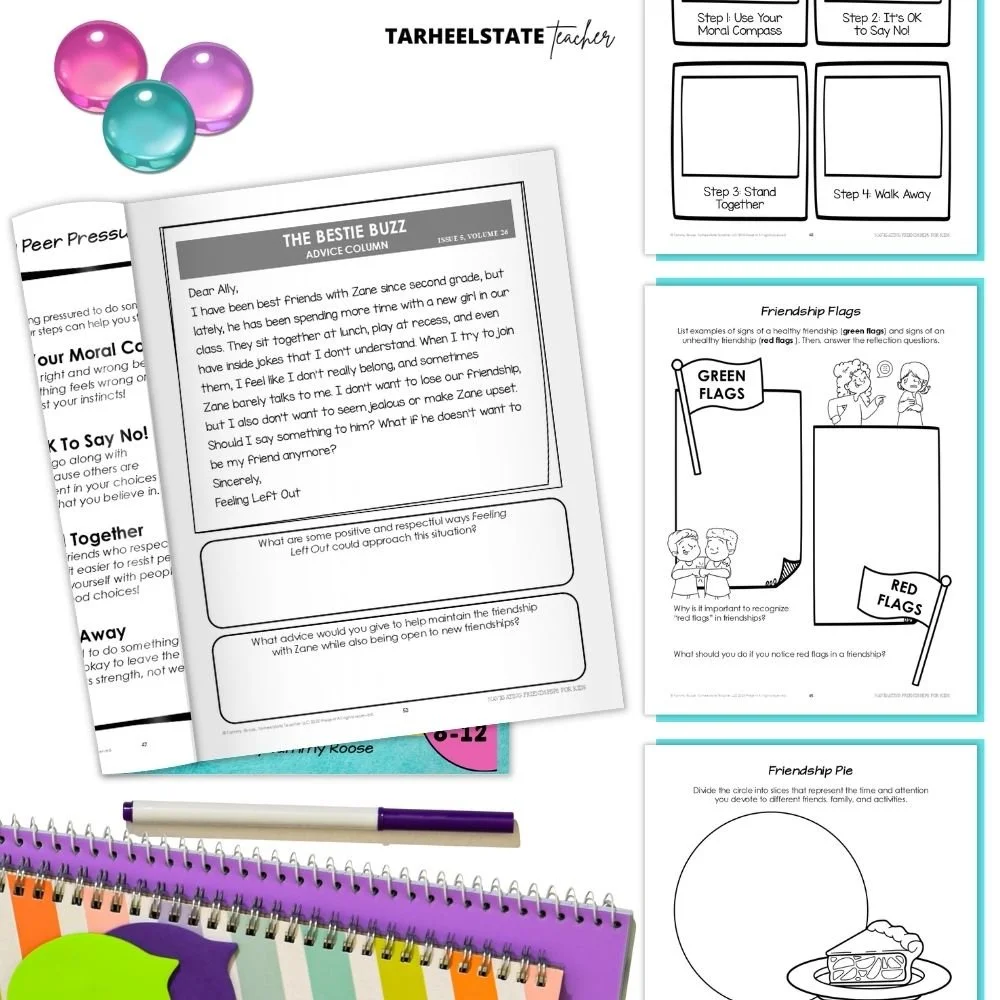
Kids will practice analyzing friendship scenarios, reflect on loyalty and boundaries, and learn strategies for choosing friends who lift them up. With awareness and confidence, they begin building friendships rooted in respect and emotional safety.
4 - FRIENDSHIP CHALLENGES & CHANGES
It’s normal for friendships to grow, shift, and sometimes change. In this section, kids learn that disagreements, growing apart, and forming new connections are part of life. They’ll gain tools for handling conflict with empathy, responding to hurt feelings, and communicating through tough moments.
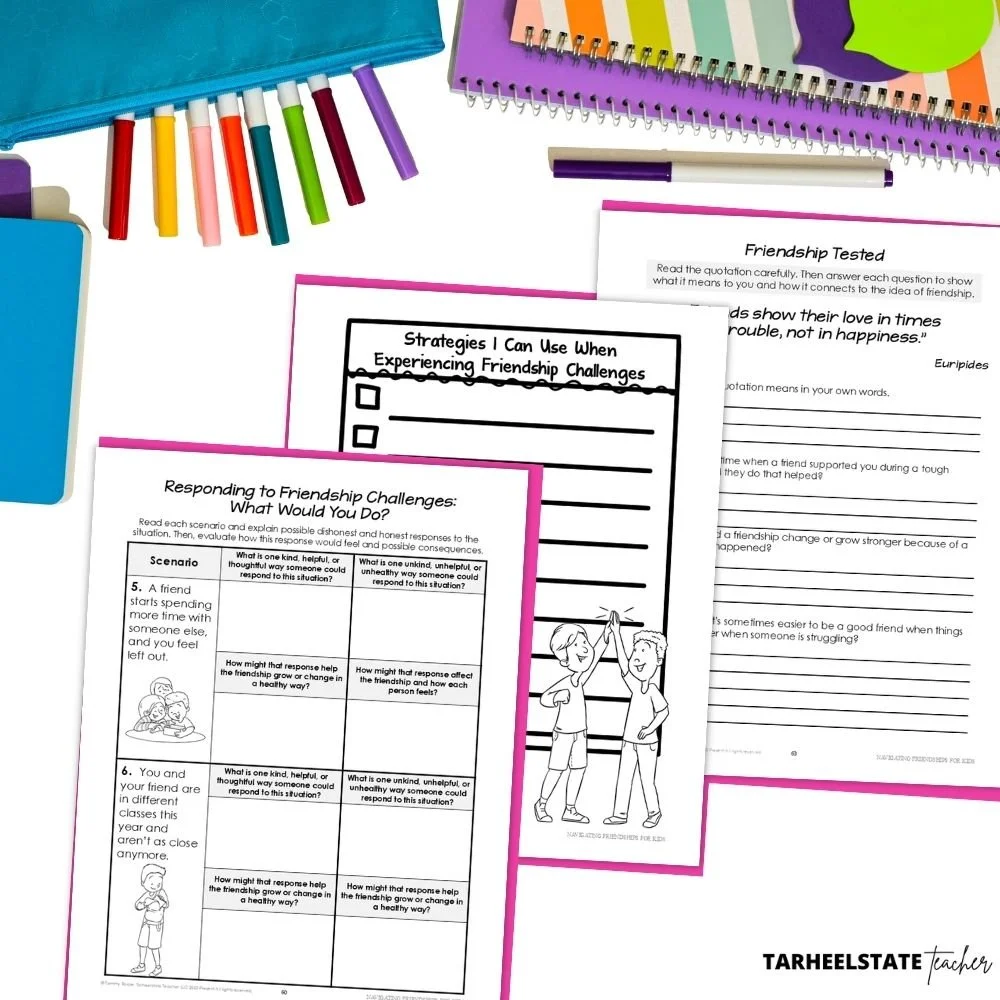
With friendship activities like advice-column writing to real-world problem-solving scenarios, this section empowers kids to navigate friendship challenges calmly and kindly and to know when it’s okay to step back from a friendship that isn’t working.
5 - LIVING OUT FRIENDSHIP
This final section helps children take everything they've learned and put it into action in their daily lives. They reflect on their friendship growth, set meaningful goals, and write a personal plan for being the kind of friend they are proud to be.
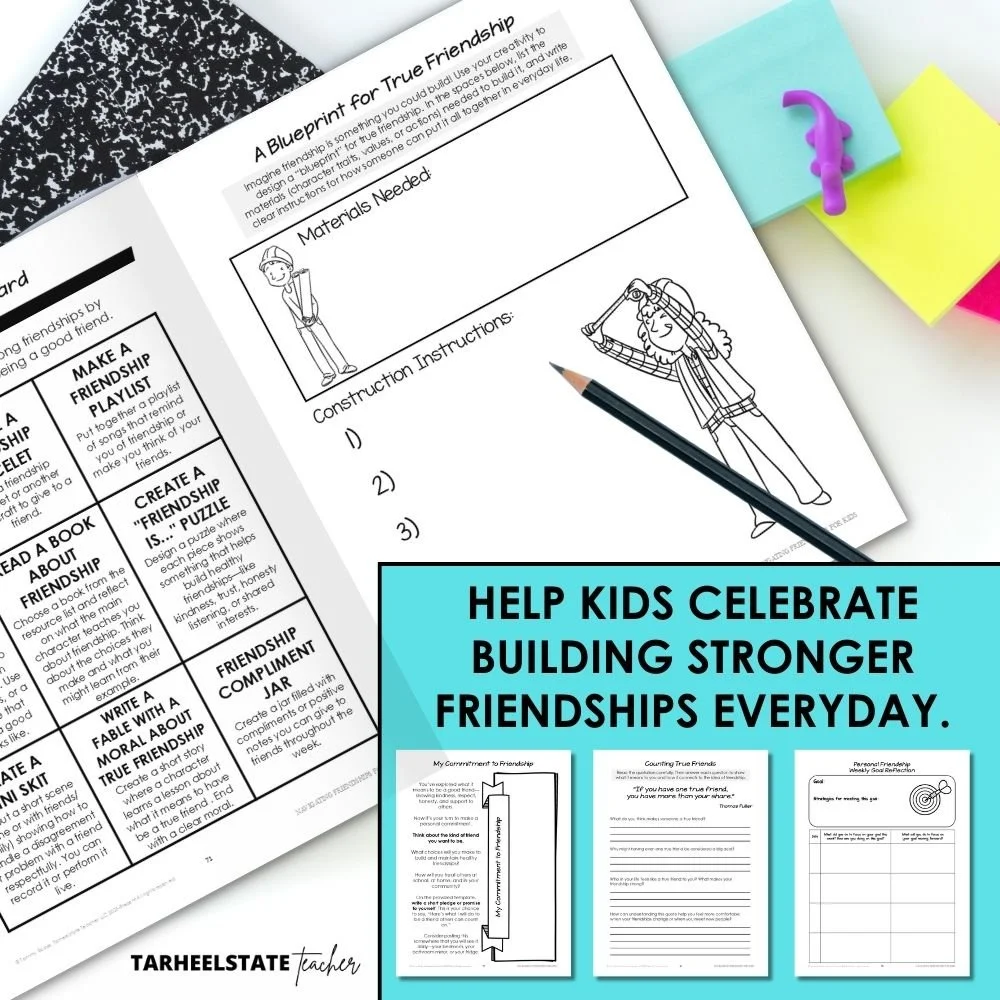
Through creative projects, habit tracking, and heartfelt reflection activities, kids celebrate who they are becoming — empathetic, confident, and loyal friends who invest in relationships with courage and kindness.
Stories That Bring Friendship to Life
Every section includes a carefully chosen picture book that connects friendship lessons to real emotions and situations.
At the back of the workbook, you’ll also find a longer list of recommended read alouds for parents to check out from the library or add to their home collection. These stories extend the conversation and keep the theme of friendship alive long after the workbook activities are done. Many parents also use these stories as part of a social emotional homeschool curriculum or a homeschool character building curriculum to spark deeper discussions about friendship.
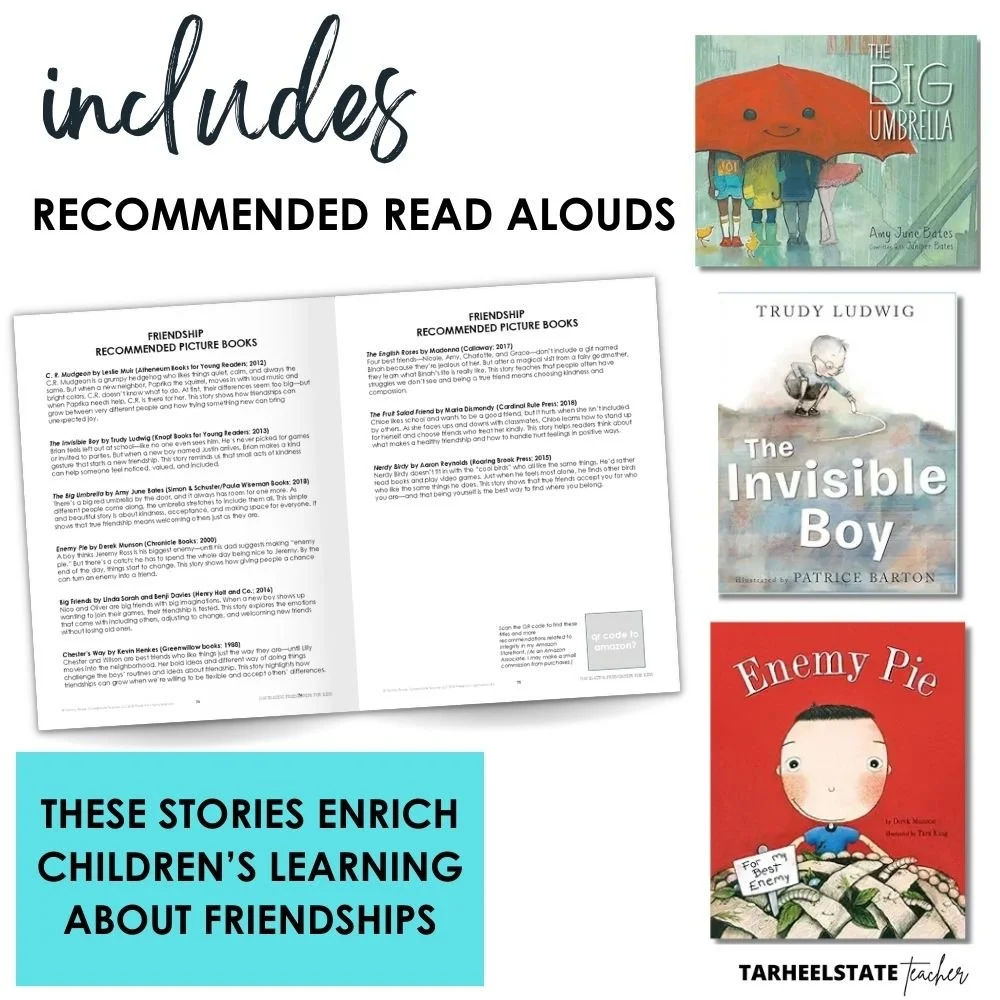
Here are three favorites:
The Big Umbrella by Amy June Bates — There’s a big red umbrella by the door, and it always has room for one more. As different people come along, the umbrella stretches to include them all. This simple story is about kindness, acceptance, and making space for everyone. It shows that true friendship means welcoming others just as they are.
The Invisible Boy by Trudy Ludwig — Brian feels left out at school—like no one even sees him. He’s never picked for games or invited to parties. But when a new boy named Justin arrives, Brian makes a kind gesture that starts a new friendship. This story reminds us that small acts of kindness can help someone feel noticed, valued, and included.
Enemy Pie by Derek Munson — A boy thinks Jeremy Ross is his biggest enemy—until his dad suggests making “enemy pie.” But there’s a catch: he has to spend the whole day being nice to Jeremy. By the end of the day, things start to change. This story shows how giving people a chance can turn an enemy into a friend.
HOW TO USE THIS WORKBOOK
Whether you’re teaching at the kitchen table over breakfast, having heartfelt conversations with your child while driving them to their after school activities, or running a full homeschool curriculum, this workbook is flexible and family-friendly. For the best results, I recommend using this workbook and having conversations about its content 3-4 times a week. This will allow you to gain momentum on the topics and teachings and build on previous discussions more easily.
FOR PARENTS AND GUARDIANS
Try weaving friendship practice into natural moments throughout the week:
Read one reflection prompt or quote together at the breakfast table and share examples of kindness or friendship from the day before.
Use the friendship habit tracker or journaling prompts at bedtime to celebrate moments of empathy, courage, or inclusion.
Swap one evening story a week for a friendship-themed passage or activity and then talk together about the social situations in the story.
Encourage your child to practice kindness “missions” at home or school and share wins during dinner or in the car.
The goal isn’t perfection, it’s progress. Your child is developing the social-emotional muscles to connect, repair, communicate, and show empathy one real-life moment at a time.
FOR HOMESCHOOL OR CO-OP EDUCATORS
Pair each section with read alouds to highlight friendship themes through story.
Invite children to discuss scenarios in small groups or family meetings.
Use journal pages as writing prompts, or the reflection questions as narration exercises.
Integrate friendship projects (like kind gesture challenges or “friendship action plans”) into weekly routines.
Highlight peer problem-solving skills during group work, cooperative games, or co-op activities.
Whether you teach daily, weekly, or as a focused social-emotional unit, this resource supports deeper thinking about friendship, kindness, and community.
FOR CLASSROOM TEACHERS
This workbook was designed based on my SEL Morning Meeting Unit for Friendship. The workbook is perfect for your character education efforts in the classroom, too. Whether you use it as a foundation for morning meetings, counseling lessons, or social-emotional learning instruction, each activity invites students to think deeply about friendship, empathy, communication, kindness, and inclusion.
You’ll find opportunities for class discussion, personal reflection, perspective-taking, and healthy social skill-building woven throughout. These lessons help students learn how to be supportive classmates, work through conflict with care, and build a classroom culture where everyone feels seen, valued, and included.
NOTE: The digital download version on TPT includes daily lesson plans, printable student journals, a bulletin board, and a Google Slides component. Consider whether the workbook curriculum or TPT version will best meet your needs.
INTERESTED IN MULTIPLE COPIES?
Contact Tammy at tarheelstateteacher(at)gmail(.)com for a quote for multiple copies or purchase orders for your campus or district.
WHY PARENTS LOVE THIS APPROACH
Families love that kids:
gain vocabulary for social situations
build empathy and emotional awareness
practice real friendship skills
grow confidence in social settings
feel supported navigating friendship ups and downs
Because friendship should feel empowering, not overwhelming.
feedback for my FRIENDSHIP unit from classroom teachers
⭐⭐⭐⭐⭐ My students struggle with social awareness and relationship skills. They found the activities provided in this resource extremely engaging. This resource guided really profound conversations that led to better decision making with my students.
⭐⭐⭐⭐⭐ Such a wonderful resource! The books and videos were engaging, great reflection opportunity for students, and great class discussions!
⭐⭐⭐⭐⭐ I enjoy the low prep and flexible nature of this resource. There are lots of different ways that this can be used in the classroom and students are engaged in good conversation and thinking around important topics.
START STRENGTHENING FRIENDSHIP SKILLS TODAY
Help your child grow confidence, empathy, and strong social skills with Navigating Friendships for Kids: Friendship Activities for Kids on Making and Keeping Friends, Being A Good Friend, and Healthy Friendships — one of the best homeschool and classroom workbooks for building kindness, communication, and healthy friendship habits.
Give your child the tools to include others, navigate friendship challenges with courage, and build friendships that last at home, at school, and in every community they become part of.