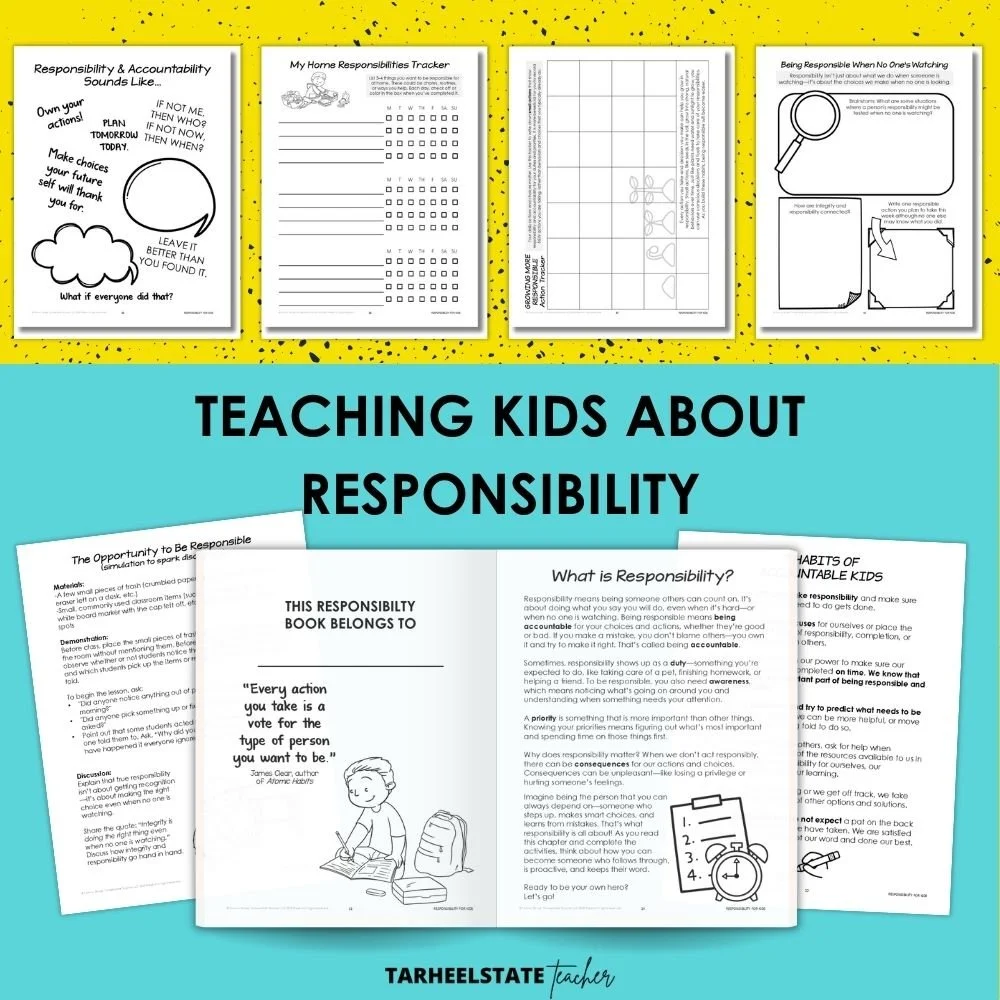
Teaching Responsibility for Kids: How to Help Children Follow Through, Make Good Choices, and Build Accountability
As teachers, parents, and homeschool educators, we want kids who follow through, take ownership, and make thoughtful choices—skills that matter now and set the stage for lifelong success. But between distractions, busy schedules, and the normal ups-and-downs of childhood, responsibility can be a tricky habit to teach.
If you’ve been reminding your child about chores, homework, or promises, only to see the same missed tasks repeat, you’re not alone. Responsibility is a learned skill. It grows through reflection, practice, and concrete tools that help children make better choices and keep their word.
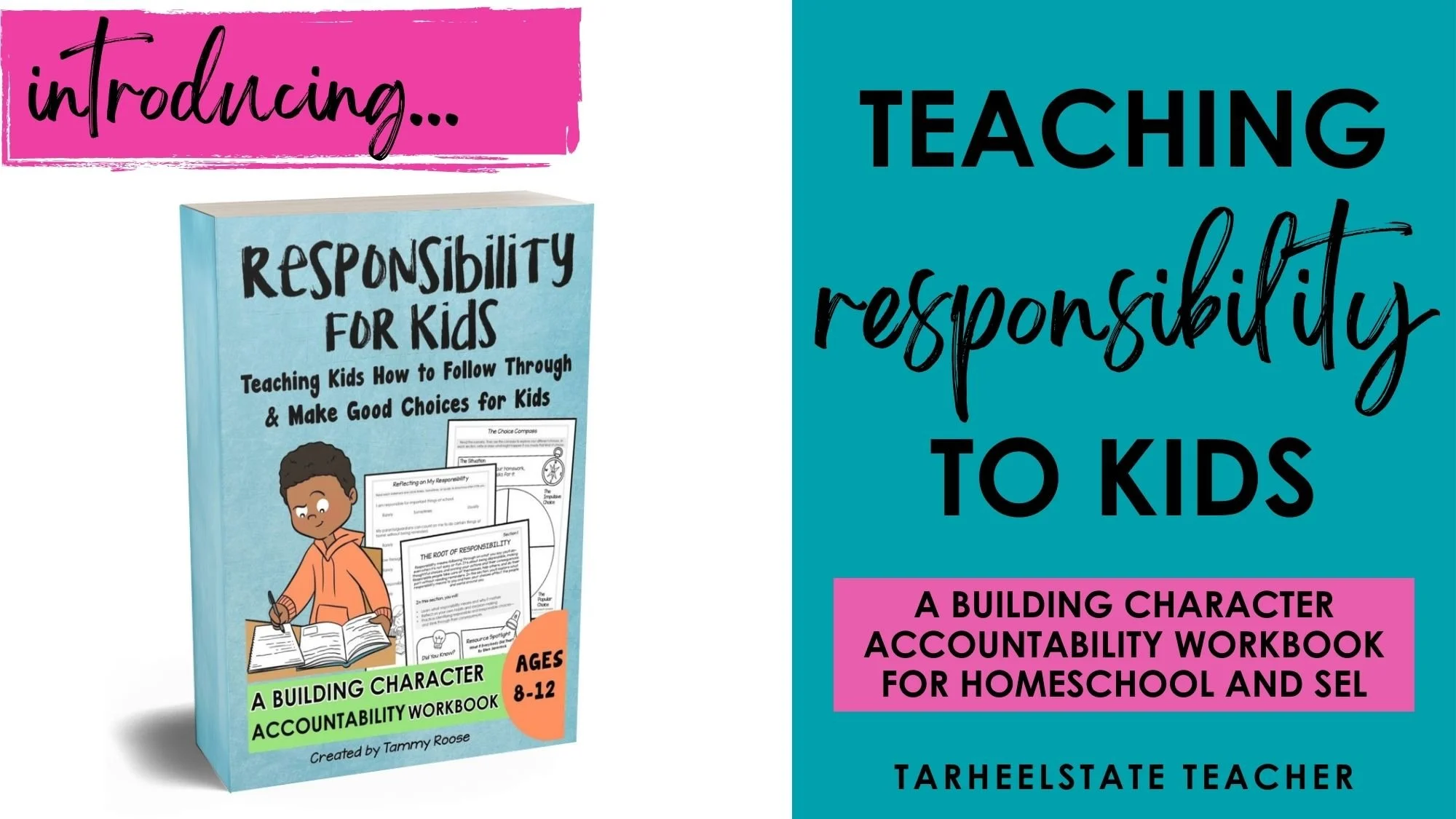
That’s why I wrote Responsibility for Kids: Teaching How to Follow Through and Make Good Choices — A Building Character Accountability Workbook for Ages 8–12. This SEL workbook helps kids understand what responsibility looks like, practice follow-through, own their mistakes, and lead with accountability through relatable scenarios, habit trackers, and creative activities.
Note: Links to suggested items in this post are affiliate links. This means that I am a participant in the Amazon’s Affiliate advertising program that allows sites to earn from qualifying purchases. These links do not increase your cost. I only recommend things I’ve used and love! Read my full disclosure here.
A Workbook That Builds Real Responsibility Skills
This workbook moves beyond “do your chores” to teach the why and how of responsibility. Kids gain vocabulary, practice problem-solving, and use student-friendly tools to turn good intentions into dependable habits.
They’ll learn to:
Consider the real consequences of choices
Reflect on personal habits and decision-making
Use practical tools to follow through and reduce excuses
Track small wins and build consistent routines
By the end, children move beyond understanding responsibility and practice it in ways that feel real and achievable.
Inside the Workbook: What Kids Will Learn
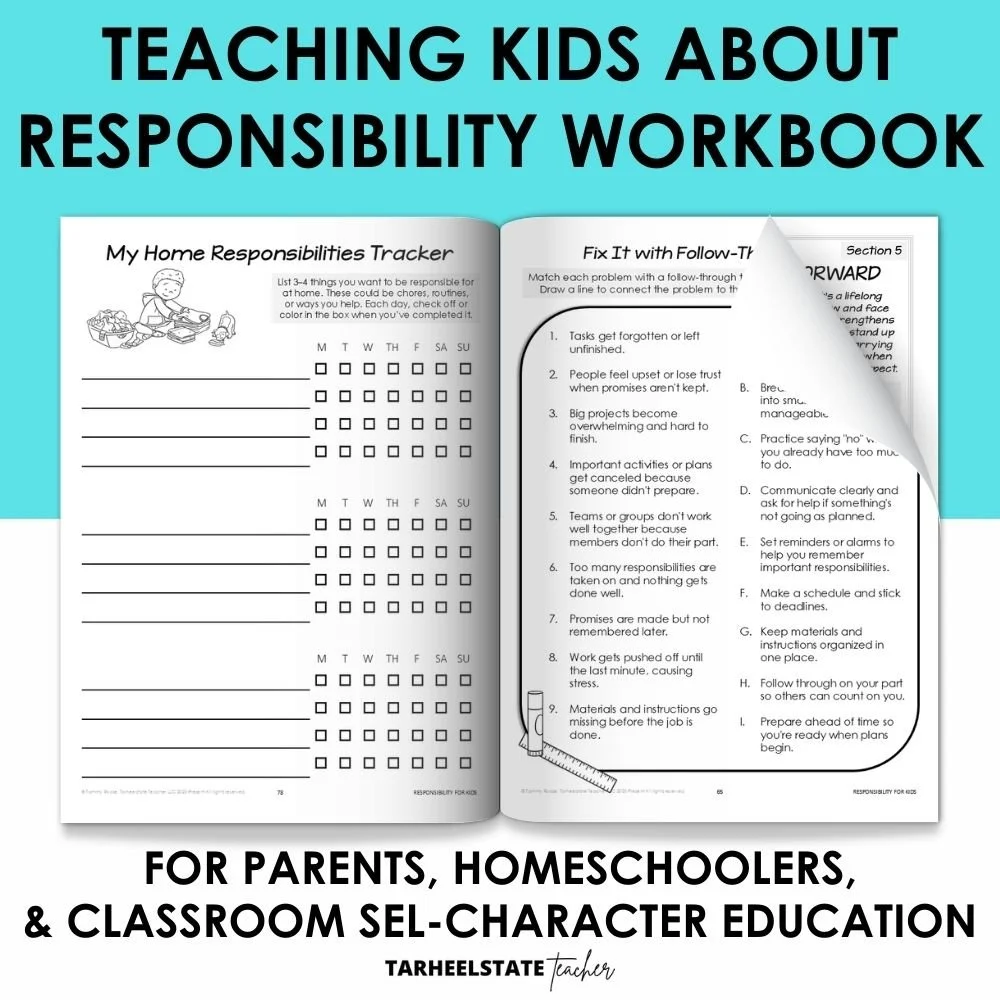
The workbook is organized into five big sections. Each section includes short reading passages, scenario responsibility activities, reflection prompts on being accountable for your actions, and a few hands-on projects to reinforce the learning.
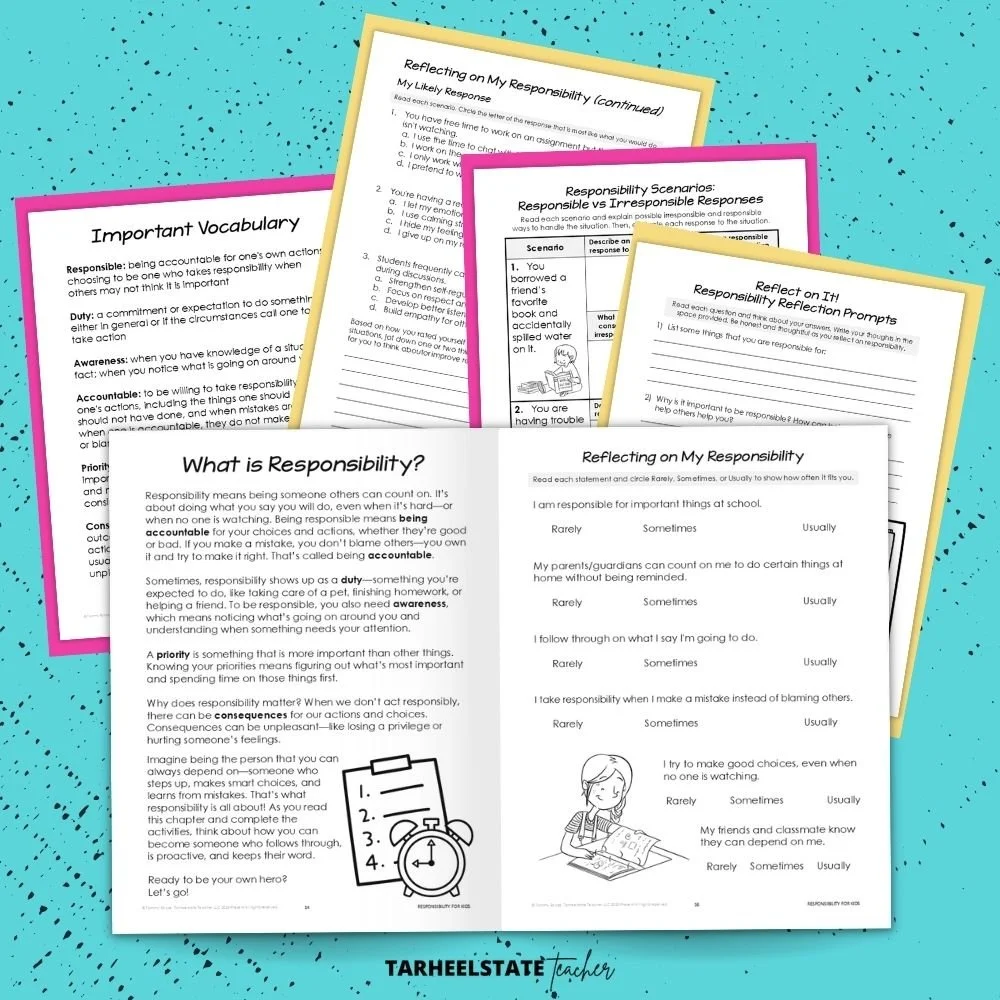
1 - THE ROOT OF RESPONSIBILITY
Kids begin their journey by exploring what responsibility truly means and why it matters. They reflect on the choices they make each day, how those choices shape their experiences, and what it looks like to follow through on commitments. Through simple vocabulary building and guided self-reflection, they start recognizing the responsibilities they already handle and the ones they want to grow in.
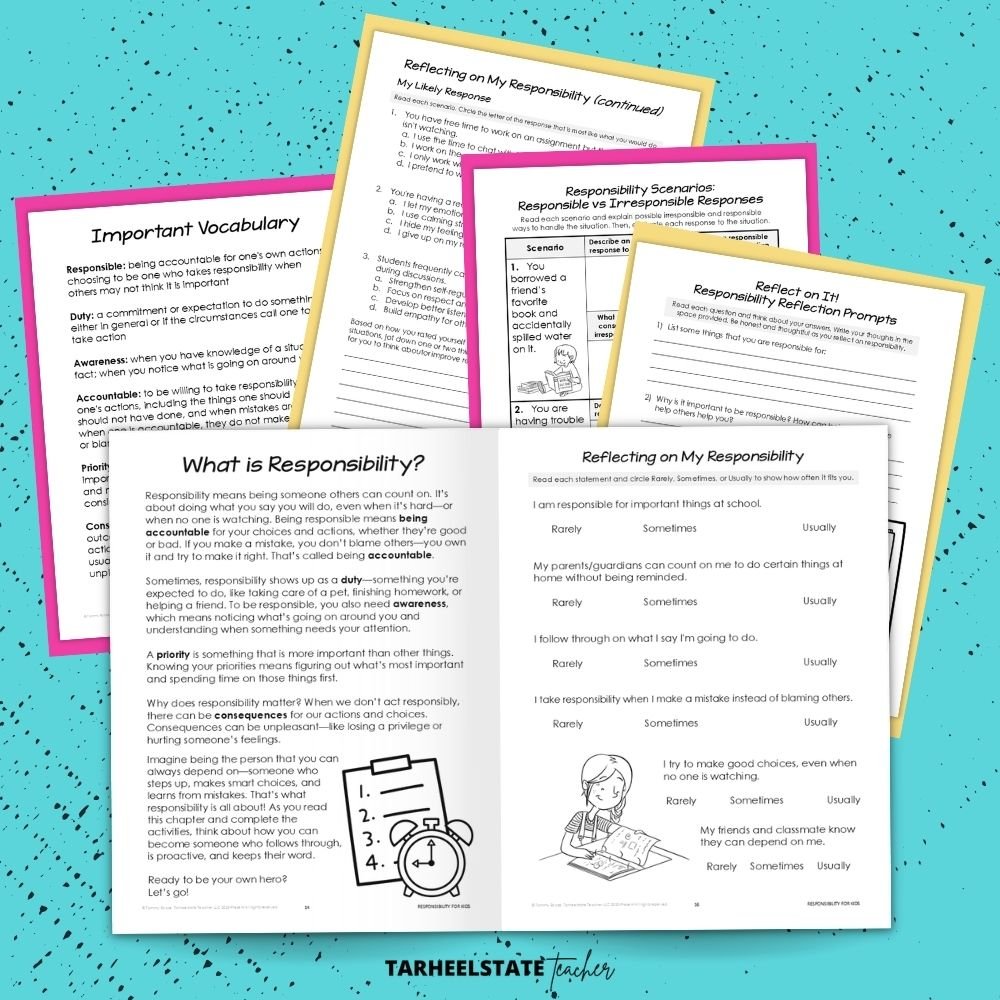
They’ll think about times when they rose to the occasion, moments when they could have made a better choice, and what it means to take ownership of both. By helping kids understand responsibility as something active, empowering, and evolving, this section lays a strong foundation for the learning ahead.
2 - CHOICES THAT MATTER
This section helps kids connect the dots between the choices they make and the results they experience. They explore how small decisions can add up, how thoughtful choices build trust, and how acting responsibly affects the people around them. Students also learn that responsibility isn’t just doing what’s required. It’s choosing what’s right, even when it’s tempting to take an easier path.
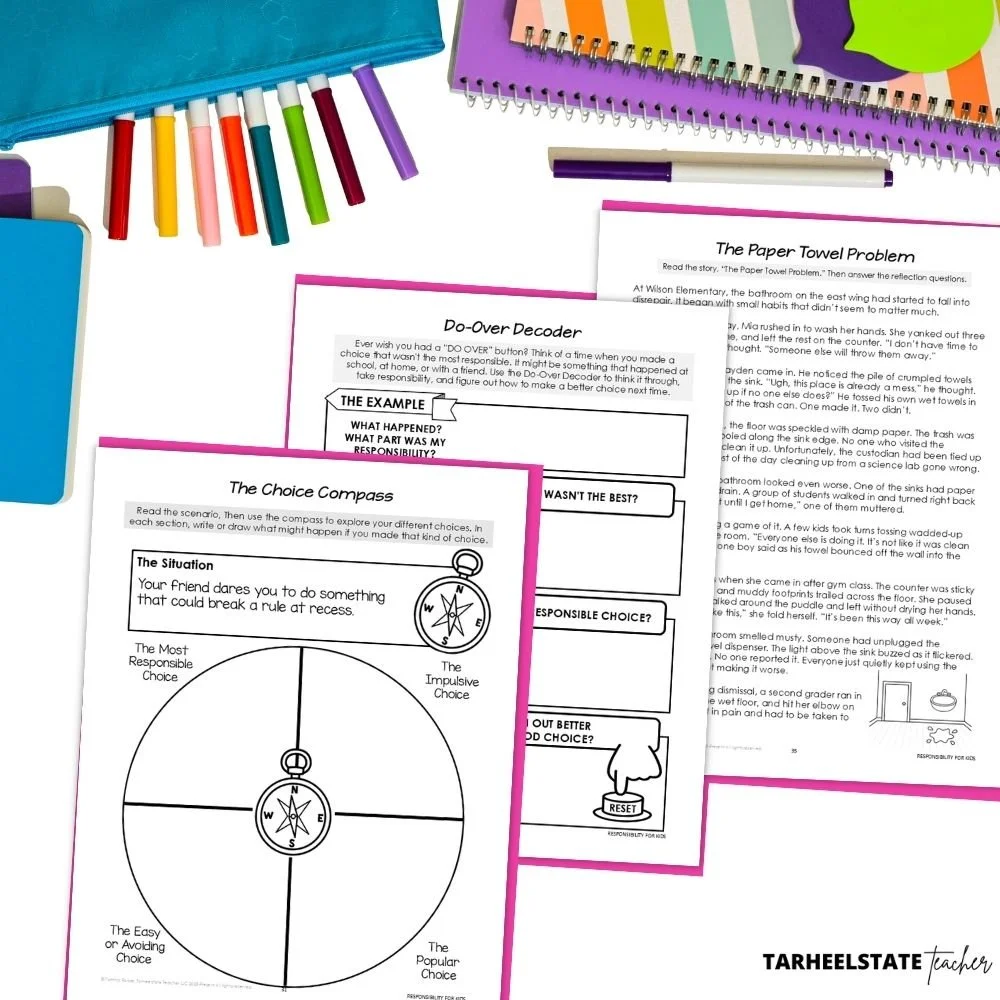
Kids practice evaluating options, navigating tricky moments, and thinking ahead. They consider what responsible behavior looks like at school, at home, and when no one is watching. This section empowers kids to see themselves as choice-makers who have control over their actions and the kind of person they are becoming.
3 - OWNING YOUR ACTIONS
Being responsible means taking ownership, not just when things go well, but also when mistakes happen. In this section, students explore what accountability looks like in everyday life. They reflect on group work, personal habits, and the importance of being someone others can count on.
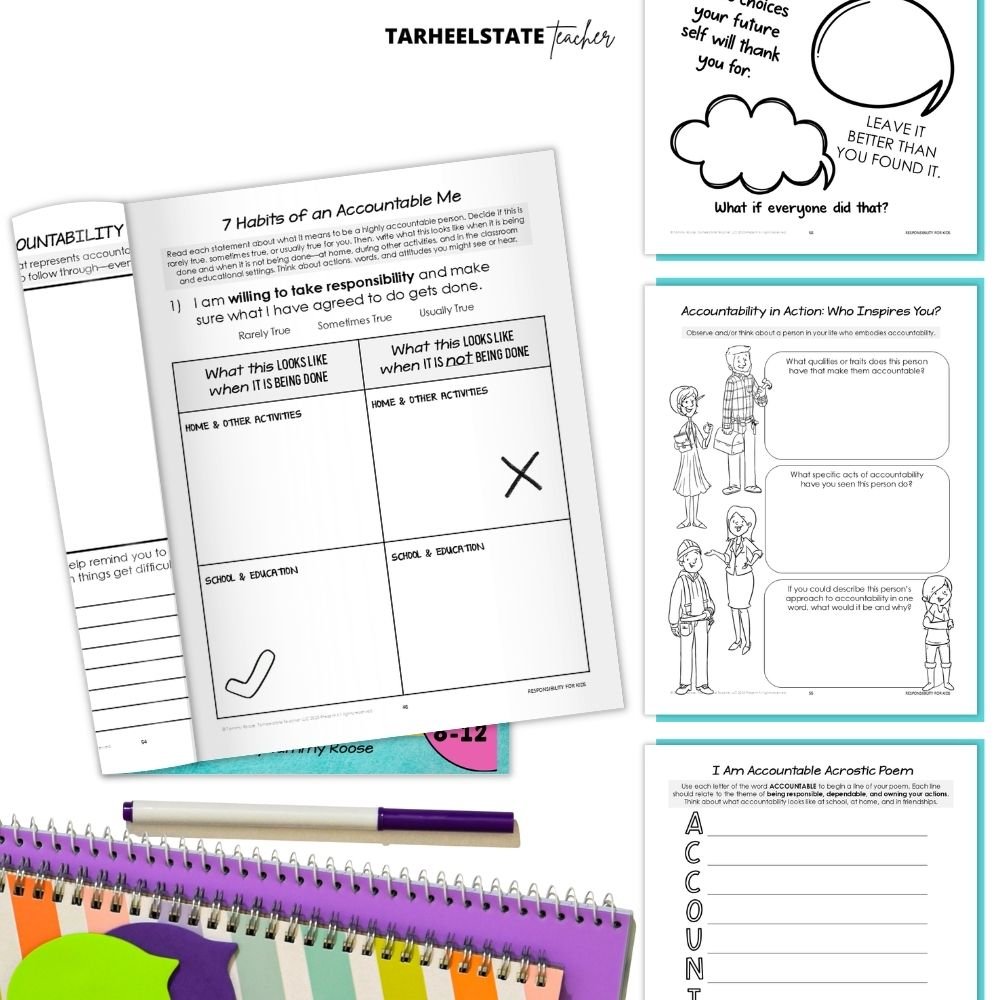
Kids think about the qualities of accountable people, identify role models who show responsibility, and begin shaping their own identity as someone who follows through. This section helps them understand that accountability isn’t about blame; it’s about learning, growing, and choosing to do better next time.
4 - THE FOLLOW-THROUGH FACTOR
Here, kids dive into the tools and mindsets that help responsible people follow through. They learn to recognize common “traps” like procrastination and excuses, and they explore practical strategies for staying on track. This section shows kids that follow-through is a skill they can build with practice, planning, and healthy self-talk.
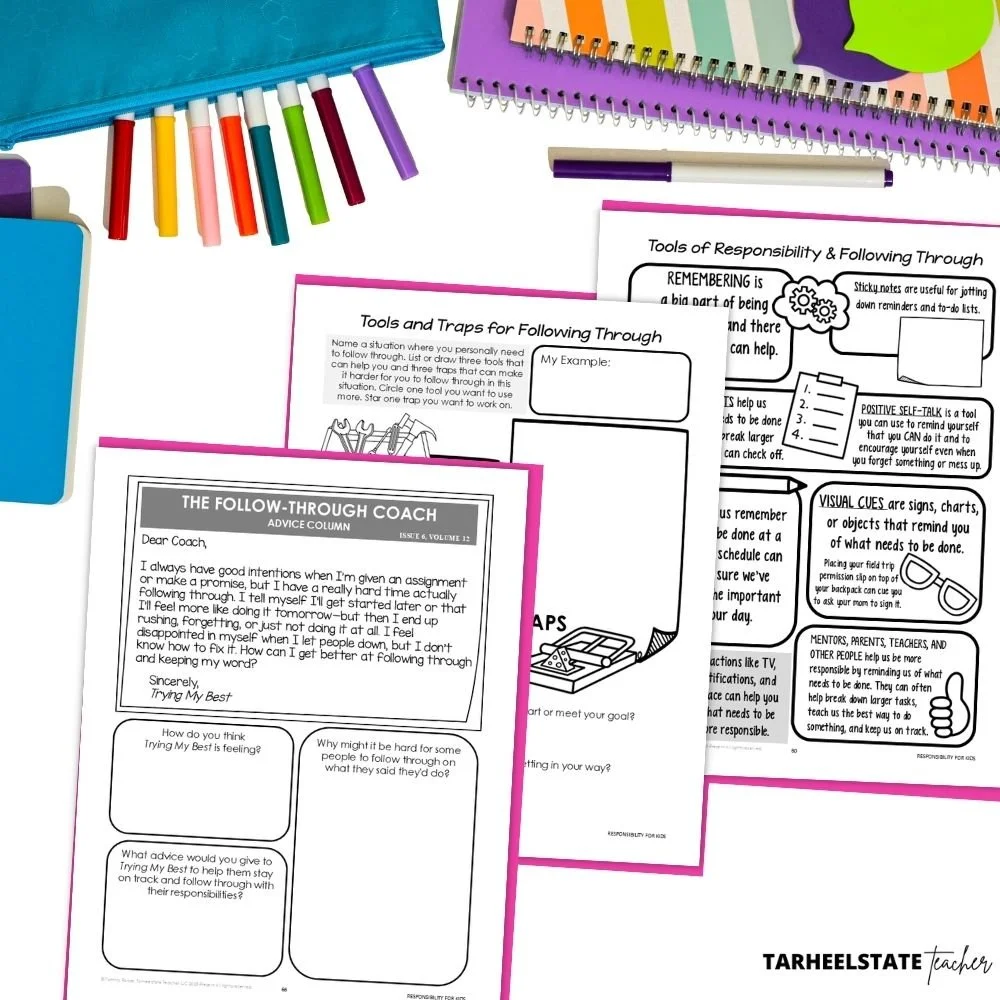
They reflect on what gets in the way, experiment with simple follow-through tools, and practice positive language that moves them forward. By the end, kids begin to see themselves as capable problem-solvers who can take action even when tasks feel boring, challenging, or overwhelming.
5 - LEADING WITH RESPONSIBILITY
In the final section, kids explore how responsibility can shape their leadership at home, at school, and in their friendships. They reflect on how responsible choices inspire others, why doing nothing still makes an impact, and how taking initiative can create positive change.
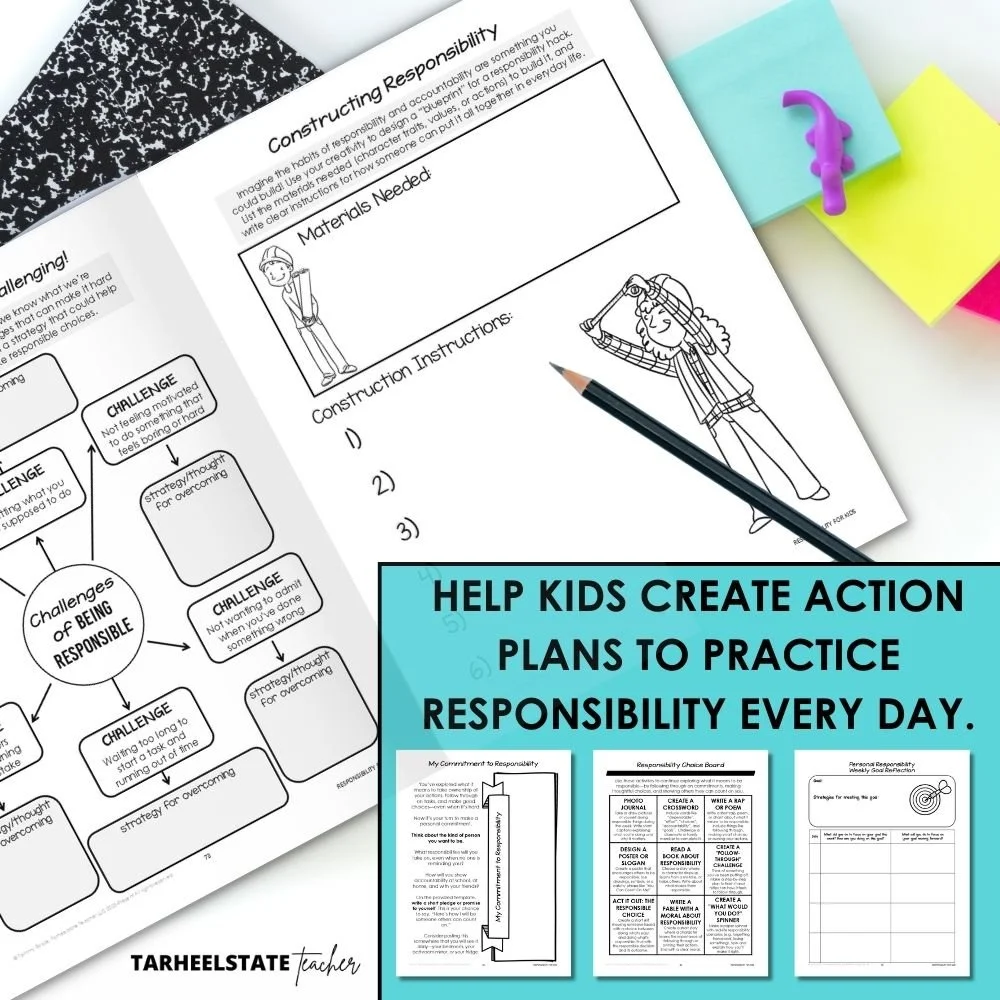
Students explore the ups and downs of being responsible, brainstorm strategies for handling challenges, and set personal goals for continued growth. With opportunities for reflection, planning, and creativity, this section helps kids see responsibility not just as something they do, but as part of the person they are becoming.
Stories That Bring Responsibility to Life
Every section includes a carefully chosen picture book that connects responsibility lessons to real situations.
At the back of the workbook you’ll also find an extended list of recommended responsibility read alouds to check out from the library or add to your home collection. These are perfect for extending lessons and sparking deeper conversation. Many families use these read alouds about responsibility as part of a social-emotional homeschool curriculum or a classroom character education block.
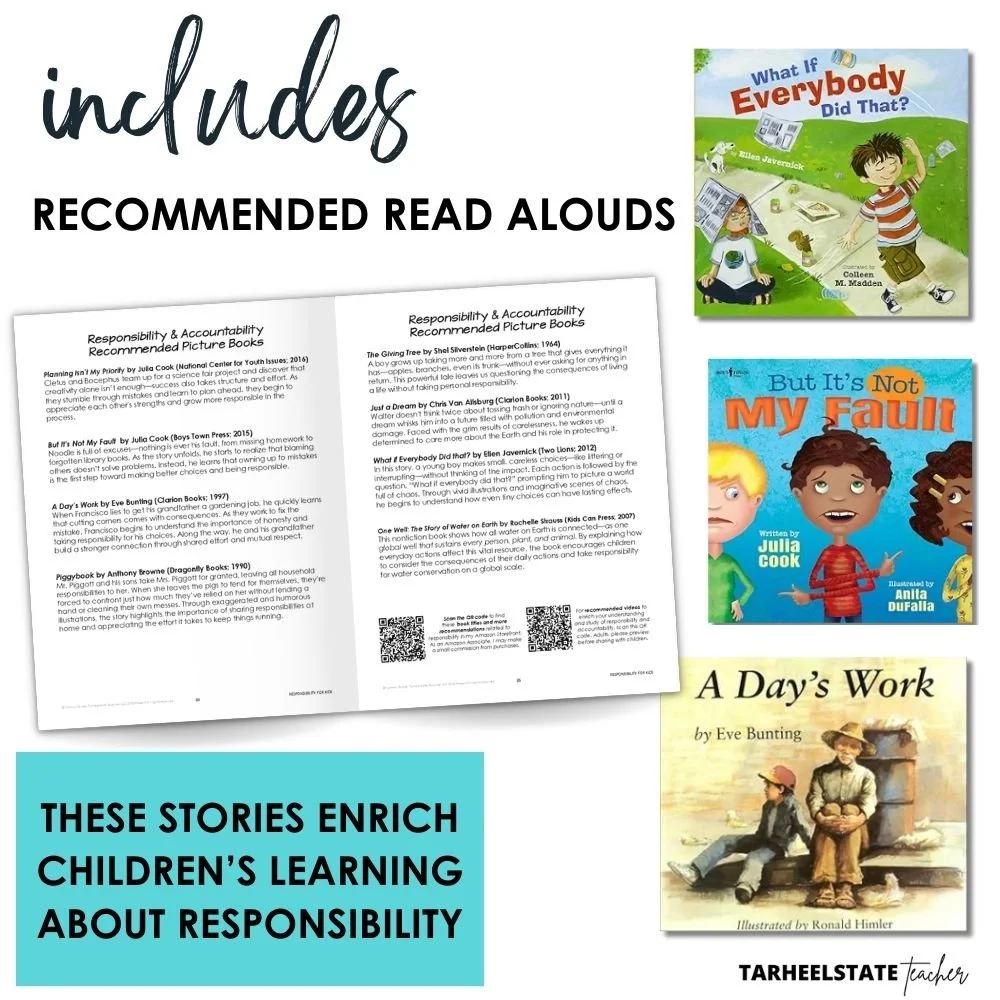
Here are three favorites from the workbook’s reading list:
What If Everybody Did That? by Ellen Javernick — A young boy makes small choices—like tossing trash out of the car or feeding animals at the zoo—and adults respond with the same question: What if everybody did that? Through simple, relatable moments, kids see how tiny actions can add up to big consequences. This story helps readers understand why responsible choices matter and how each person’s behavior affects the world around them.
But It’s Not My Fault by Julia Cook —Whenever something goes wrong, Ben is sure it’s not his fault. He blames everyone else—even when the situation clearly leads back to his own choices. As the story unfolds, Ben begins to realize that pointing fingers doesn’t solve problems. This lighthearted, humorous book helps kids reflect on excuses, accountability, and what it means to take ownership of their actions.
A Day’s Work by Eve Bunting — Francisco and his grandfather search for day labor, and when Francisco exaggerates his grandfather’s skills to get a job, the truth quickly catches up with them. Together, they must repair the mistake with honesty and hard work. This touching story shows how responsibility, integrity, and making things right can strengthen character—and relationships—over time.
How to Use This Workbook
Whether you’re guiding a child at the kitchen table, leading a homeschool lesson, or teaching a classroom SEL unit, this workbook is flexible and practical. For best results, I recommend using it 3–4 times per week so kids can build momentum and practice skills in real-world settings.
FOR PARENTS & GUARDIANS
Read a reflection prompt together at breakfast to start the day with intention.
Use the Growing More Responsible Action Tracker at bedtime to celebrate small wins.
Turn the Do-Over Decoder into a family practice: role-play a “do-over” after a mistake.
Assign one short responsibility scenario after school and discuss choices during dinner.
Use the Responsibility Choice Board for weekend activity ideas.
The goal is progress, not perfection. These short, consistent habits help children grow independence and self-trust.
FOR HOMESCHOOL OR CO-OP EDUCATORS
Use each section as a weekly unit in your SEL block.
Pair read alouds with writing prompts and small-group scenario work.
Turn the Follow-Through Coach Advice Column into a cooperative project where students give peer advice.
Use the Home Responsibilities Tracker as a cross-curricular project in life skills or family studies.
This character homeschool curriculum resource adapts easily to daily, weekly, or unit-style instruction.
FOR CLASSROOM TEACHERS
This workbook was designed based on my SEL Responsibility Unit and supports classroom character education seamlessly. Whether you use it for morning meetings, counseling lessons, or SEL instruction, each responsibility activity invites students to think deeply about follow-through, accountability, and choices. You’ll find opportunities for whole-class discussions, partner reflection, writing assignments, and restorative conversations when things go wrong.
NOTE: The digital download on TPT includes daily lesson plans, printable journals, a bulletin board set, and Google Slides. Consider whether the workbook or the full TPT curriculum better suits your classroom needs.
INTERESTED IN MULTIPLE COPIES?
Contact Tammy at tarheelstateteacher(at)gmail(.)com for a quote for multiple copies for small groups or purchase orders for your campus or district.
Why Parents & Teachers Love This Approach
Families and educators tell me this workbook does what so many resources promise: it opens honest conversation, provides practical tools, and helps kids practice responsibility in small, sustainable steps. Kids begin to see themselves as capable and trustworthy—and adults see their reminders needed less and less.
Feedback from Classroom Teachers
⭐⭐⭐⭐⭐ Great resource for talking about and teaching responsibility!
⭐⭐⭐⭐⭐ Kids are struggling more and more to understand exactly what responsibility is, and this resource was helpful during our morning meetings. It allowed students to get specific examples but also come up with some themselves.
⭐⭐⭐⭐⭐ This resource was wonderful; thank you! I used part of it for my whole-class counseling lesson, and used the rest for my small group counseling work on responsibility and accountability. The material was very accessible and relevant.
START BUILDING RESPONSIBILITY TODAY
Help your child strengthen follow-through, make better choices, and become someone others can count on with Responsibility for Kids: Teaching How to Follow Through and Make Good Choices—a practical SEL workbook for ages 8–12.
Give your child the tools to practice accountability, build consistent habits, and lead with responsibility at home, at school, and beyond.