Teaching Gratitude to Kids: Social and Emotional Activities for Gratitude and Positivity (Ages 8–12)
Gratitude is more than polite words or good manners. For children, gratitude is a way of seeing the world that strengthens happiness, resilience, empathy, and emotional well-being.
As students grow into the upper elementary years, they begin to notice comparison, disappointment, and complex social emotions. Learning to practice gratitude during this stage gives them tools to pause, reflect, and recognize the good already present in their lives.
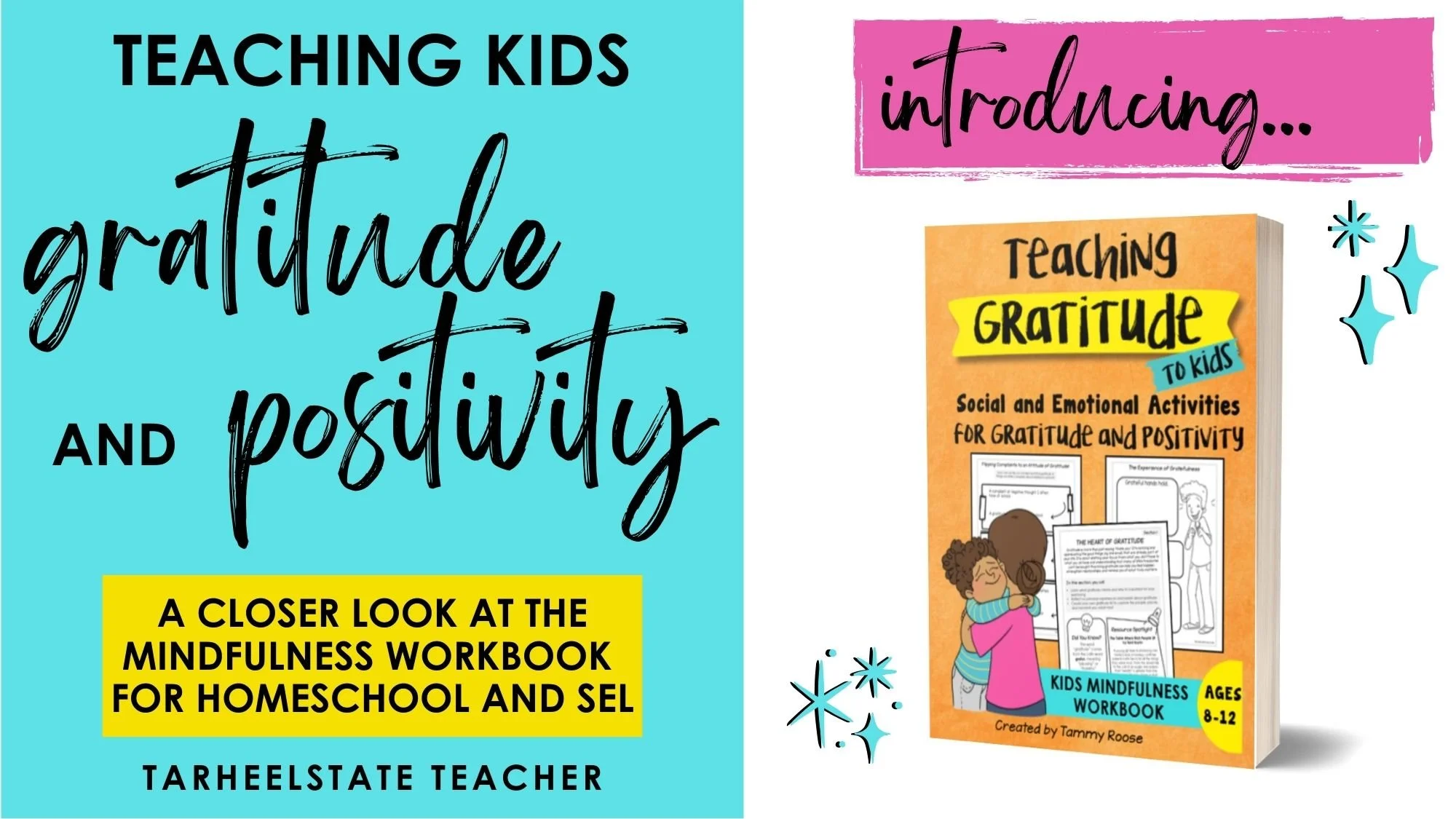
That’s why I created Teaching Gratitude to Kids — a social-emotional learning workbook designed to help children ages 8–12 build positivity, mindfulness, and everyday gratitude habits that last.
Through reflection, creative expression, and real-life connection, kids discover that gratitude is not a single moment. It is a mindset that grows with practice.
Note: Links to suggested items in this post are affiliate links. This means that I am a participant in the Amazon’s Affiliate advertising program that allows sites to earn from qualifying purchases. These links do not increase your cost. I only recommend things I’ve used and love! Read my full disclosure here.
Why Gratitude and Mindfulness Matter for Kids
Gratitude shapes far more than attitude. It influences emotional regulation, perspective, relationships, and overall happiness.
When children learn to notice everyday good moments and express appreciation, they begin to:
Feel more positive and hopeful
Build stronger friendships
Develop empathy and kindness
Handle disappointment with resilience
These are lifelong social-emotional skills that support both learning and well-being.
A Workbook That Helps Kids Practice Real Gratitude
This workbook moves beyond simply telling kids to “be thankful.” Instead, it guides them through meaningful reflection and real-world practice.
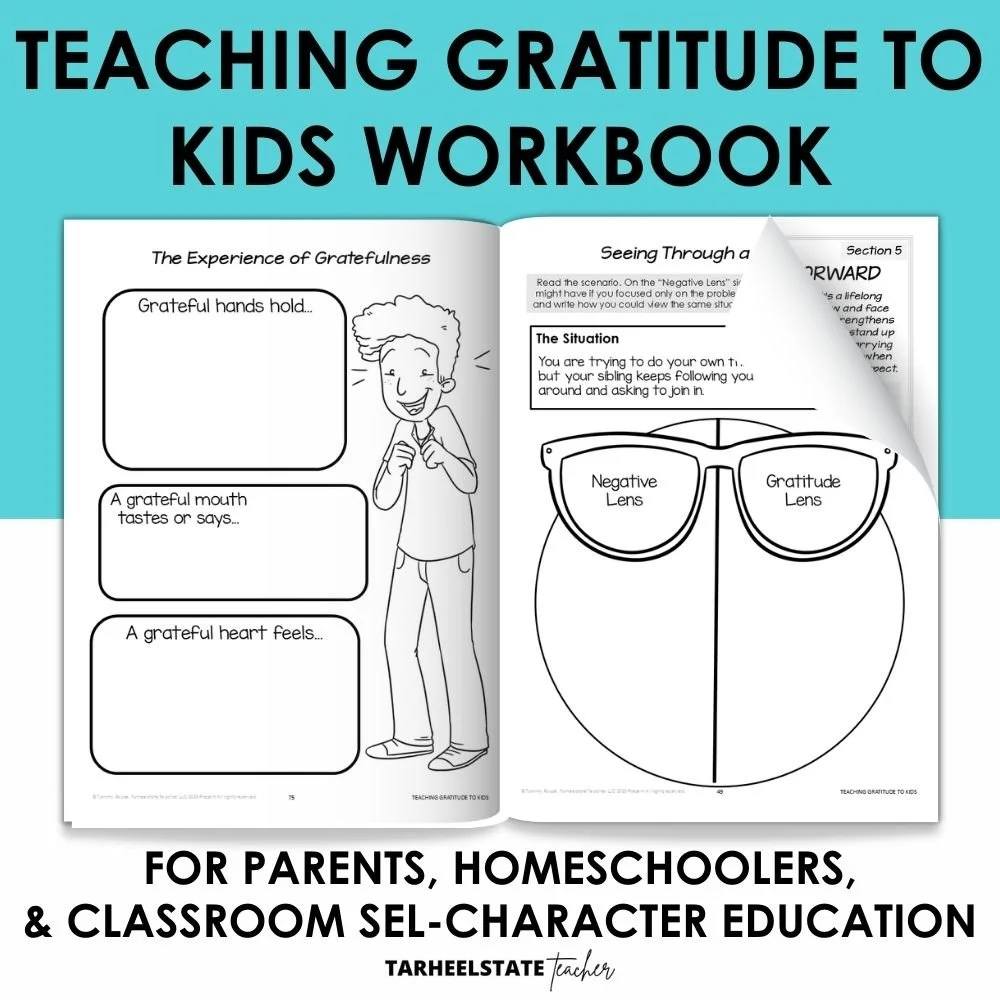
Children learn to:
Understand what gratitude truly means
Recognize types of everyday gratitude
Use mindfulness to notice positive moments
Express appreciation through words and actions
Reflect on challenges with a healthier perspective
Build daily gratitude habits that last
Through Teaching Gratitude to Kids, students move beyond talking about gratitude and begin incorporating it into their daily lives.
Inside the Workbook: What Kids Will Explore
The workbook is organized into five meaningful sections that gently build understanding, reflection, and daily gratitude practice.
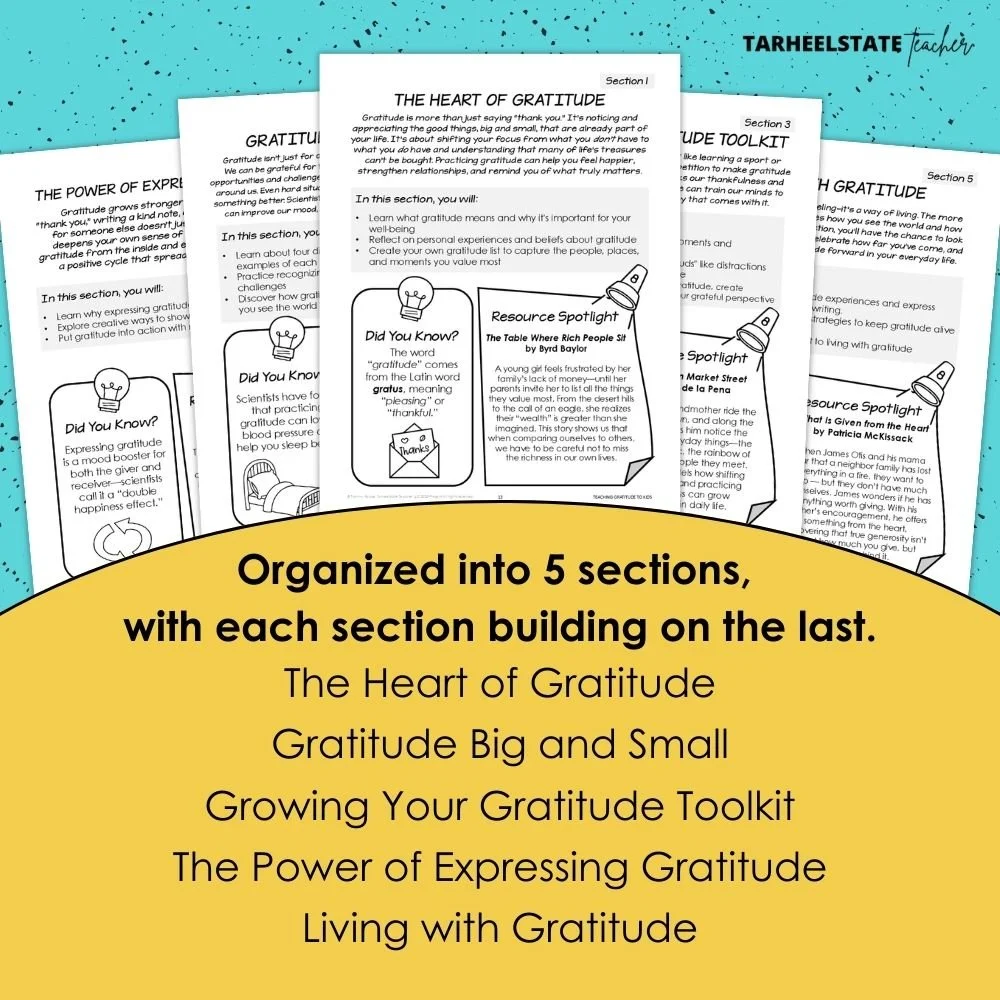
1 – THE HEART OF GRATITUDE
Students begin by exploring the meaning of gratitude, building vocabulary, and reflecting on their personal beliefs. They discover how gratitude appears in both big life events and small everyday moments.
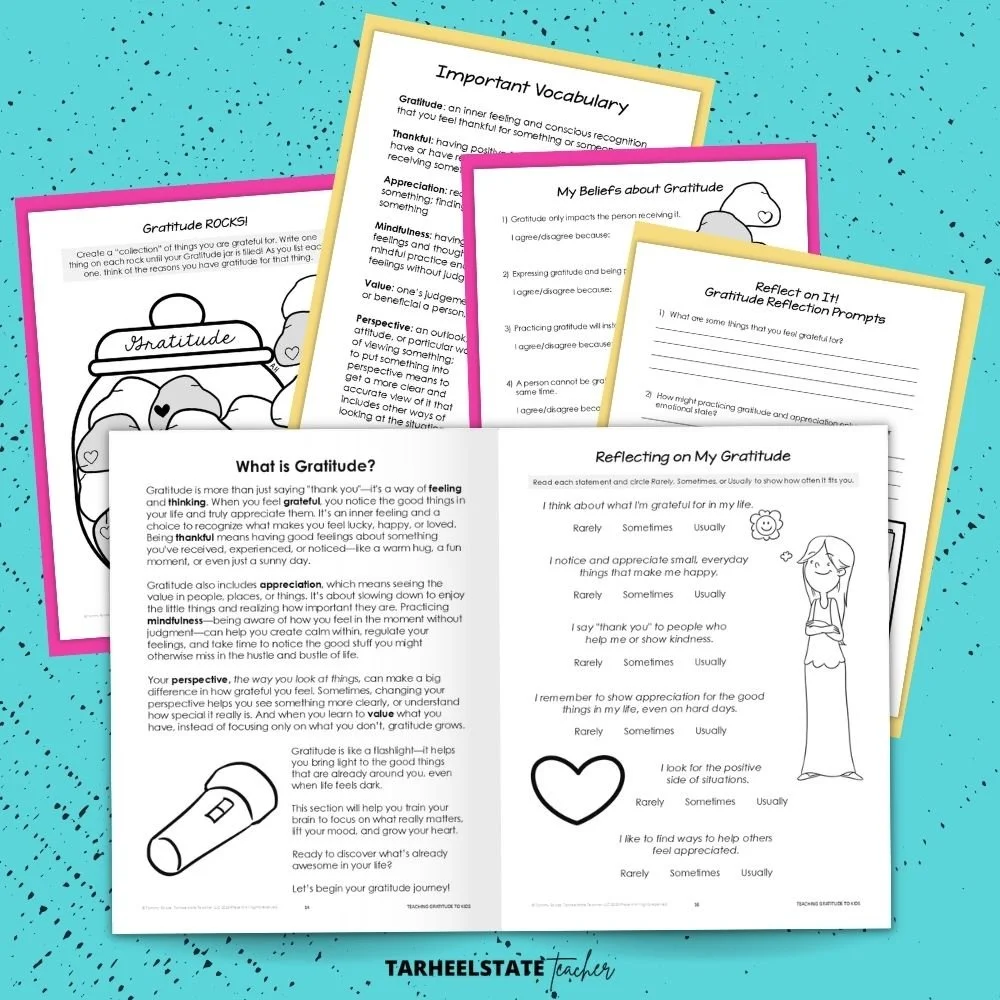
This foundation helps children recognize that gratitude is already part of their lives and can continue to grow.
2 – TYPES AND SCIENCE OF GRATITUDE
Children explore different forms of gratitude while learning how thankfulness affects happiness, mindset, and emotional health. They begin connecting gratitude to real experiences at school, home, and in friendships.
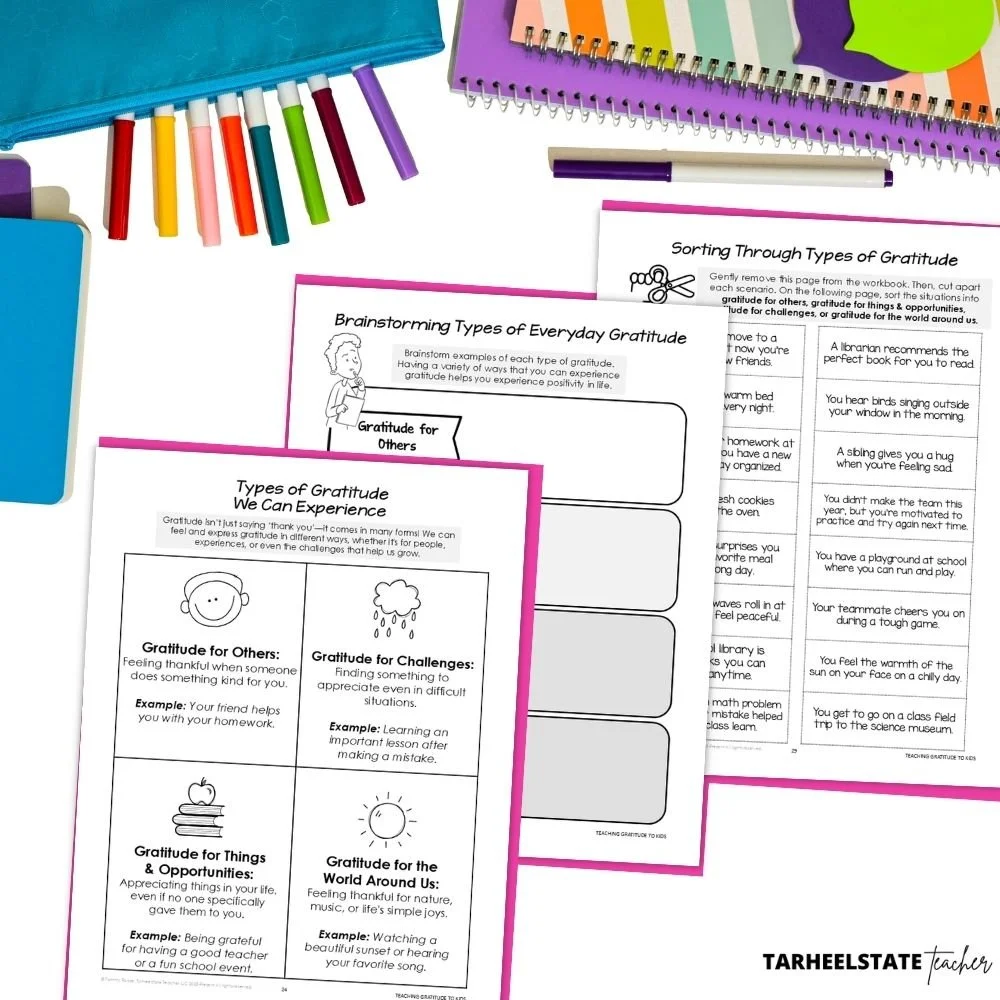
This section shows students that gratitude is both a feeling and a powerful life skill.
3 – GROWING A GRATITUDE AND MINDFULNESS TOOLKIT
Students practice mindfulness strategies that help clear distractions, shift perspective, and notice positive moments more easily. They learn to flip complaints into gratitude-focused thinking and view daily life through a more hopeful lens.
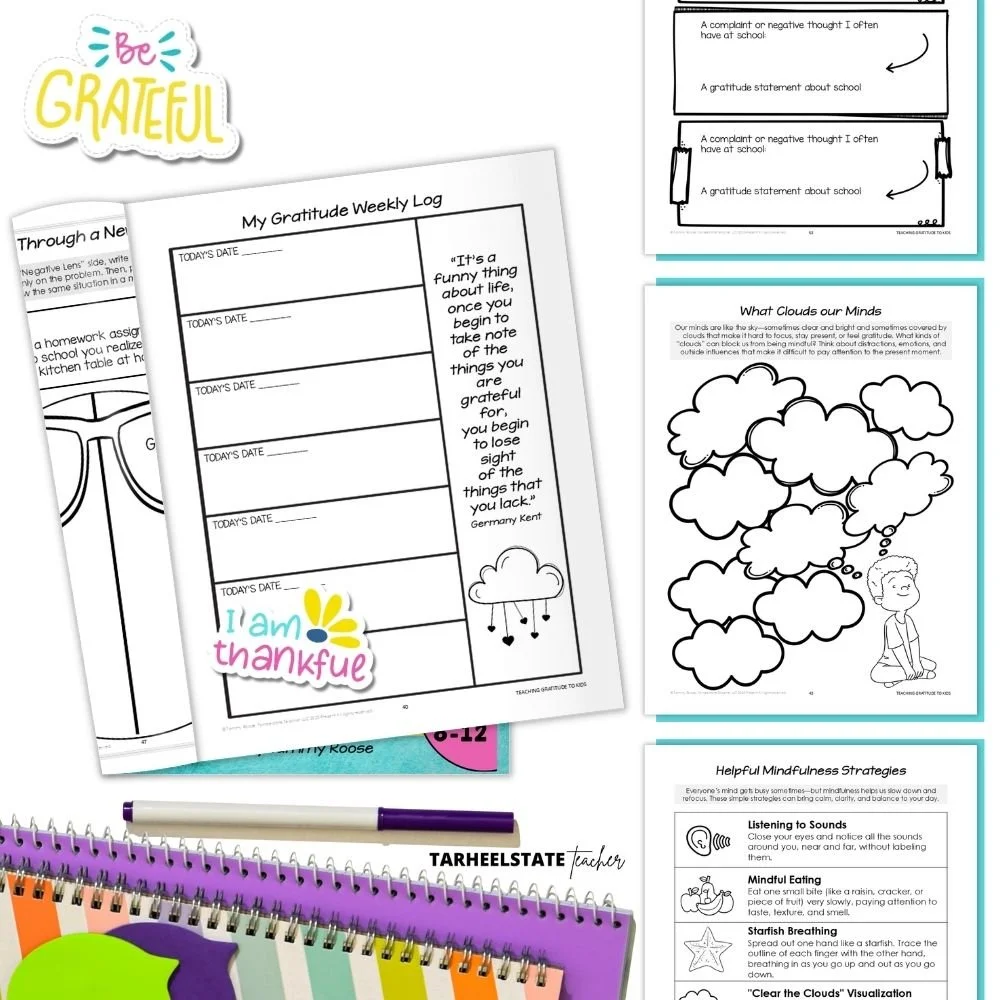
These tools support calmer thinking, stronger emotions, and healthier self-awareness.
4 – EXPRESSING GRATITUDE TO OTHERS
Children explore meaningful ways to show appreciation through thank-you notes, reflection activities, and real-life connection. They recognize people who inspire them and practice communicating gratitude with sincerity.
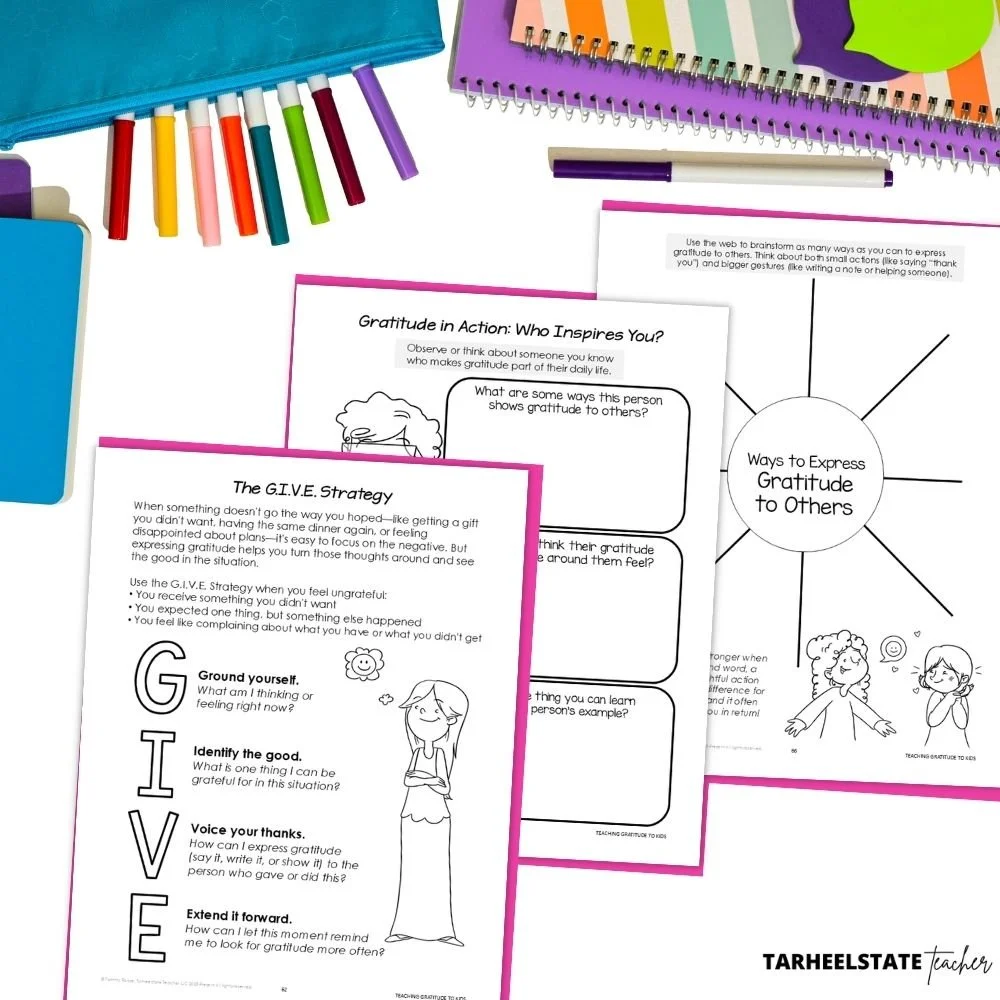
This section strengthens empathy, kindness, and relationships.
5 – LIVING WITH GRATITUDE EVERY DAY
The final section brings everything together through creativity, reflection, and personal goal setting.
Students celebrate growth and commit to daily gratitude habits they can carry forward.
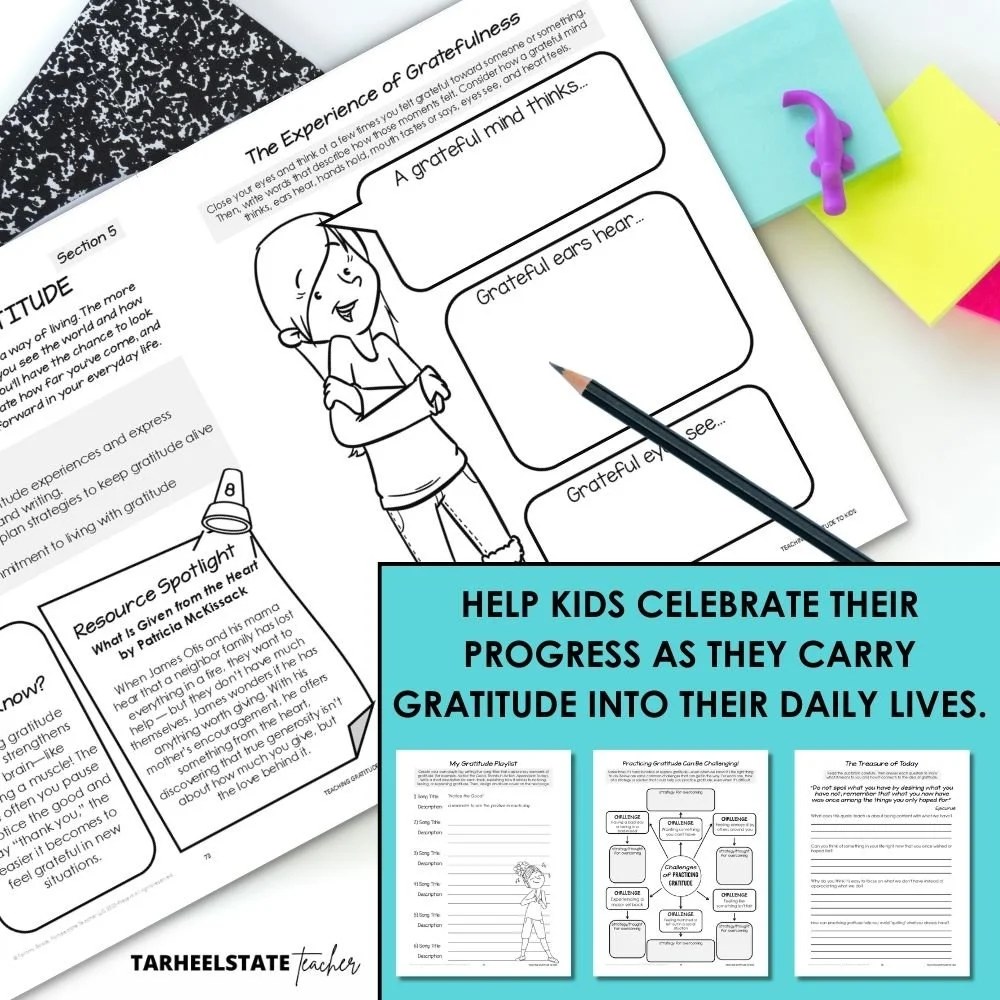
They leave with stronger positivity, deeper awareness, and tools for lifelong emotional well-being.
Stories That Bring Gratitude to Life
Each section connects learning to meaningful picture books that model thankfulness, perspective, and mindfulness in action. Here are three favorites:
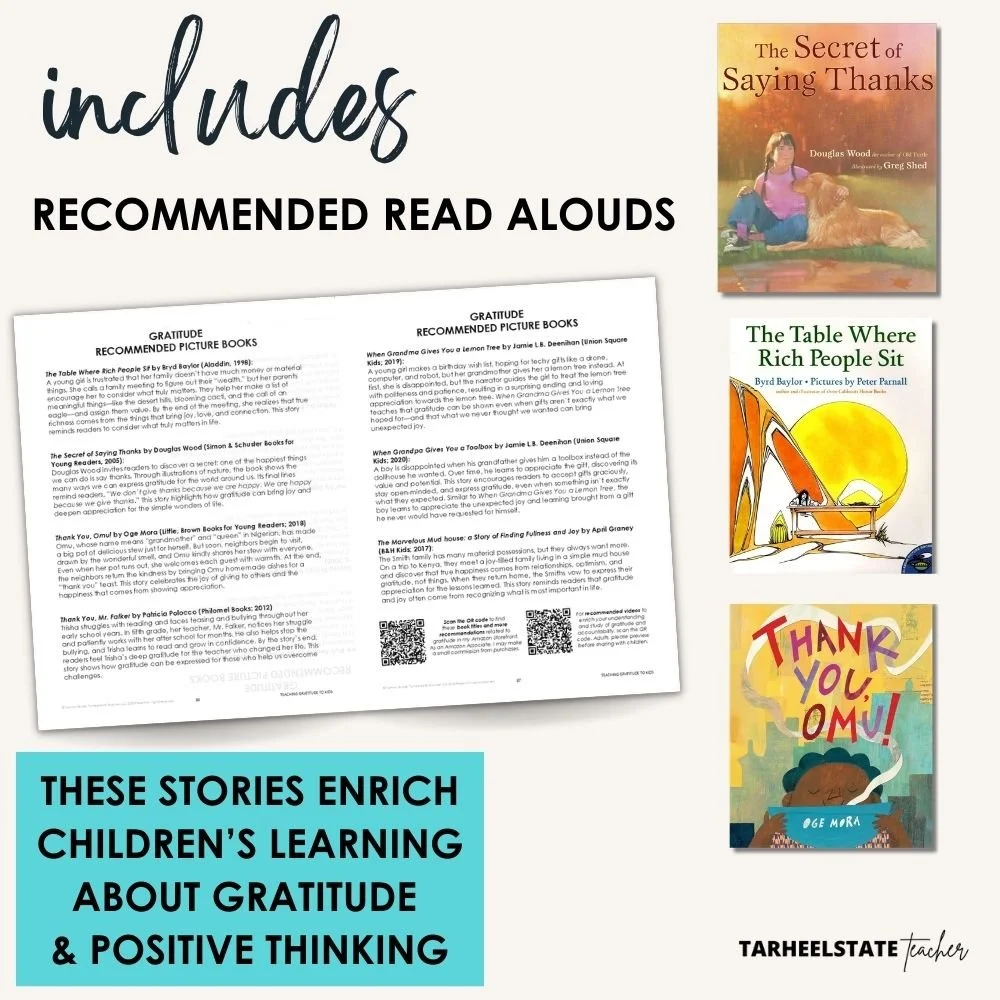
The Table Where Rich People Sit by Byrd Baylor
A young girl believes her family is poor until she discovers the richness of love, nature, and meaningful experiences. The story shows how gratitude changes perspective and reveals what truly matters.
The Secret of Saying Thanks by Douglas Wood
This story reminds readers that happiness grows from giving thanks. Appreciation becomes a pathway to joy rather than a response to it.
Last Stop on Market Street by Matt de la Peña
Through a simple bus ride, CJ learns to notice beauty, music, and kindness in ordinary moments. The story models how mindfulness helps gratitude grow in everyday life.
How to Use This Workbook
Whether you’re talking around the dinner table, guiding a homeschool morning, or creating meaningful classroom conversations, this gratitude workbook is designed to fit naturally into real life. For the strongest impact, explore the activities and reflections together three to four times each week, allowing children to build steady habits of noticing goodness, practicing mindfulness, and expressing appreciation.
FOR PARENTS & GUARDIANS
Look for simple ways to weave gratitude into everyday family rhythms:
Use My Gratitude Weekly Log or Gratitude in Action: Gratitude Tracker during bedtime routines to reflect on moments of thankfulness from the day.
Flip complaints into positive thinking together using Flipping Complaints to an Attitude of Gratitude when frustrations arise at home.
Help your child come up with lyrics to their song ideas from My Gratitude Playlist in the car and talk about using the power of music as a tool to flipping to an attitude of gratitude.
Write real notes of appreciation using A Note of Gratitude and deliver them to family members, neighbors, or friends.
The goal is steady growth, not perfection. Small daily moments of noticing goodness help gratitude become a natural way of seeing the world.
FOR HOMESCHOOL OR CO-OP EDUCATORS
This workbook supports meaningful reflection, discussion, and creative expression within flexible learning environments:
Begin the week by exploring Types of Gratitude or Ways Gratitude Improves Our Lives, then set aside time for journaling connections.
Practice mindfulness together through Clearing the Clouds and Helpful Mindfulness Strategies to strengthen focus and emotional awareness.
Encourage collaborative sharing with activities like The Thank-You Experiment or G.I.V.E. Strategy Opportunities for Gratitude.
Use creative projects such as My Gratitude Symbol, My Gratitude Album Cover, or Gratitude Rocks to deepen personal expression.
Whether used daily or as a focused character-building study, these experiences help children connect gratitude, mindfulness, and positive thinking in meaningful ways.
FOR CLASSROOM TEACHERS
Created from my SEL Gratitude Unit that support reflection and discussion, this workbook fits naturally into morning meetings, counseling lessons, or character education time.
Students explore how gratitude shapes thinking through activities like Seeing Through a New Lens, Growing Health Through Gratitude, and The Power of Expressing Gratitude. Reflection pages such as Personal Gratitude Post Reflection & Action Plan and Personal Gratitude Weekly Goal Reflection encourage goal setting and real-world application, while collaborative discussions around Everyday Gratitude and Ways to Express Gratitude to Others help strengthen classroom community.
These lessons nurture perspective-taking, emotional awareness, and positive connection—helping classrooms grow into spaces where appreciation, kindness, and mindfulness are practiced every day.
NOTE: The digital download version on TPT includes printable journals, lesson pacing support, and presentation materials. Consider which format best supports your teaching environment.
INTERESTED IN MULTIPLE COPIES?
Contact Tammy at tarheelstateteacher(at)gmail(.)com for school or district orders.
Why Families and Teachers Value Gratitude-Focused SEL
Adults consistently share that gratitude practice helps children:
Feel happier and more hopeful
Build empathy and kindness
Strengthen friendships
Handle disappointment with resilience
Develop a positive outlook on life
Gratitude looks beyond challenges and helps children discover goodness alongside them.
Feedback from Classroom Teachers
⭐⭐⭐⭐⭐ An excellent, easy-to-use resource that adds value to any classroom and saves teachers valuable prep time.
⭐⭐⭐⭐⭐ This resource was exactly what I needed! The materials were clear, well-organized, and easy to use in my classroom. My students were engaged and enjoyed the activities, and I appreciated how it saved me valuable planning time. Overall, a high-quality product that I would definitely recommend to other teachers. Thank you!
⭐⭐⭐⭐⭐ I am using this as a unit on "Attitude of Gratitude" for my 4th graders. FANTASTIC resource with a great student journal and PPT slide prompts for students to reflect on specific events in their life where they felt gratitude. It's all about changing the mindset to a positive one!
Start Growing Gratitude Today
If you’re looking for meaningful gratitude activities, mindfulness reflection, or a positivity-focused SEL workbook, Teaching Gratitude to Kids gives children practical tools they can use right away.
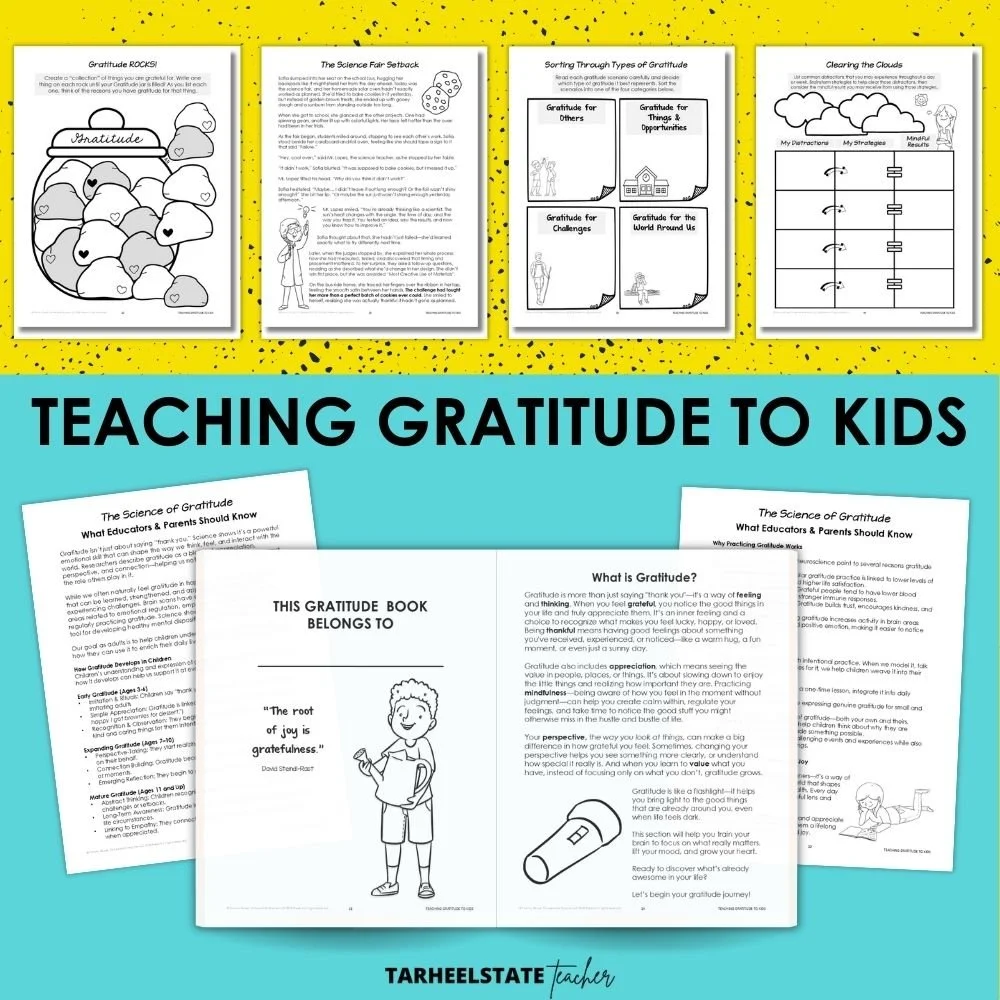
This gratitude workbook helps kids notice the good, express appreciation, and build lasting happiness—one small moment at a time.