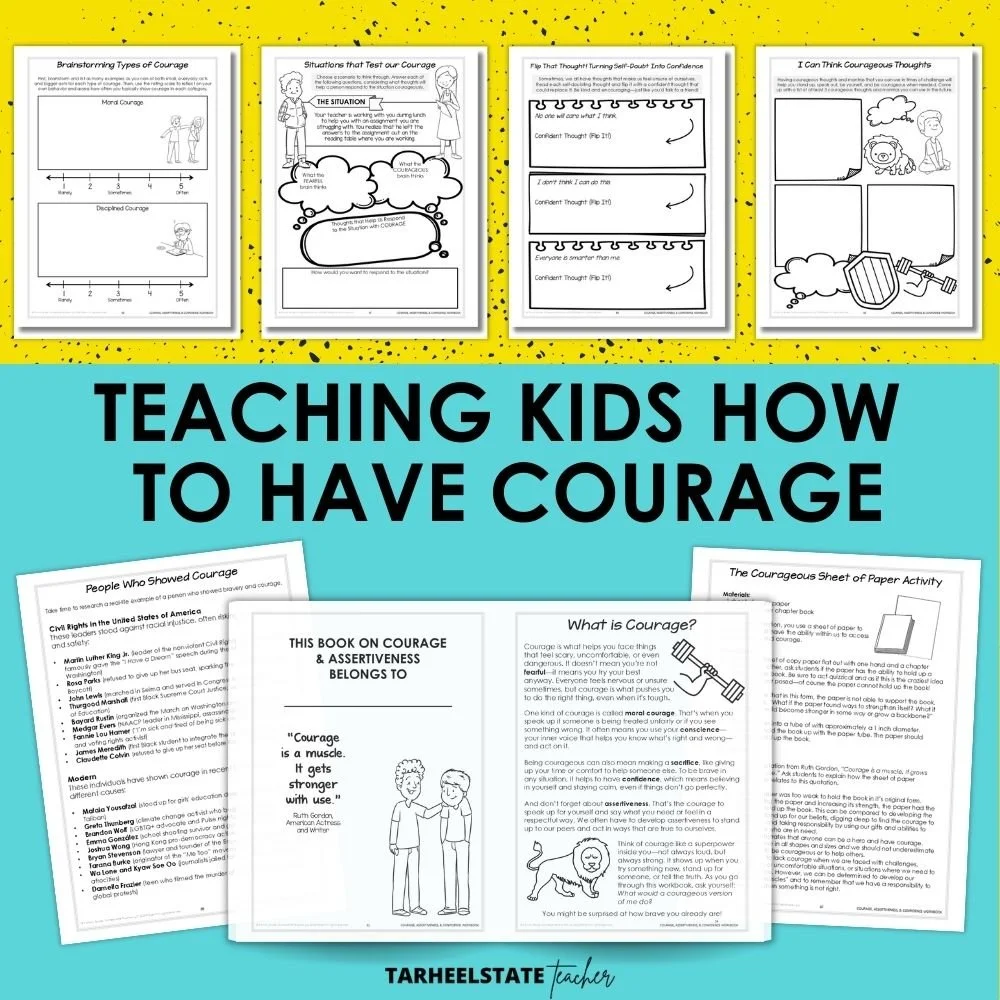
Helping Kids Build Courage and Confidence: A Courage & Assertiveness Workbook for Ages 8–12
Kids face brave moments every single day, like speaking up in class, trying something new, standing up for a friend, or telling the truth when it’s hard.
But courage doesn’t always feel big or bold in the moment. Sometimes it feels like fear, doubt, or the quiet question, “What if I can’t?”
Many children want to be confident and brave, yet struggle with self-doubt, peer pressure, or uncertainty about how to respond in challenging situations. Courage is not something kids either have or don’t have. It is a skill that can be taught, practiced, and strengthened over time.
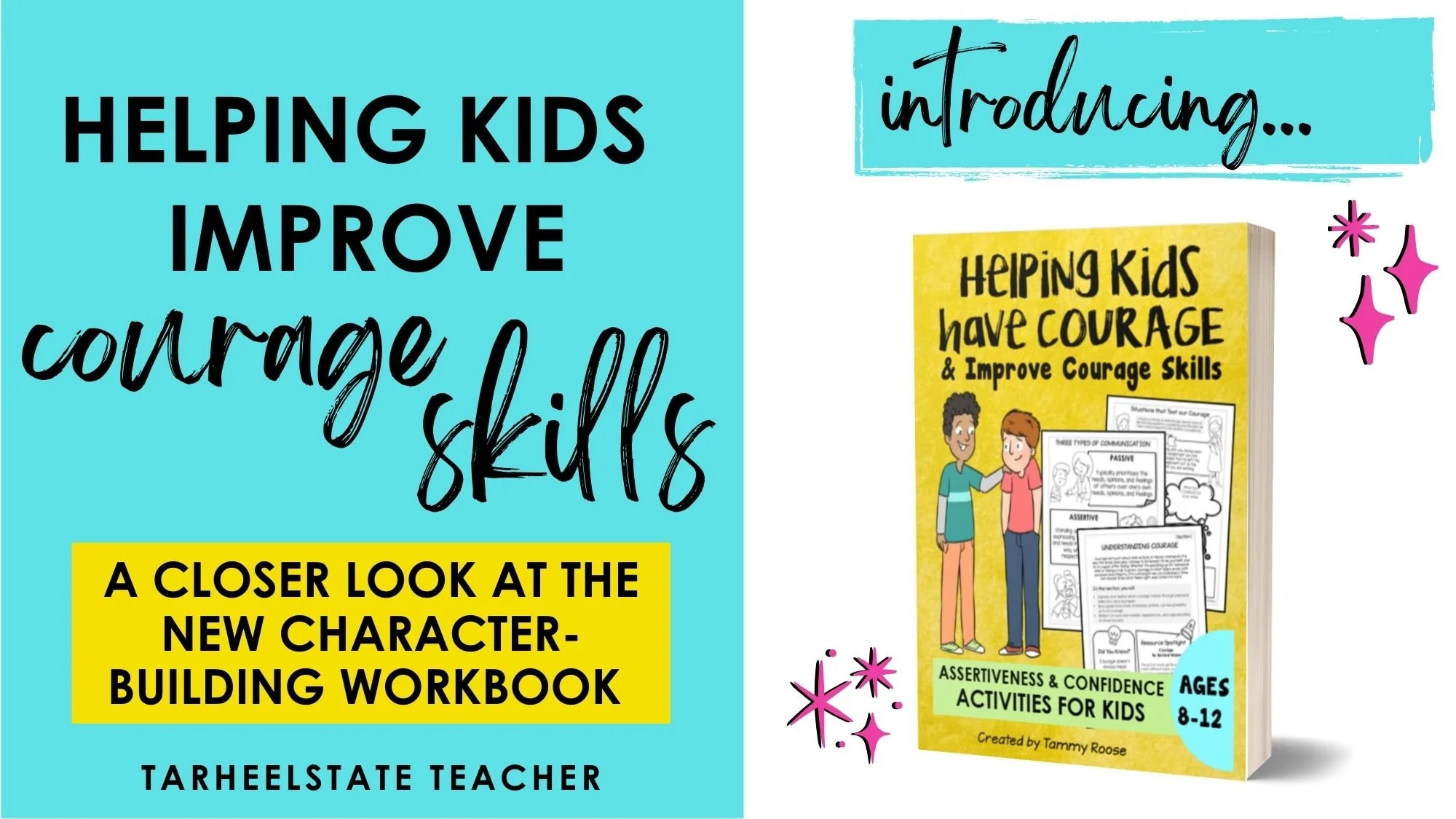
That’s why I created Helping Kids Have Courage and Improve Courage Skills — a social-emotional learning workbook designed to help children ages 8–12 build confidence, develop assertiveness skills, and take brave steps in everyday life.
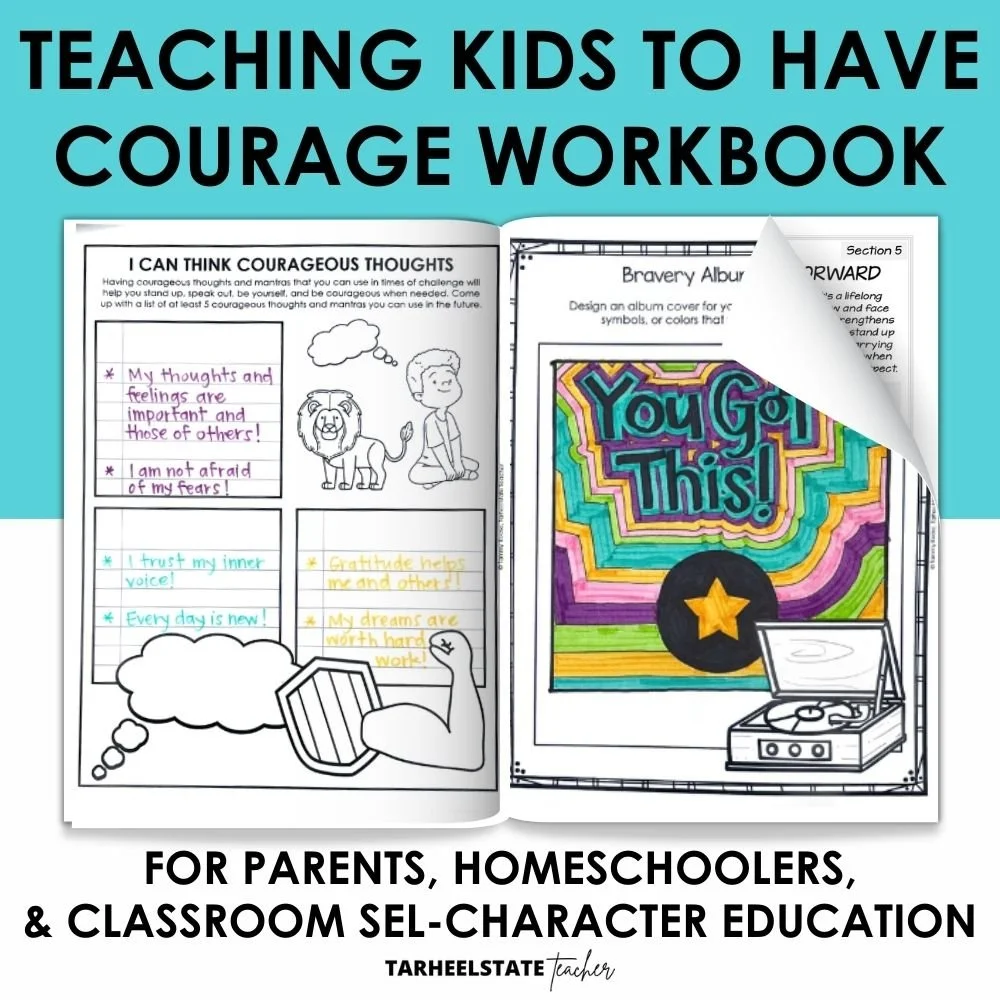
Through reflection, discussion, and meaningful activities, kids learn that courage is not about being fearless. It is about acting with strength, honesty, and confidence even when something feels hard.
Note: Links to suggested items in this post are affiliate links. This means that I am a participant in the Amazon’s Affiliate advertising program that allows sites to earn from qualifying purchases. These links do not increase your cost. I only recommend things I’ve used and love! Read my full disclosure here.
Why Courage and Assertiveness Matter for Kids
Learning to be brave goes far beyond dramatic, heroic moments. For children, courage often shows up in small but powerful ways:
Asking for help
Trying again after failure
Speaking up respectfully
Making choices that match their values
When kids build assertiveness skills and understand what assertiveness means, they begin to trust their voices, stand up for themselves and others, and handle peer pressure with confidence. These are lifelong social-emotional skills that shape friendships, learning, leadership, and personal identity.
A Workbook That Helps Kids Practice Real-Life Courage
This workbook moves beyond simply talking about bravery. It guides children through understanding courage, strengthening confidence, and applying assertive communication in real situations.
Inside, kids will learn how to:
Recognize different types of courage in everyday life
Reflect on fears, beliefs, and opportunities to be brave
Build confidence and manage self-doubt
Practice assertive communication instead of passive or aggressive responses
Stand strong in values, friendships, and peer pressure situations
Set meaningful goals for living with courage each day
Through Helping Kids Have Courage, children don’t just define courage, they begin to live it with confidence.
Inside the Workbook: What Kids Will Learn
This workbook is organized into guided sections that gradually build courage, confidence, and assertiveness from the inside out.
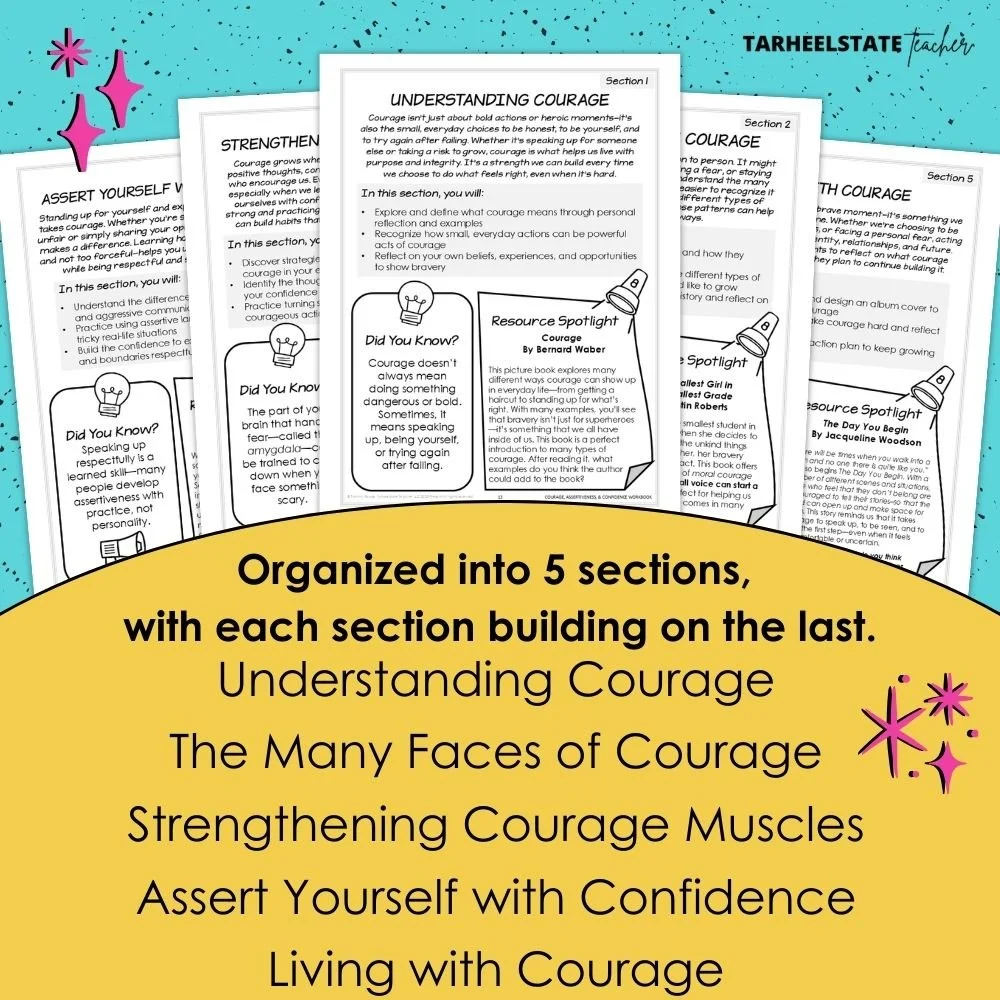
1 – UNDERSTANDING COURAGE
Kids begin by exploring what courage really means and how bravery appears in both big and small moments. Through reflection, sorting activities, and personal connections, they discover that courage is already part of their everyday lives.
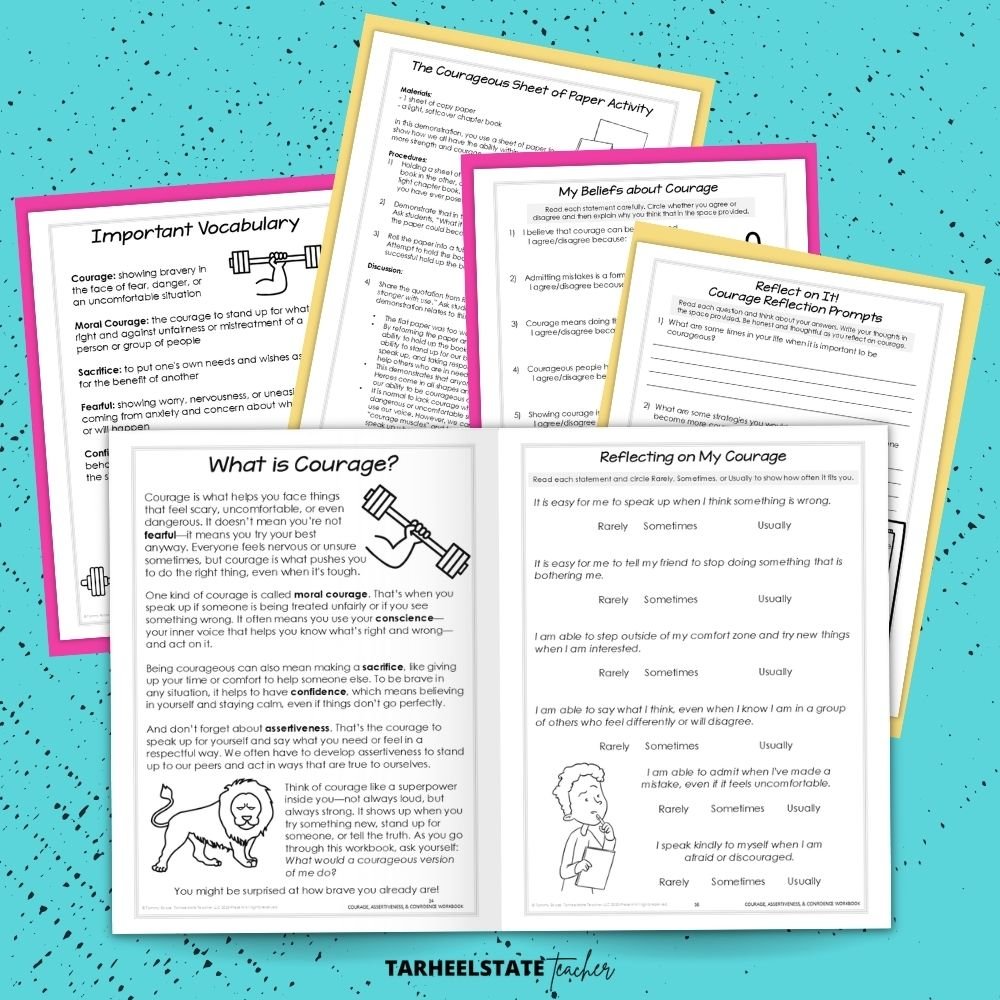
This foundation helps children recognize their own brave choices and see courage as something reachable and real, not just heroic or dramatic.
2 – TYPES OF COURAGE IN ACTION
Children expand their understanding by exploring the many forms courage can take, including moral, intellectual, empathetic, and disciplined courage. They begin noticing how bravery shows up in school, friendships, learning, and personal decisions.
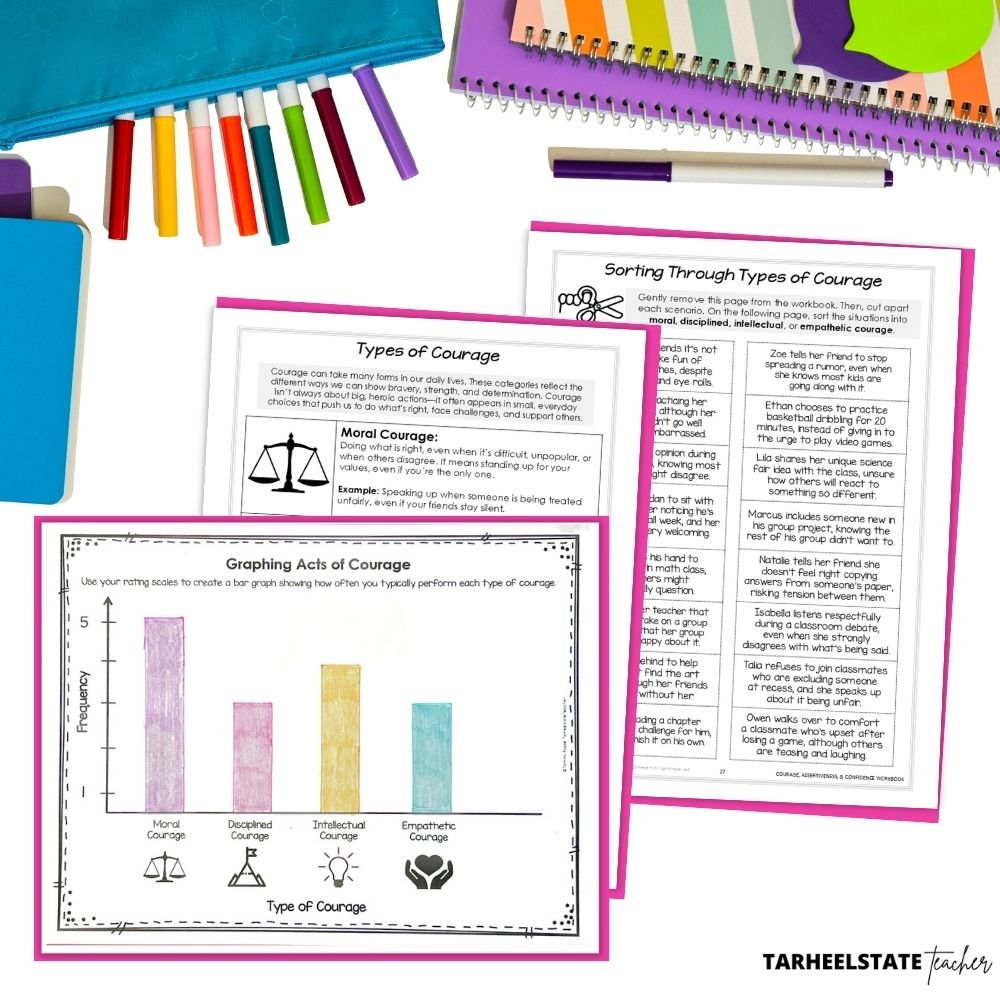
This section helps students see that courage is not one-size-fits-all. Everyone can grow brave in their own unique way.
3 – STRENGTHENING COURAGE MUSCLES
With a deeper understanding in place, kids begin building confidence through mindset shifts, reflection, and intentional practice. They explore self-doubt, learn to reframe discouraging thoughts, and develop inner strength that supports brave action.
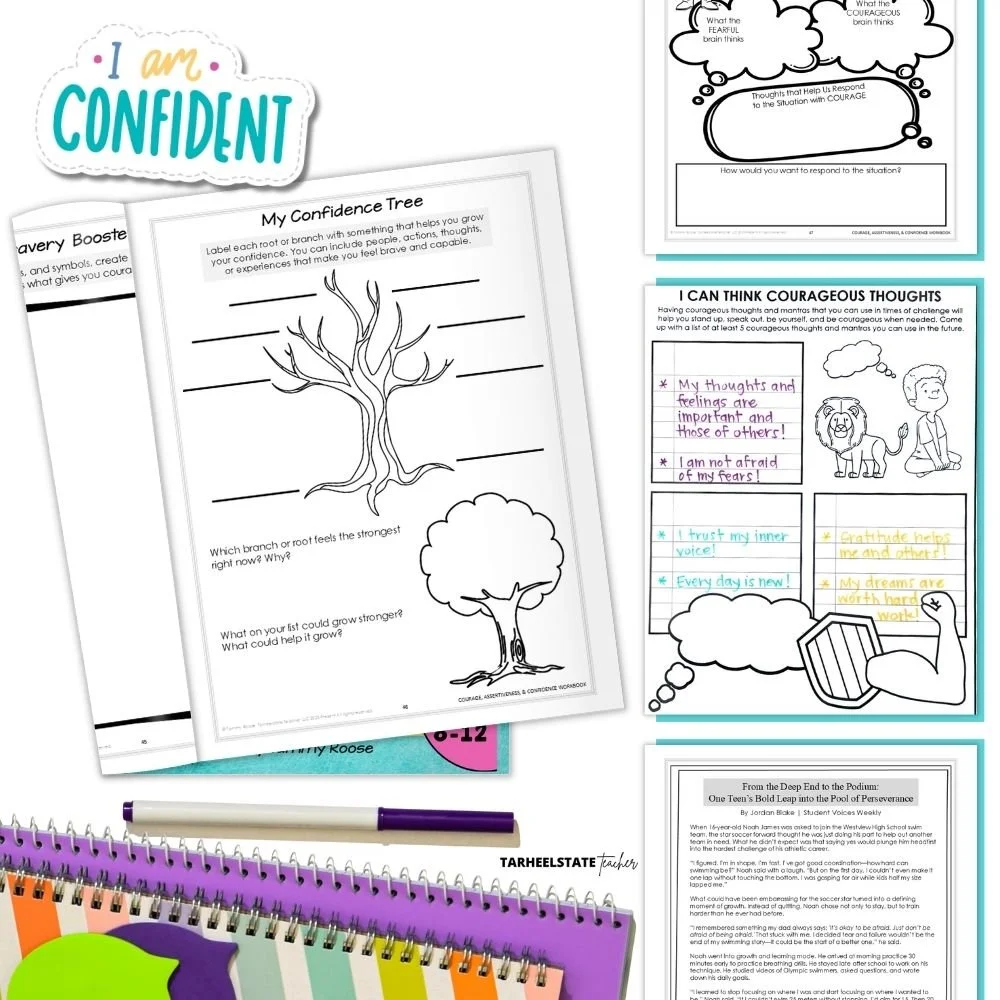
These activities help children understand that confidence grows through practice, persistence, and positive thinking.
4 – ASSERTIVENESS AND CONFIDENT COMMUNICATION
Courage often requires using your voice. In this section, kids learn the difference between passive, aggressive, and assertive communication and practice responding to real-life social situations with clarity and respect.
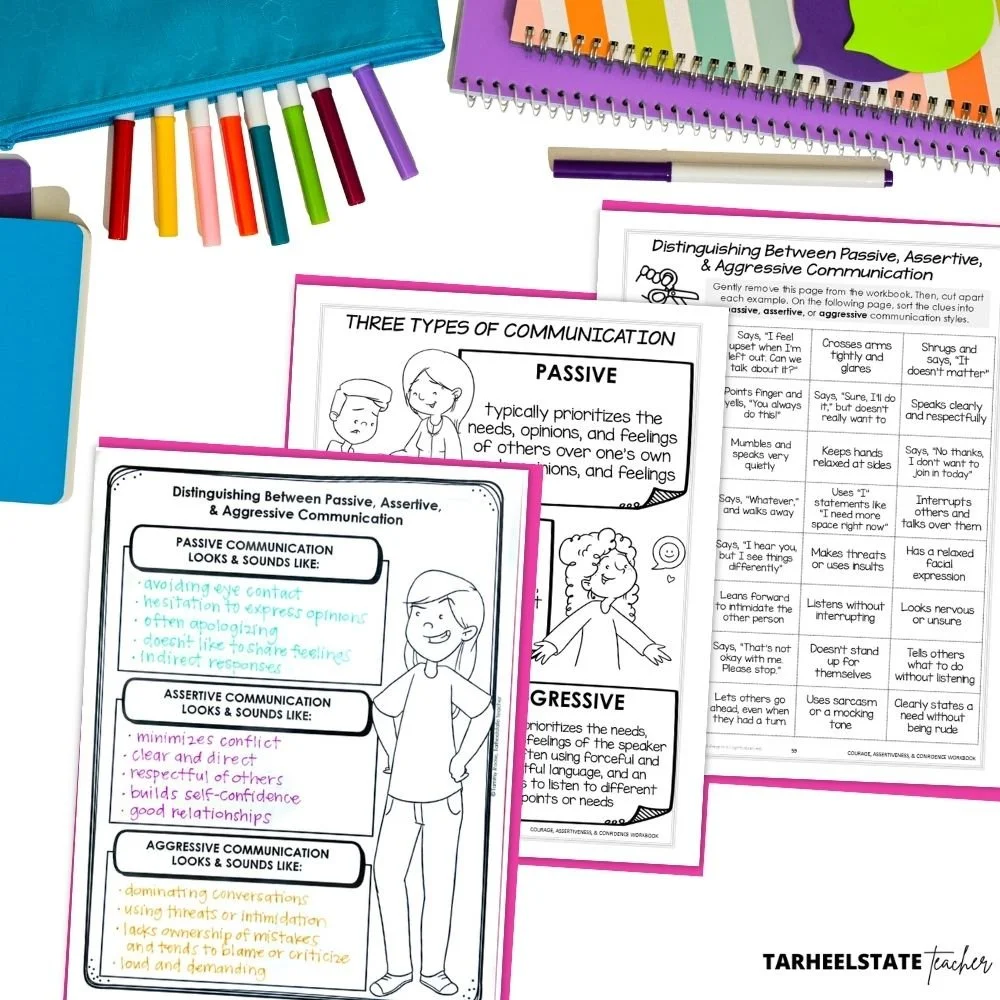
By developing assertiveness skills, children learn how to:
Speak up kindly
Set boundaries
Handle peer pressure
Express thoughts with confidence
These are essential life skills that support healthy relationships and self-respect.
5 – LIVING WITH COURAGE EVERY DAY
The final section brings everything together through reflection, creativity, and personal goal setting. Kids celebrate their growth, imagine future brave choices, and commit to living with courage beyond the workbook.
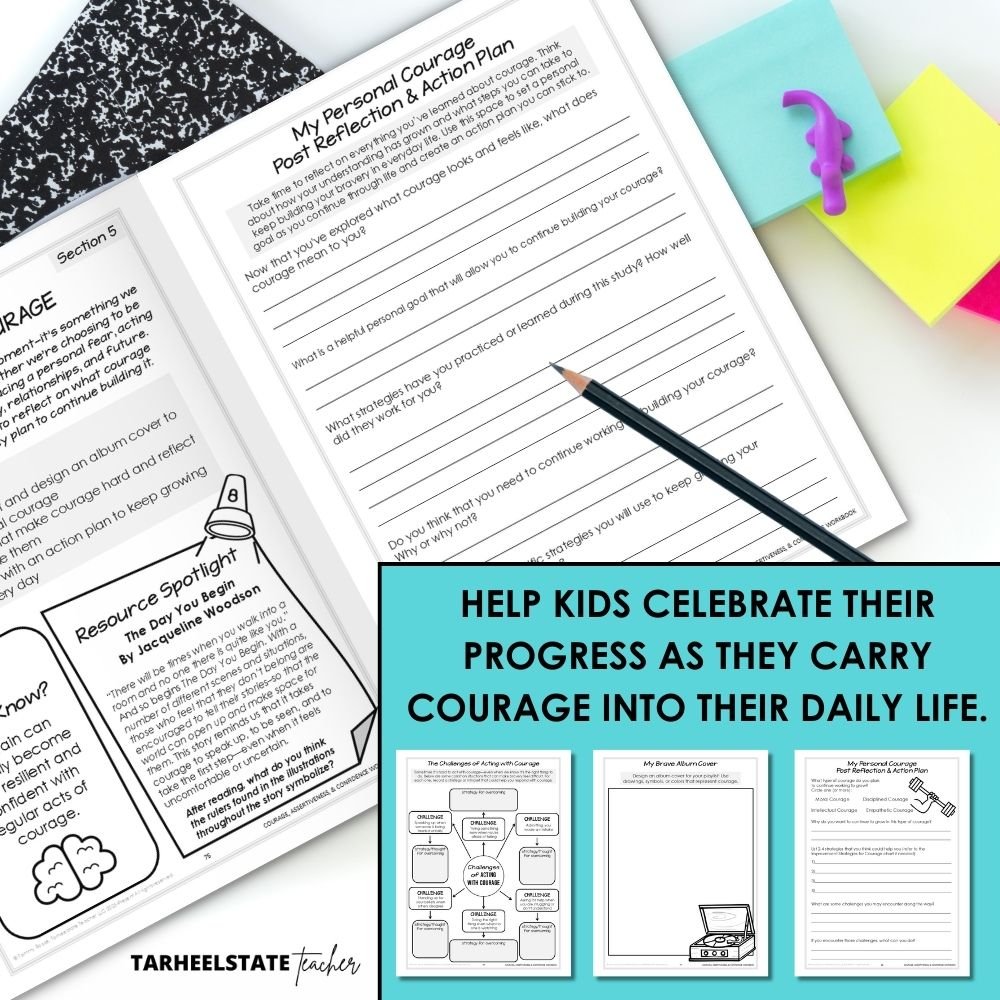
They leave with stronger confidence, clearer values, and the belief that small brave steps can change everything.
Stories That Help Courage Come to Life
Each section is supported by meaningful picture books that show bravery, confidence, and assertiveness in action.
At the back of the workbook, you’ll also find an extended list of books about courage and bravery for continued learning at home or in the classroom.
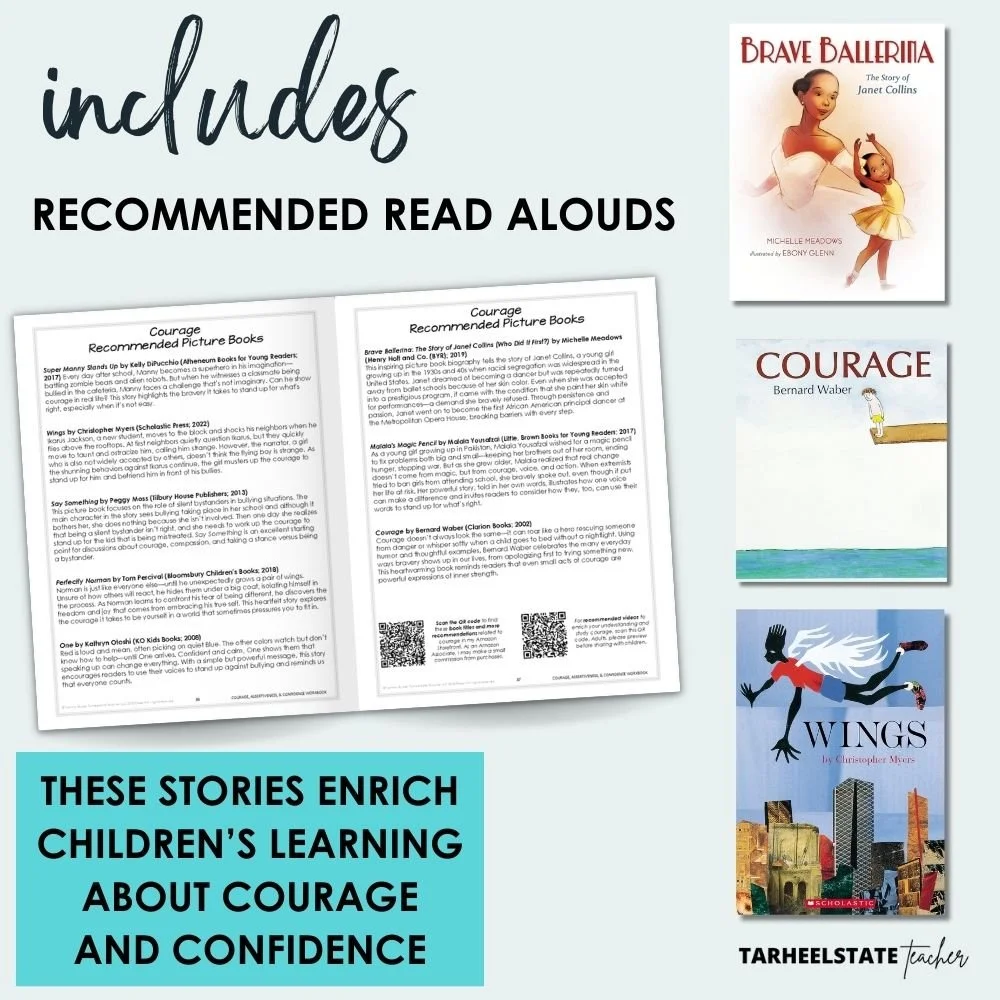
Here are three powerful favorites:
Courage by Bernard Waber — A thoughtful look at the many everyday ways bravery appears, reminding readers that courage lives inside ordinary moments and ordinary people.
The Smallest Girl in the Smallest Grade by Justin Roberts — A moving example of moral courage that shows how one quiet voice speaking up can create meaningful change.
Say Something by Peggy Moss — An encouraging story about assertiveness and the importance of using your voice when something is wrong, proving that one brave choice can make a difference.
How to Use This Workbook
Whether you’re talking at the kitchen table, teaching in a homeschool setting, or guiding a classroom community, this workbook is designed to be flexible, meaningful, and easy to use.
For best results, engage with the activities and conversations three to four times per week to build momentum and deeper reflection.
FOR PARENTS AND GUARDIANS
Try weaving courage practice into everyday routines:
Talk about brave moments from the day during meals or bedtime
Celebrate effort, honesty, and speaking up
Use reflection prompts to discuss fears and confidence
Encourage small brave choices at home, school, or with friends
The goal is not perfection. It is helping your child grow stronger, more confident, and more willing to try.
FOR HOMESCHOOL OR CO-OP EDUCATORS
Pair courage activities with read-aloud discussions
Use reflection pages for journaling or narration
Practice assertiveness through role-play and group discussion
Connect bravery themes to character education or SEL studies
Encourage students to share real-life courageous choices
This workbook supports meaningful conversations about values, confidence, and personal growth within a supportive learning community.
FOR CLASSROOM TEACHERS
Created based on my SEL Morning Meeting Unit for Courage, this resource fits naturally into:
Morning meetings
Counseling sessions
Social-emotional learning blocks
Classroom community discussions
Students practice communication, confidence, empathy, and resilience while building a classroom culture where voices are heard and courage is encouraged.
NOTE: The digital download version on TPT includes lesson plans, student journals, bulletin board materials, and Google Slides for easy classroom implementation.
INTERESTED IN MULTIPLE COPIES?
Contact Tammy at tarheelstateteacher(at)gmail(.)com for school or district orders.
Why Families and Teachers Love This Courage Workbook
This resource helps kids:
Build real confidence and assertiveness
Speak up respectfully and set boundaries
Face fears with support and strategies
Grow resilience after mistakes or setbacks
Believe in their ability to be brave
Because courage means facing fear and taking the next brave step anyway.
feedback for my COURAGE unit from classroom teachers
⭐⭐⭐⭐⭐ Great ideas for teaching the important virtue of COURAGE!
⭐⭐⭐⭐⭐ I used this resource for my morning meeting with students. It has many wonderful ideas and resources that made planning easy. Thank you!
⭐⭐⭐⭐⭐ This is Exactly what I was looking for! Thank you for making such an amazing resource.
Start Building Courage Today
Whether you’re searching for courage activities for students, meaningful assertiveness worksheets, or a character-building SEL resource, Helping Kids Have Courage and Improve Courage Skills gives children the tools to grow brave, confident, and strong from the inside out.