Teaching students conflict resolution skills and providing them with time to practice these steps in various scenarios is an excellent way to support their social-emotional learning and growth. It’s important for upper elementary students to learn effective conflict resolution skills and to understand the value and power of handling conflicts constructively.
By making time to teach and practice conflict resolution skills, we can help students develop into confident, empathetic, and well-adjusted individuals. These conflict resolution activities and lesson ideas include strategies to help students not only resolve disputes peacefully but also build strong, positive relationships through understanding and cooperation.
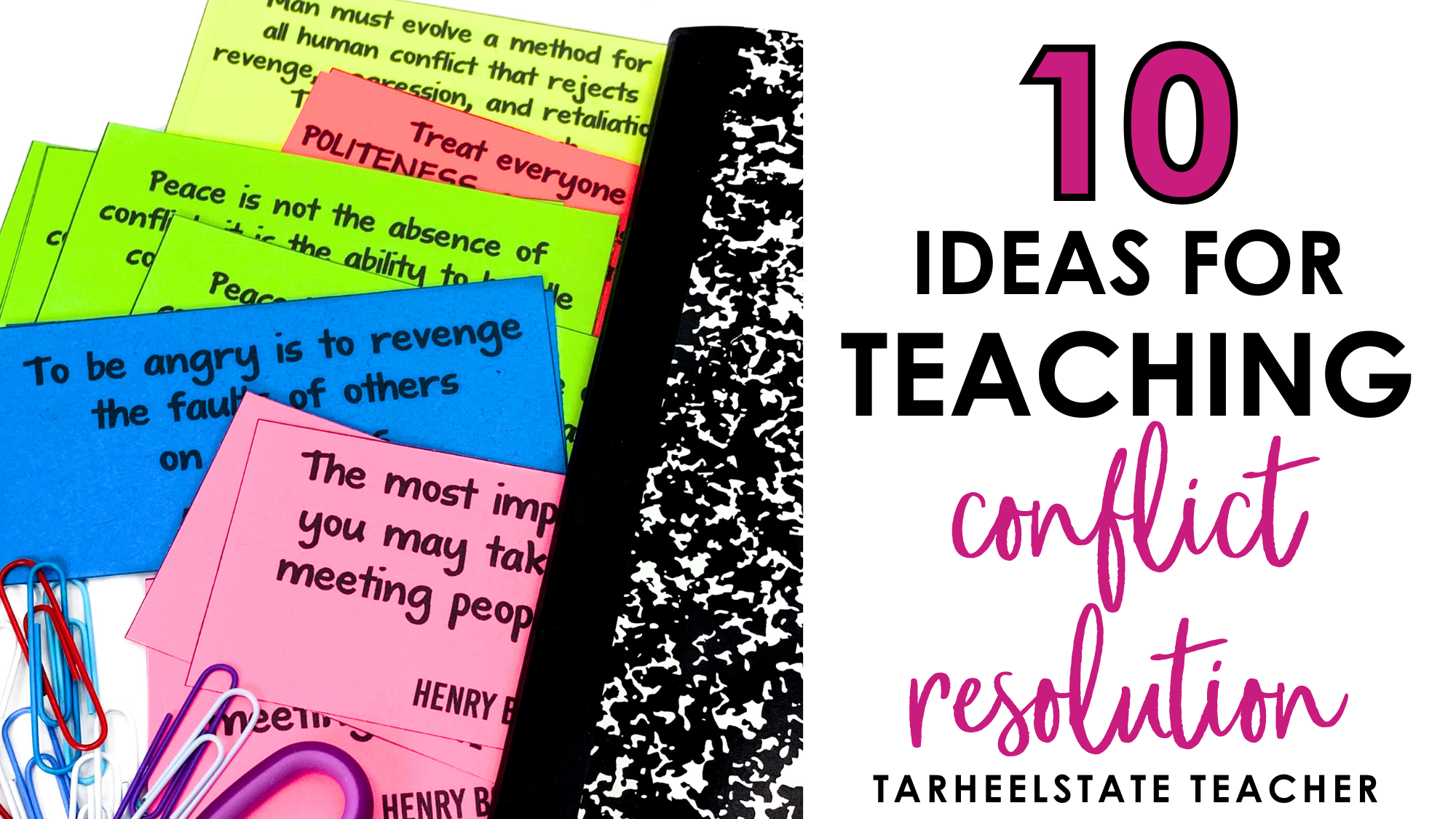
 You can do each of these suggested conflict resolution activities for students with a reflection journal and materials you have around the classroom, but if you want some of the work done for you, you can check out my full Conflict Resolution and Compromise SEL unit, complete with lesson plans that make it super easy to implement and enjoy!
1) TEACH THE VOCABULARY OF CONFLICT
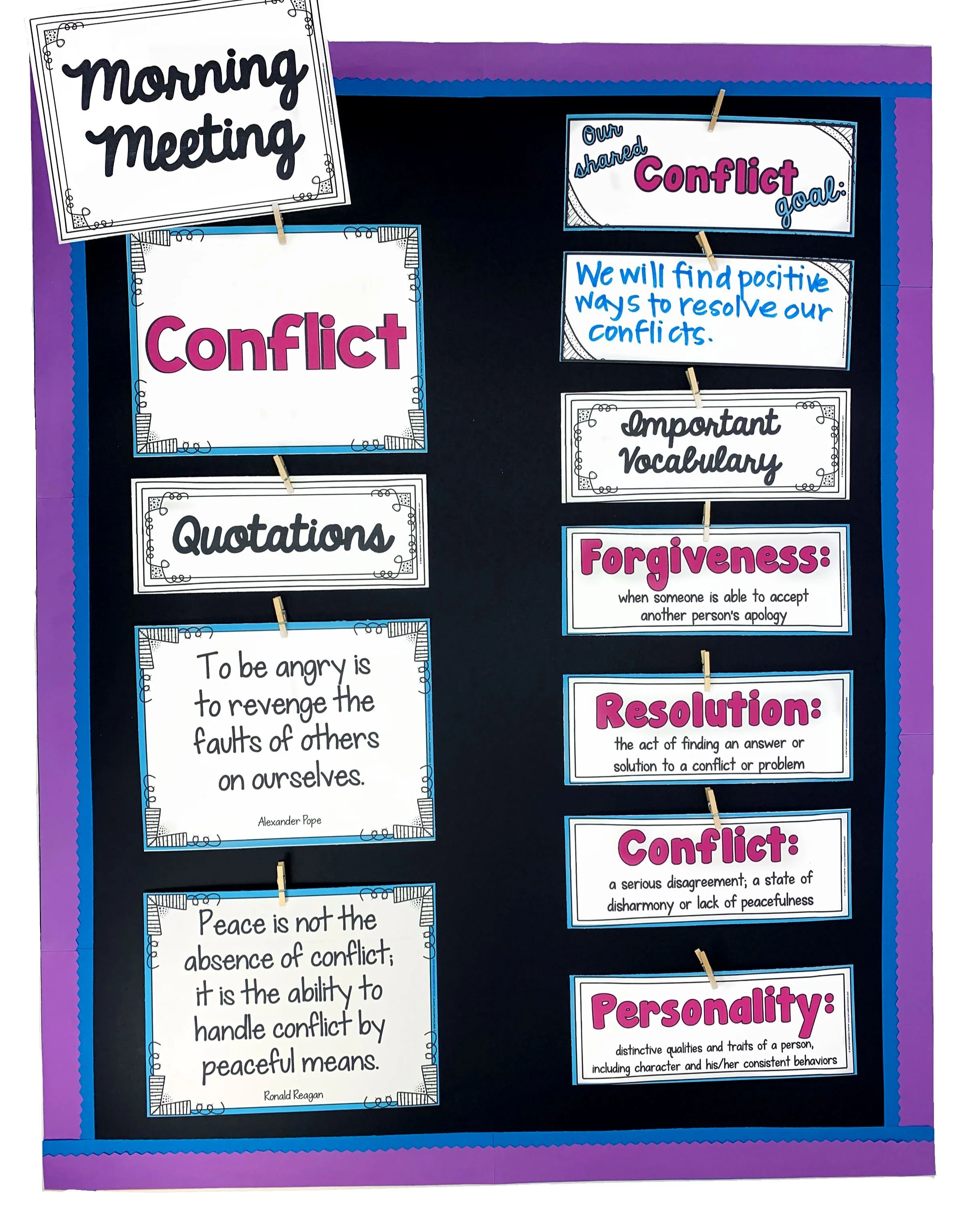
When teaching my SEL Conflict Resolution unit, I am sure to give students the vocabulary necessary to learn about the topic and experience it in deep and meaningful ways. I provide them with the definitions of conflict, resolution, forgiveness, compromise, and personality.
To define conflict resolution for my students, I first define conflict as “a serious disagreement; a state of disharmony or lack of peacefulness, and I define resolution as “the act of finding an answer or solution to a conflict or problem.” So, conflict resolution is “the act of finding an answer or solution to a serious disagreement, conflict, or problem.”
🌟 Through SEL-focused Morning Meetings, I display a bulletin board of the topic we are learning about. This bulletin board contains key vocabulary, related quotations, and anchor charts that we develop together throughout the unit.
2) PROVIDE SELF-REFLECTION OPPORTUNITIES
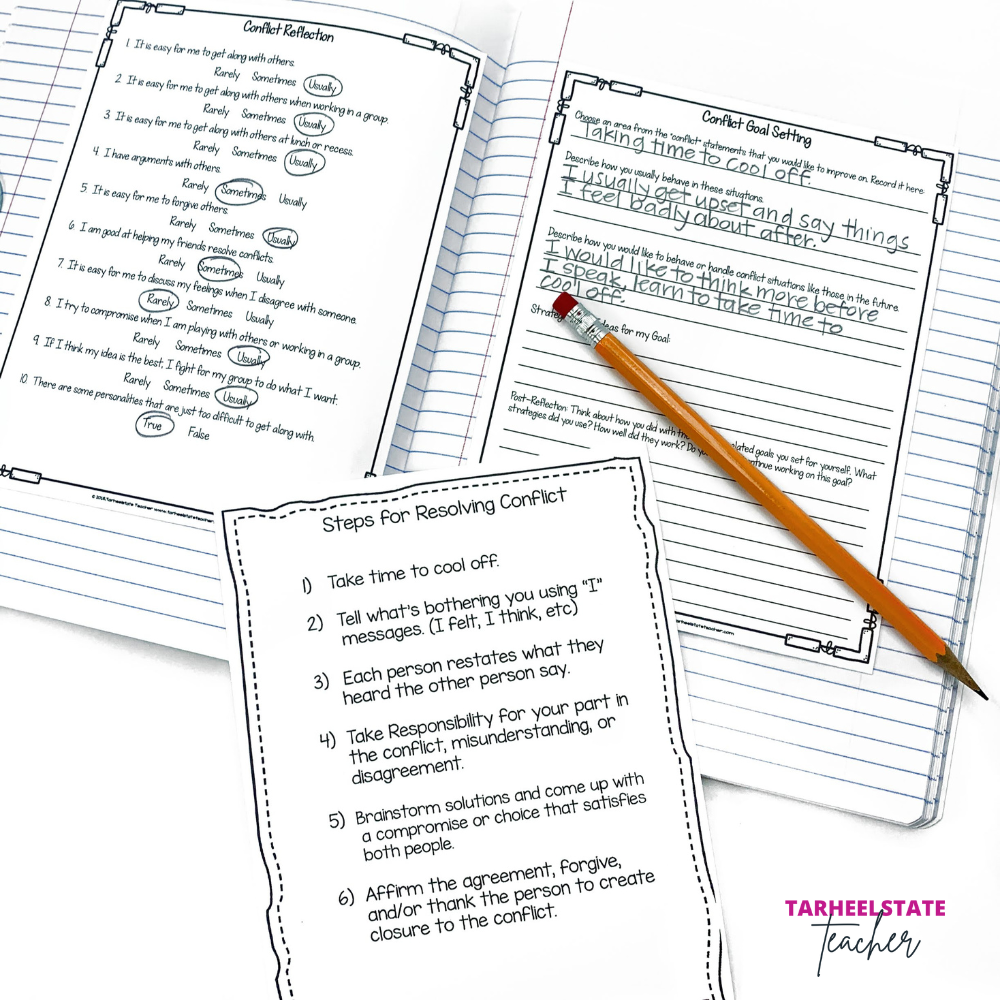
In my SEL Conflict Resolution Morning Meeting Unit, I like to use self-assessments and questionnaires that encourage students to think about their relationship with conflict and how they typically choose to manage it. We also take time to set both personal and whole-class goals relating to conflict management skills.
3) TEACH THE 5 CONFLICT RESOLUTION STYLES
Teaching students that not all conflicts hold the same importance and that different resolution styles may be more effective depending on the situation, helps students to be better equipped to step back and analyze a problem or conflict before immediately responding to it.

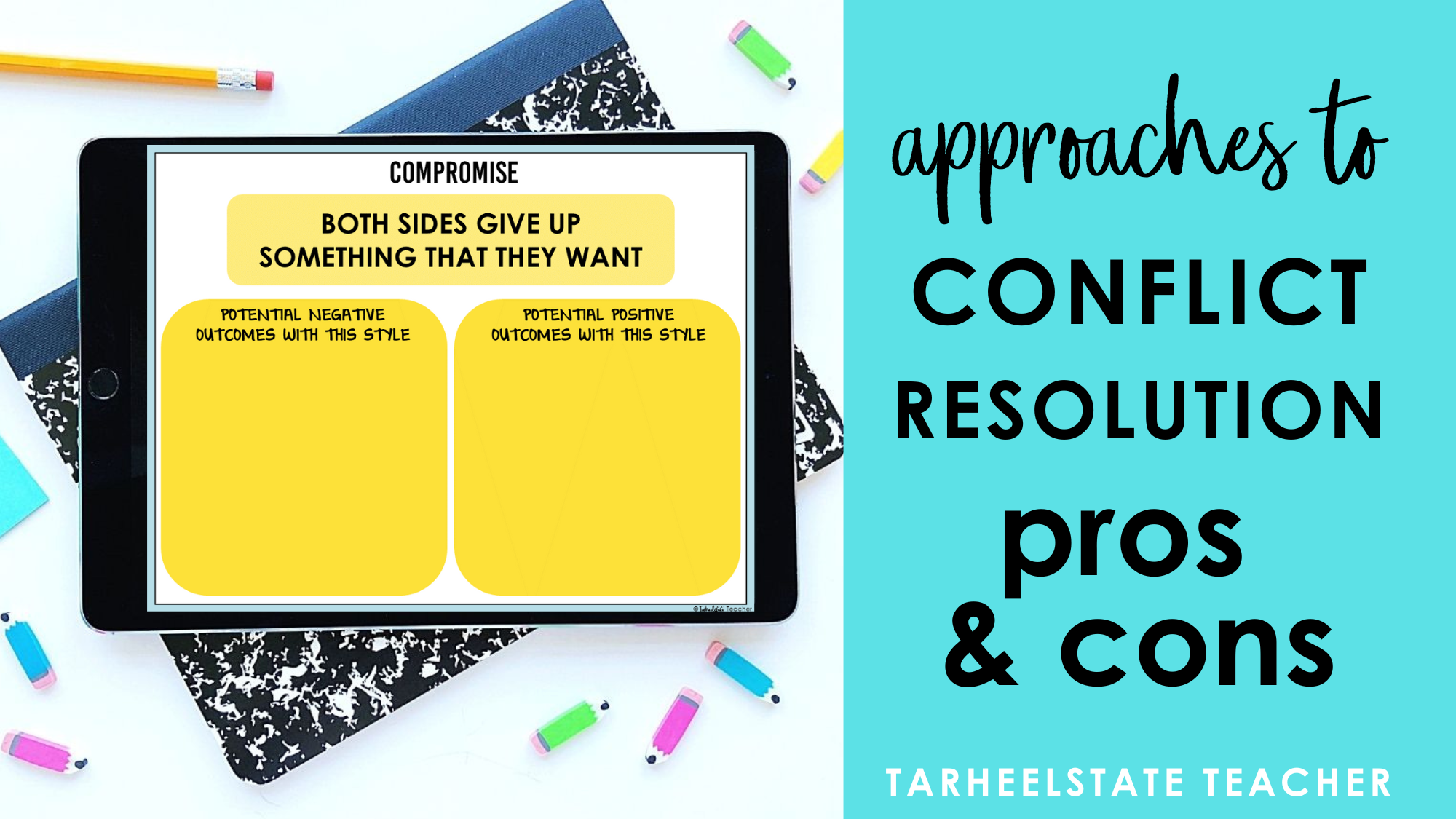
After introducing the 5 Conflict Resolution Styles, I offer a few conflict scenarios and examples that may arise in a classroom. Students discuss where one might choose to apply that particular resolution style and generate possible positives and negatives (pros and cons) for each way of resolving a conflict. Get more details about this conflict resolution activity here.
🌟This chart of 5 Conflict Resolution Styles, along with pros and cons graphic organizers can be found in my Conflict and Compromise SEL teaching unit. It includes 20 days of editable lesson plans to help you teach your students about conflict and the strategies we can use to get along better and resolve them more respectfully and effectively.
4) GENERATE CONFLICT RESOLUTION STEPS FOR THE CLASSROOM
Divide students into small groups and ask them to work together to create a list of steps that a person should go through to productively resolve a conflict in the classroom or school. You might suggest that students brainstorm all possible ideas, group them into related strategies, and then pull the ideas together in a step-by-step process that they can follow to resolve a conflict.
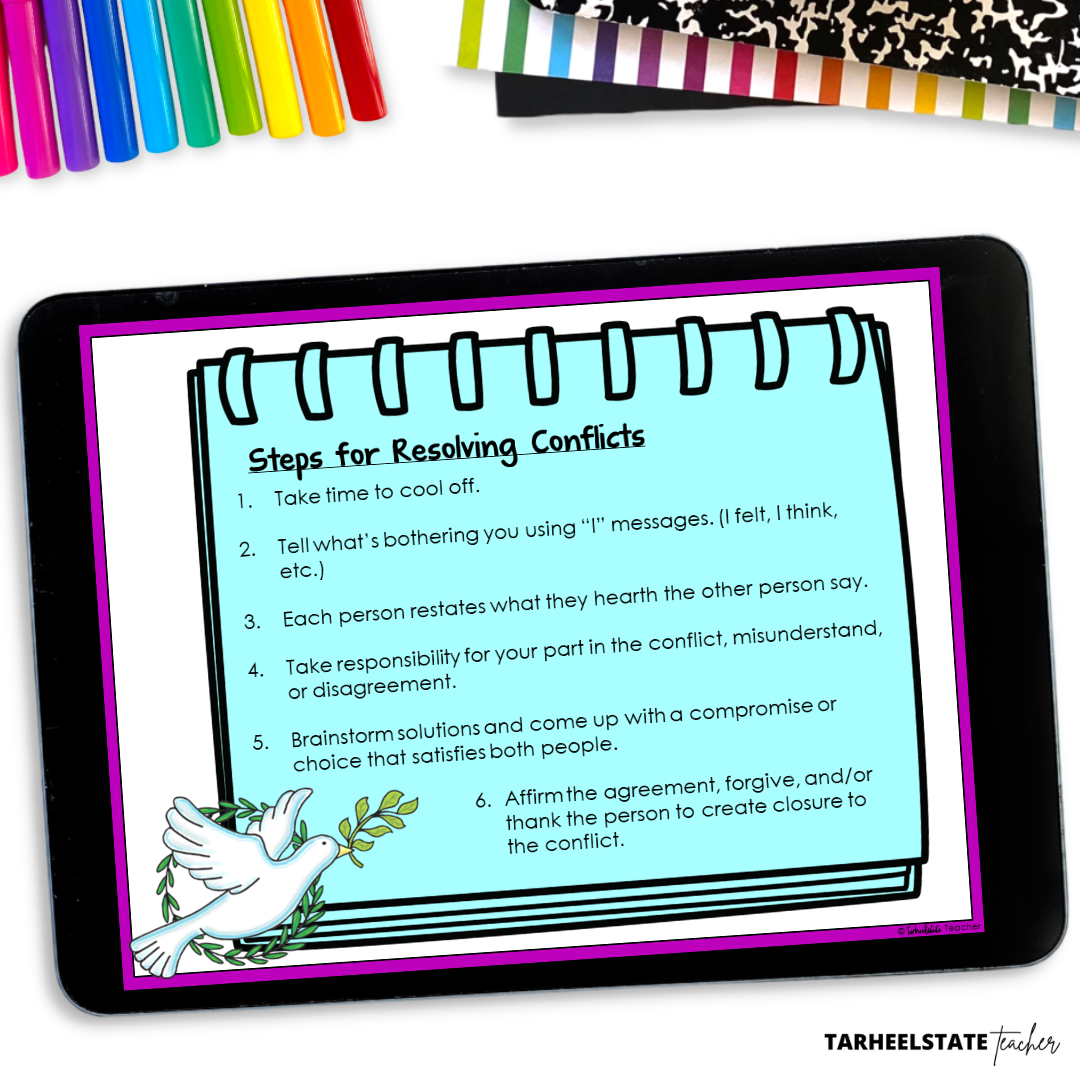
Have each group share their process and allow the whole group to ask questions and give feedback on steps that may be missing, need clarification, or need to be taken out. Create a class anchor chart of steps compiled from the group discussion.
5) FLIPPING TO AN “ATTITUDE OF COMPROMISE” ACTIVITY
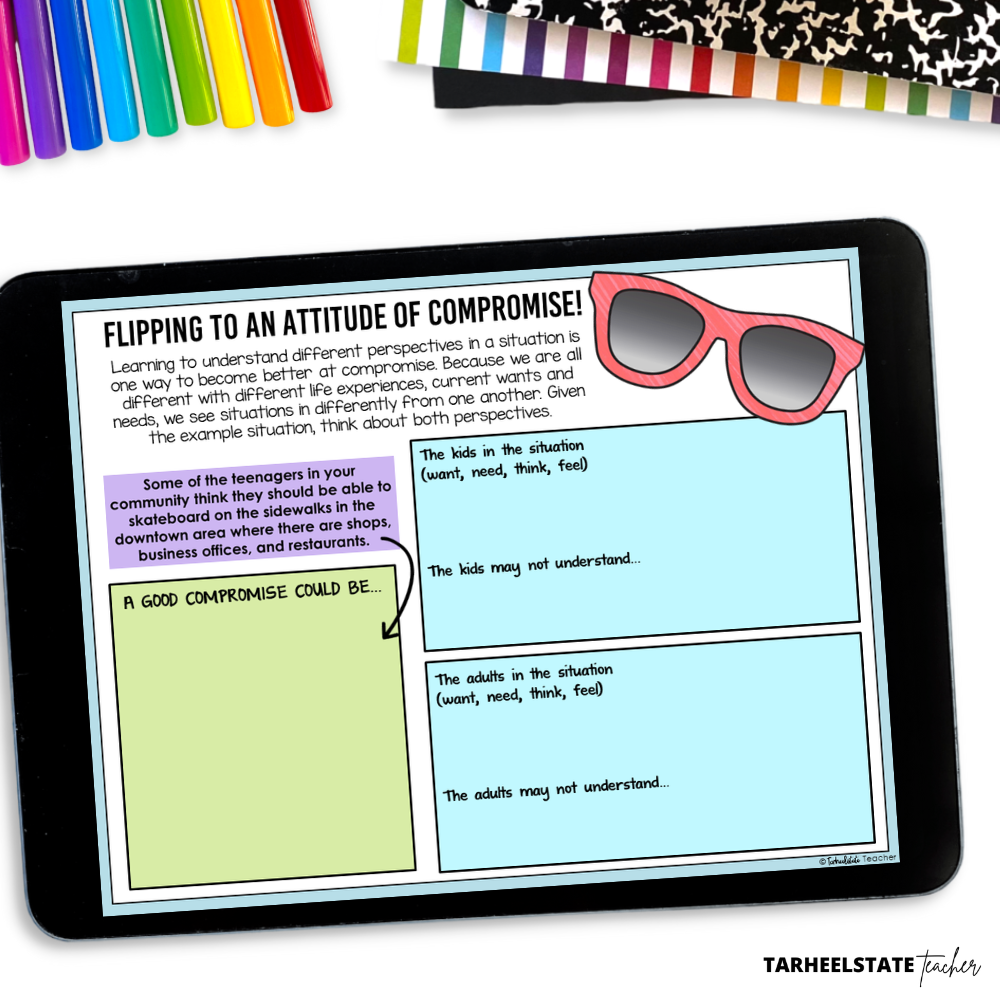
Discuss with students the concept of “perspective” and how learning to understand different perspectives in a situation is one way to become better at compromise when conflict arises. Give students compromise example scenarios and have them work in small groups, recording ideas in their notebooks or on chart paper and constructing a shared resolution that they would consider a good compromise for the situation. Have each group present their compromise example scenario to the class and then discuss the different ideas for resolving the issue.
6) READ ALOUD CONFLICT RESOLUTION BOOKS
Incorporate children’s literature and picture books that touch on themes of conflict resolution, compromise, taking accountability, apologizing, and forgiveness. Be sure to choose a variety of stories so that students have examples of all five conflict resolution styles. Some of my favorites are Feathers and Fools by Mem Fox, The First Strawberries by Joseph Bruchac, and The Forgiveness Garden by Lauren Thompson. You can click here if you need more read aloud recommendations for conflict resolution books!
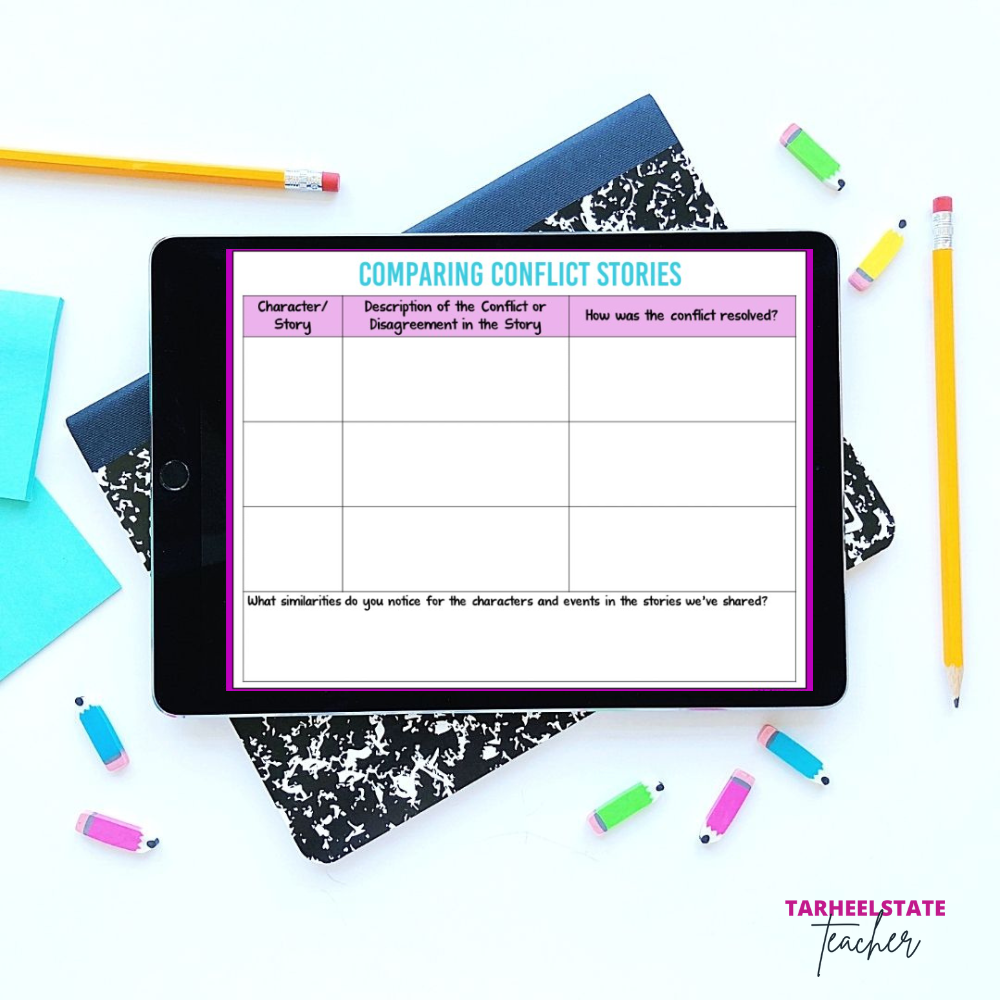
🌟After reading aloud (or viewing) many different texts related to resolving conflicts, I lead my students through a compare and contrast activity. By detailing the situations, main conflicts, and ways of resolving the conflicts from each text, we are able to pull together themes and big ideas that encompass a variety of texts. By taking the time to tease out threads of connection among different stories, we are able to deepen the understanding of each text AND deepen students’ understanding of resolving conflict itself in their own lives.
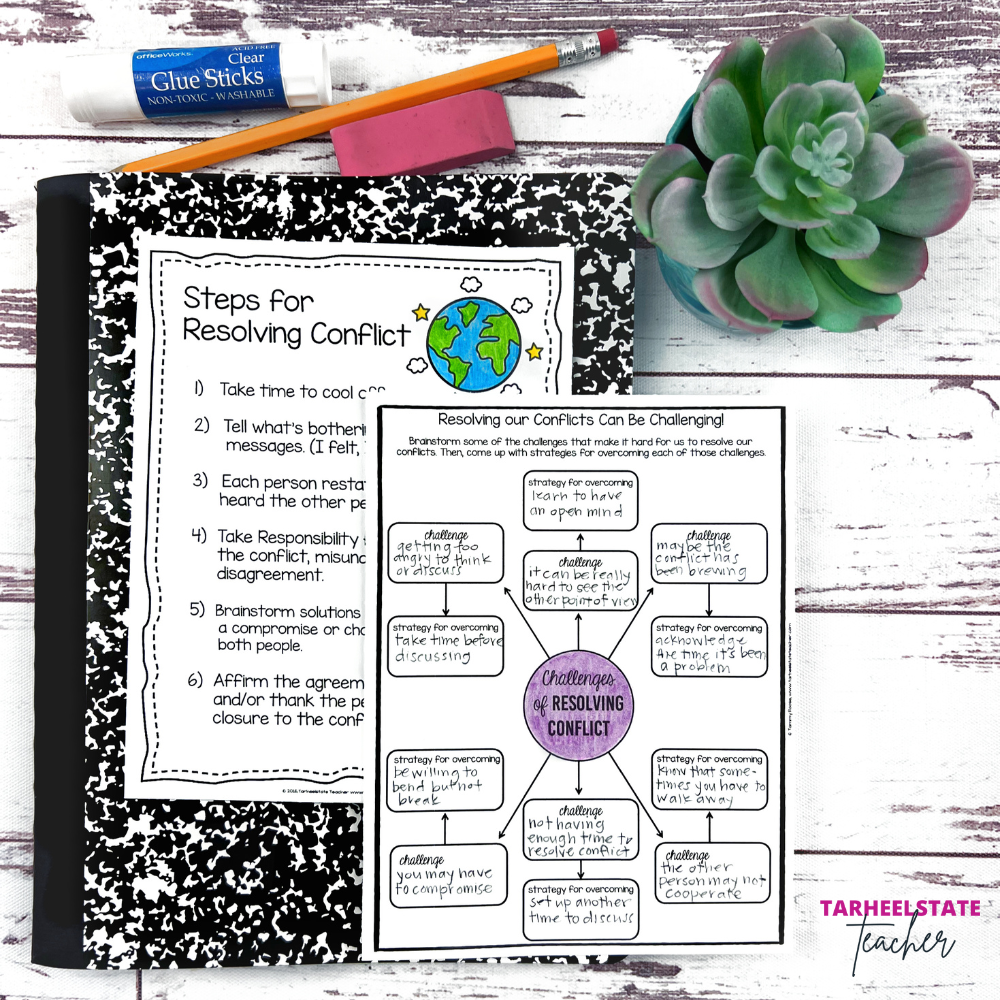
7) IDENTIFY THE CHALLENGES OF RESOLVING CONFLICT AND GENERATE STRATEGIES FOR OVERCOMING THEM
It is no secret that consistently remaining calm to productively resolve a conflict has its challenges. Have students generate some examples of the challenges that make it difficult for us to remain calm when resolving conflict as you create an anchor chart. Try to get a good variety of challenges to discuss. Then, discuss ways to overcome the different challenges we face in remaining calm when resolving a conflict.
🌟 I like to lead this activity with the graphic organizer shown in the picture below. After students and I generate a few examples, students can add challenges specific to their own experiences with conflict. Allowing them a bit of time to think through their own ways to overcome these challenges helps support students in dealing with similar conflicts more appropriately and positively in the future.
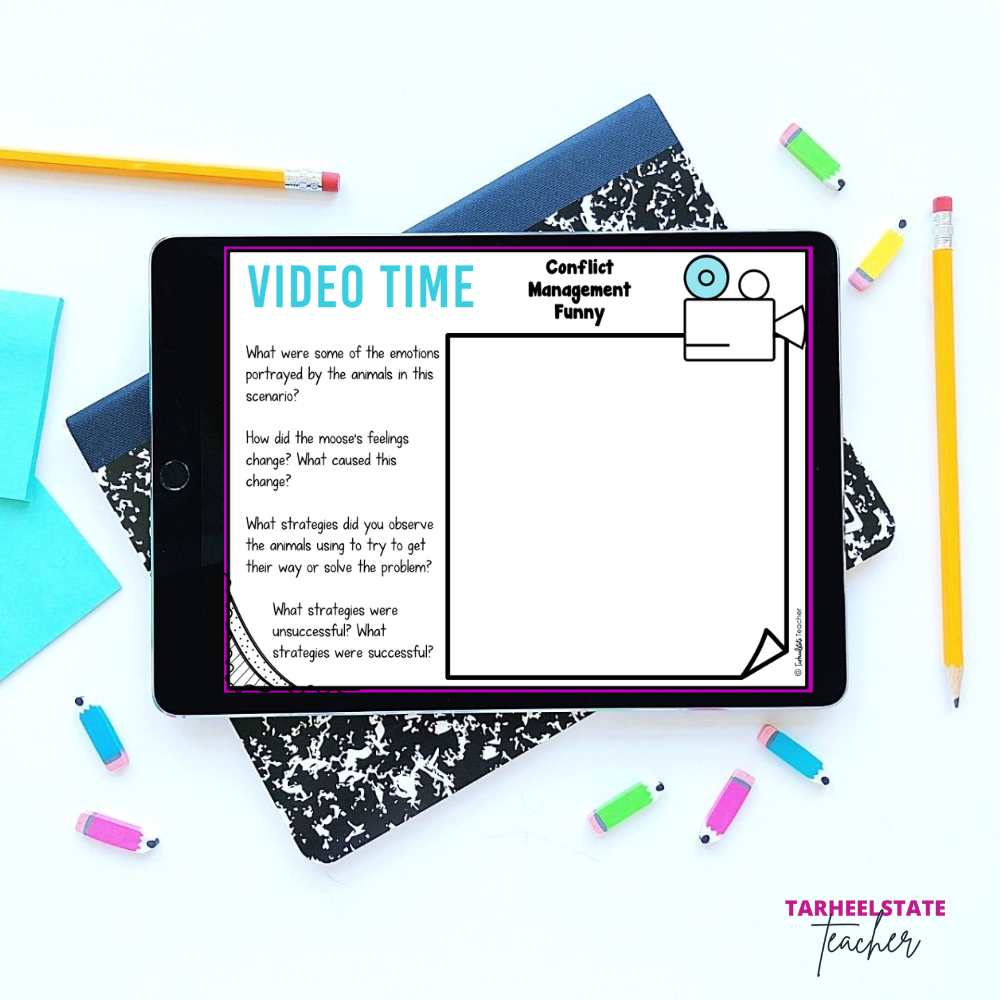
8) SHOW VIDEOS ABOUT CONFLICT RESOLUTION
Video is a great way to share a new concept with students, especially for showing and analyzing conflict resolution examples together as a class. This video by Kid President focused on how to disagree is one of my favorites. In my SEL Conflict Resolution Morning Meeting Unit I’ve included a suggested playlist of videos for Resolving Conflict and for teaching Compromise.
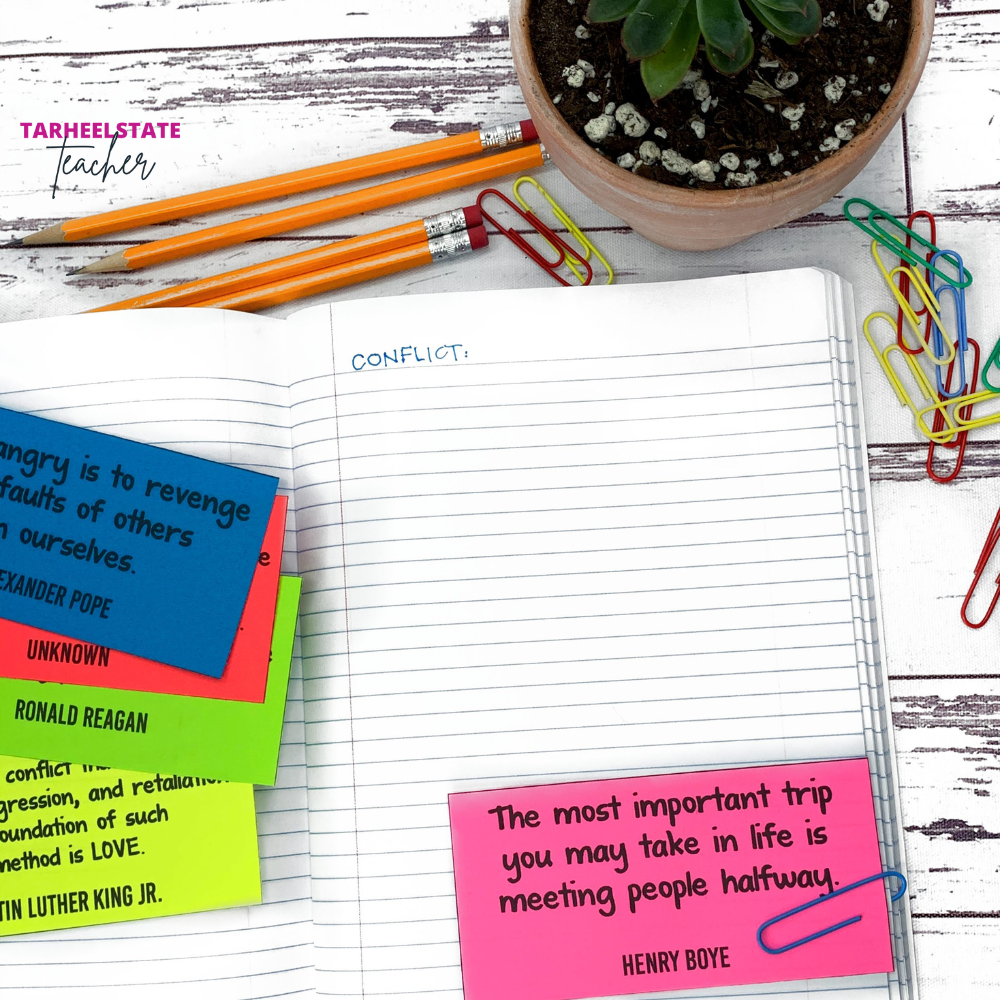
9) ANALYZA CONFLICT RESOLUTION QUOTATIONS
Have students reflect on popular conflict resolution quotes and analyze the similarities and differences between them to generate big ideas about conflict resolution. I weave conflict resolution quotations throughout my SEL Conflict Resolution unit and guide students to discuss them to deepen their opinions and understanding of managing conflict in their lives.
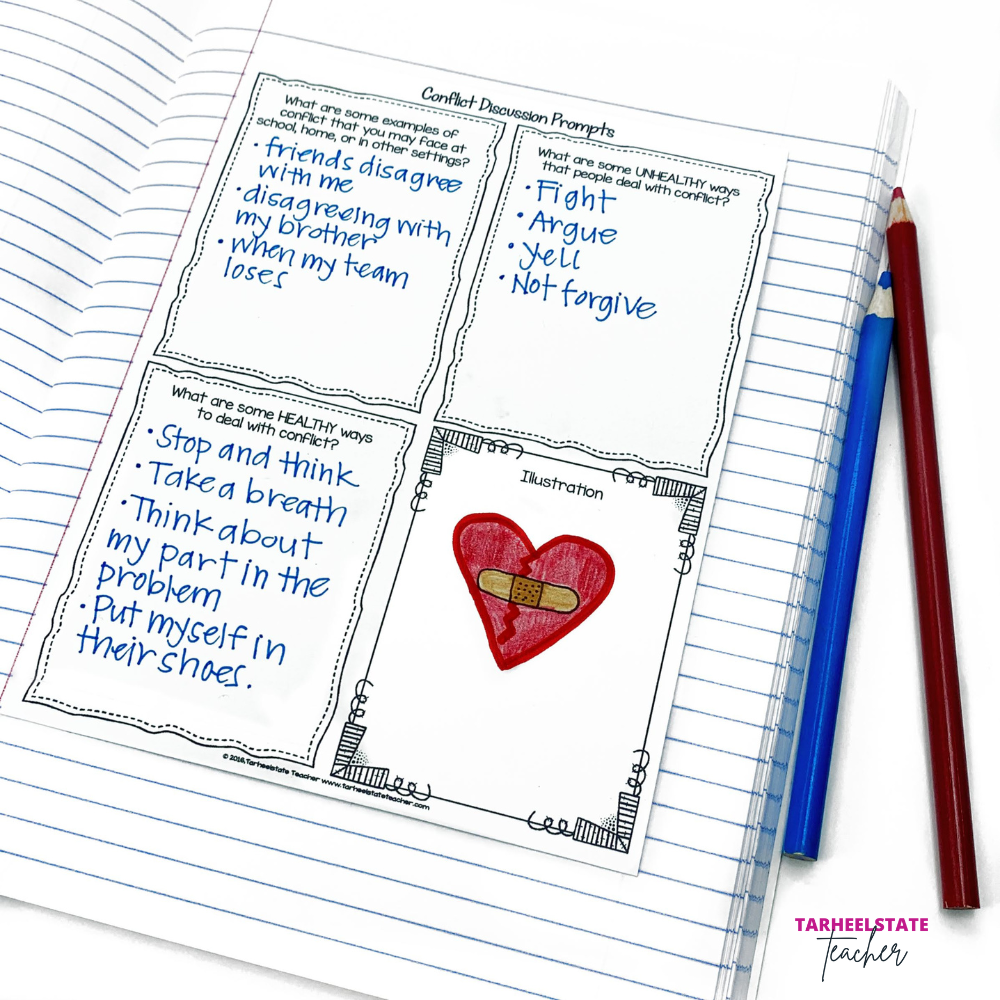
10) CREATE CONFLICT RESOLUTION SYMBOLS
Ask students to come up with a symbol that represents conflict resolution and can serve as a personal reminder to help them gracefully manage conflict in difficult situations. Examples of symbols could include a handshake (representing agreement and reconciliation), puzzle pieces fitting together (symbolizing finding a solution that fits everyone), scales (to represent fairness and balance in resolving conflicts), or even a heart (symbolizing empathy, understanding, and compassion).
If you’re looking for more ways to keep building conflict resolution and compromise skills with your students, here are some other resources you may be interested in:
- 5 Conflict Resolution Styles to Teach Students breaks down the five different ways people respond to conflict and helps students recognize which style they tend to use—and when a different approach might work better.
- 6 Conflict Resolution Steps for Students walks through a clear, student-friendly process for working through conflict that gives students a reliable framework they can turn to whenever disagreements arise.
- Books about Resolving Conflict, Compromise, & Friendship highlights a diverse collection of read alouds that open the door to meaningful conversations about navigating disagreements, finding common ground, and maintaining healthy relationships.
- Complete Conflict Resolution & Compromise SEL Unit for upper elementary—this unit includes all of the activities you see in this post, editable lesson plans, suggested read alouds, student notebooks, and a bulletin board to help your unit make a lasting impression!
Let’s continue helping students grow into thoughtful, solution-focused problem solvers.
NEED A DONE-FOR-YOU CONFLICT RESOLUTION SKILLS AND COMPROMISE UNIT?
The Conflict Resolution & Compromise SEL-Morning Meeting unit is a 25 day unit for upper elementary. It includes
 25 Days of Printable & Editable Lesson Plans — includes suggested read alouds, discussion questions, conflict resolution activities, extension ideas, and linked online resources
Student Journals & Activities — conflict resolution-related discussion prompts, self-reflection and goal setting exercises, and social emotional learning worksheets to deepen students’ understanding of conflict resolution and compromise, with activities like Role Playing & Reflection with Conflict Situation Cards, Analyzing the 5 Types of Conflict Resolution Styles, Flipping to an Attitude of Compromise, Creating Steps for Resolving Conflict, and more!
Conflict Resolution Bulletin Board that includes important vocabulary like conflict, forgiveness, resolution, compromise, and trade-off and inspirational quotations for a visual reminder of your conflict resolution and compromise lessons
Google Slides — Teacher and student versions to implement this unit digitally or use as visual prompts and discussion starters on your interactive whiteboard