Do you ever feel like you’re constantly putting out small fires in your classroom, dealing with student conflicts just to get back to the lesson? And then one day, you suddenly realize these little interruptions have piled up so much that you feel more like a firefighter than a teacher. We’ve all been there.
Whether this realization hits you in September, October, January, or mid-March, it’s at this moment you know it’s time to address conflict resolution head-on with your students and reclaim your teaching time. This blog post delves into practical conflict resolution steps you can use to guide your students through effectively resolving their own conflicts, transforming daily disruptions into teachable moments that foster a harmonious and collaborative learning environment.
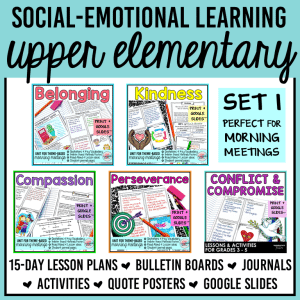
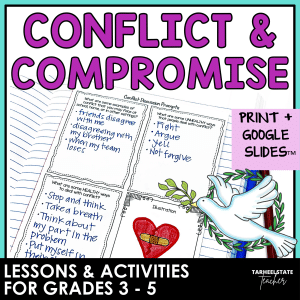
Within the first few days of every new school year, I prioritize teaching my SEL Belonging Morning Meeting Unit as one of the ways to start establishing a welcoming, inclusive, and supportive classroom community. And because conflict in the classroom is as inevitable as recess and lunch breaks, my SEL Conflict Resolution and Compromise Morning Meeting Unit is quick to follow. After launching the SEL theme with a conflict resolution book like Feathers and Fools by Mem Fox or The First Strawberries by Joseph Bruchac and a conflict resolution quote for students to analyze, we jump right into generating conflict resolution steps for the classroom.
 You can do each of these suggested conflict resolution activities for students with a reflection journal and materials you have around the classroom, but if you want some of the work done for you, you can check out my full Conflict Resolution and Compromise SEL unit, complete with lesson plans that make it super easy to implement and enjoy!
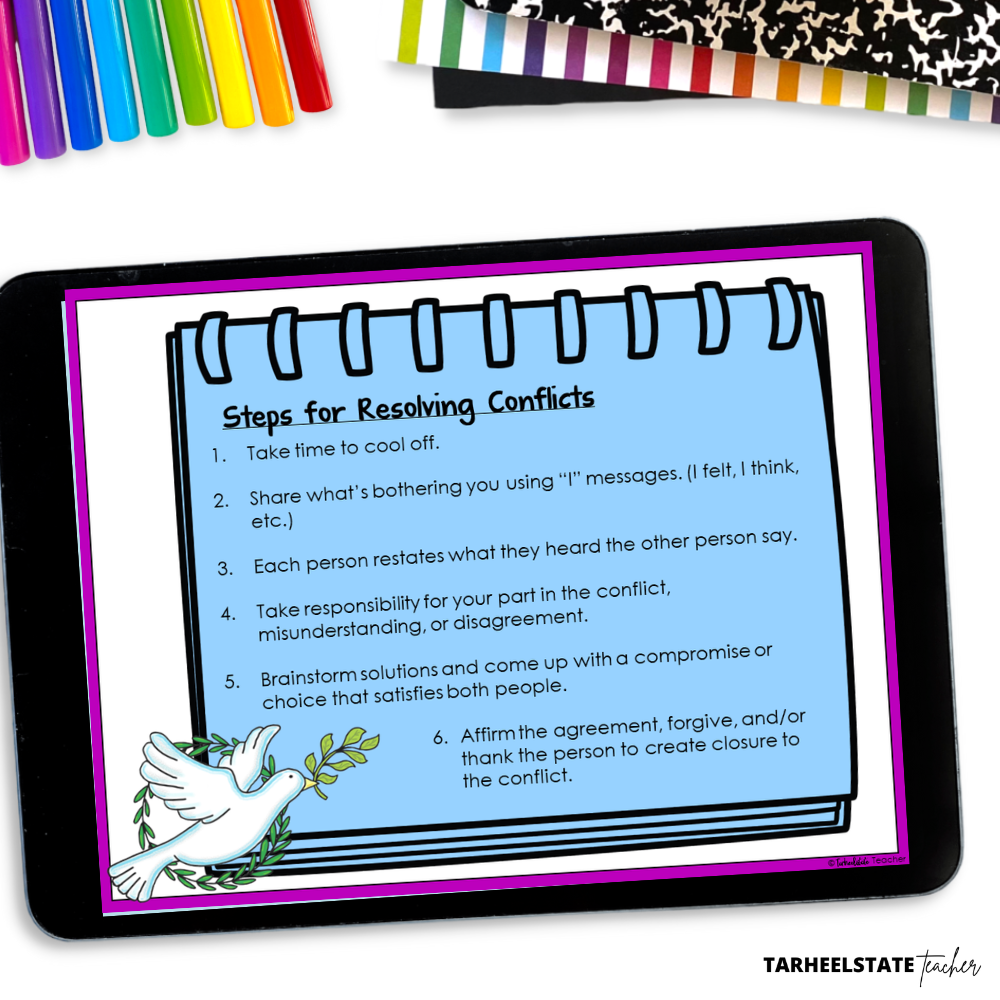
STEPS TO CONFLICT RESOLUTION IN THE CLASSROOM
- Take time to cool off
- Tell what’s bothering you using “I” messages. (I feel, I think, etc.)
- Each person restates what they heard the other person say.
- Take responsibility for your part of the conflict, misunderstanding, or disagreement.
- Brainstorm solutions and come up with a compromise or choice that satisfies both people.
- Affirm the agreement, forgive, and/or thank the person to create closure to the conflict.
HOW TO MAKE THE STEPS TO CONFLICT RESOLUTION STICK
As much as we would like to believe that slapping a poster or anchor chart on the wall would magically transform our students into conflict resolution experts, we all know that’s as realistic as expecting a group of fourth graders to return permission slips on time. Classroom management takes ongoing effort and engagement!
OWNERSHIP
First, it is important to allow students to brainstorm and generate the conflict resolution steps for themselves instead of giving them the steps. This process helps students feel more ownership over their classroom community and increases the likelihood that they will remember and try to apply the steps the next time they are trying to resolve a conflict with a classmate.
I like to divide students into small groups and ask them to work together to create a list of steps that a person should go through to productively resolve a conflict in the classroom or school. I usually have students brainstorm all possible ideas, group them into related strategies, and then pull the ideas together in a step-by-step process that they can follow to resolve a conflict. So my anchor chart looks a little different every year.
TEACH CONFLICT RESOLUTION STRATEGIES
After our class conflict resolution steps have been agreed upon and posted, I typically wait a day or two and then follow up with a conflict resolution activity that helps students break down what thoughts, words, and actions would help lead to a successful conflict resolution. We analyze various conflict resolution examples and generate thoughts, words, and actions that would be helpful to use at the beginning, in the middle of, and at the end of a given conflict scenario.
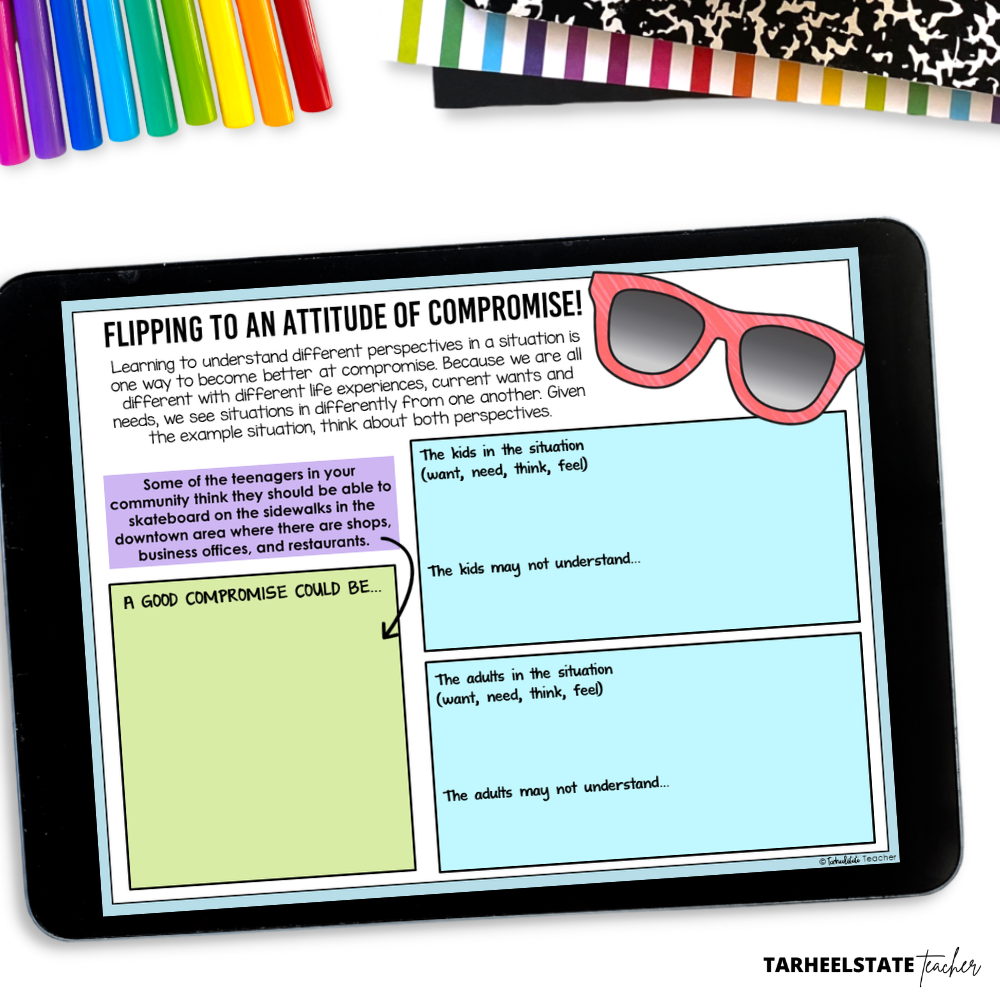
Other conflict resolution activities that we do throughout our focus on conflict resolution and compromise include analyzing behaviors that indicate a conflict is brewing, learning the 5 conflict resolution styles, flipping to an attitude of compromise, and identifying the challenges of conflict resolution and generating strategies to help overcome them.
PRACTICE MAKES PROGRESS
Consistently practicing conflict resolution is key to embedding these skills into students’ daily interactions. If you don’t have time to teach an entire unit on conflict resolution and compromise, start by incorporating short conflict resolution activities into your weekly schedule.
In addition, role-playing conflict resolution scenarios is very effective because it allows students to step into different roles and explore various perspectives. Analyzing and role-playing various conflict resolution examples not only helps reinforce the conflict resolution steps students have learned but also builds empathy and understanding among classmates.
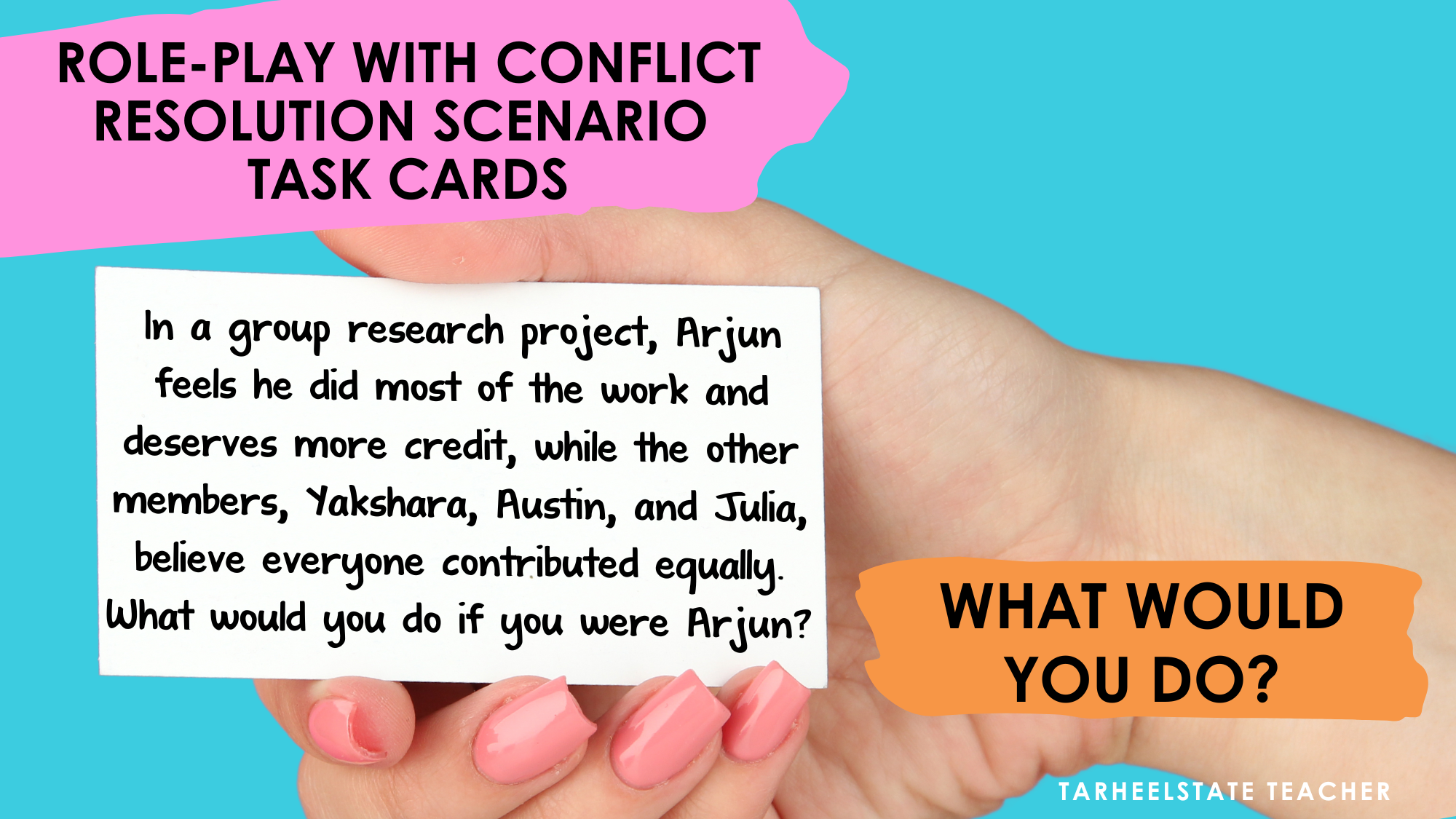
Remember, the goal is not perfection but progress. Celebrate small victories when students successfully resolve a conflict on their own. Create a classroom culture where mistakes are seen as learning opportunities. Encourage students to reflect on what went well and what could be improved after each conflict resolution attempt. With consistent practice and positive reinforcement, students will gradually develop the confidence and competence needed to handle conflicts constructively, creating a more harmonious and productive classroom environment.
If you’re looking for more ways to keep building conflict resolution and compromise skills with your students, here are some other resources you may be interested in:
- 5 Conflict Resolution Styles to Teach Students breaks down the five different ways people respond to conflict and helps students recognize which style they tend to use—and when a different approach might work better.
- Teaching Conflict Resolution Skills in the Classroom shares practical strategies and lesson ideas for making conflict resolution a natural, ongoing part of your classroom community.
- Books about Resolving Conflict, Compromise, & Friendship highlights a diverse collection of read alouds that open the door to meaningful conversations about navigating disagreements, finding common ground, and maintaining healthy relationships.
- Complete Conflict Resolution & Compromise SEL Unit for upper elementary—this unit includes all of the activities you see in this post, editable lesson plans, suggested read alouds, student notebooks, and a bulletin board to help your unit make a lasting impression!
Let’s continue helping students grow into thoughtful, solution-focused problem solvers.
NEED A DONE-FOR-YOU CONFLICT RESOLUTION SKILLS AND COMPROMISE UNIT?
The Conflict Resolution & Compromise SEL-Morning Meeting unit is a 25 day unit for upper elementary. It includes
 25 Days of Printable & Editable Lesson Plans — includes suggested read alouds, discussion questions, conflict resolution activities, extension ideas, and linked online resources
Student Journals & Activities — conflict resolution-related discussion prompts, self-reflection and goal setting exercises, and social emotional learning worksheets to deepen students’ understanding of conflict resolution and compromise, with activities like Role Playing & Reflection with Conflict Situation Cards, Analyzing the 5 Types of Conflict Resolution Styles, Flipping to an Attitude of Compromise, Creating Steps for Resolving Conflict, and more!
Conflict Resolution Bulletin Board that includes important vocabulary like conflict, forgiveness, resolution, compromise, and trade-off and inspirational quotations for a visual reminder of your conflict resolution and compromise lessons
Google Slides — Teacher and student versions to implement this unit digitally or use as visual prompts and discussion starters on your interactive whiteboard