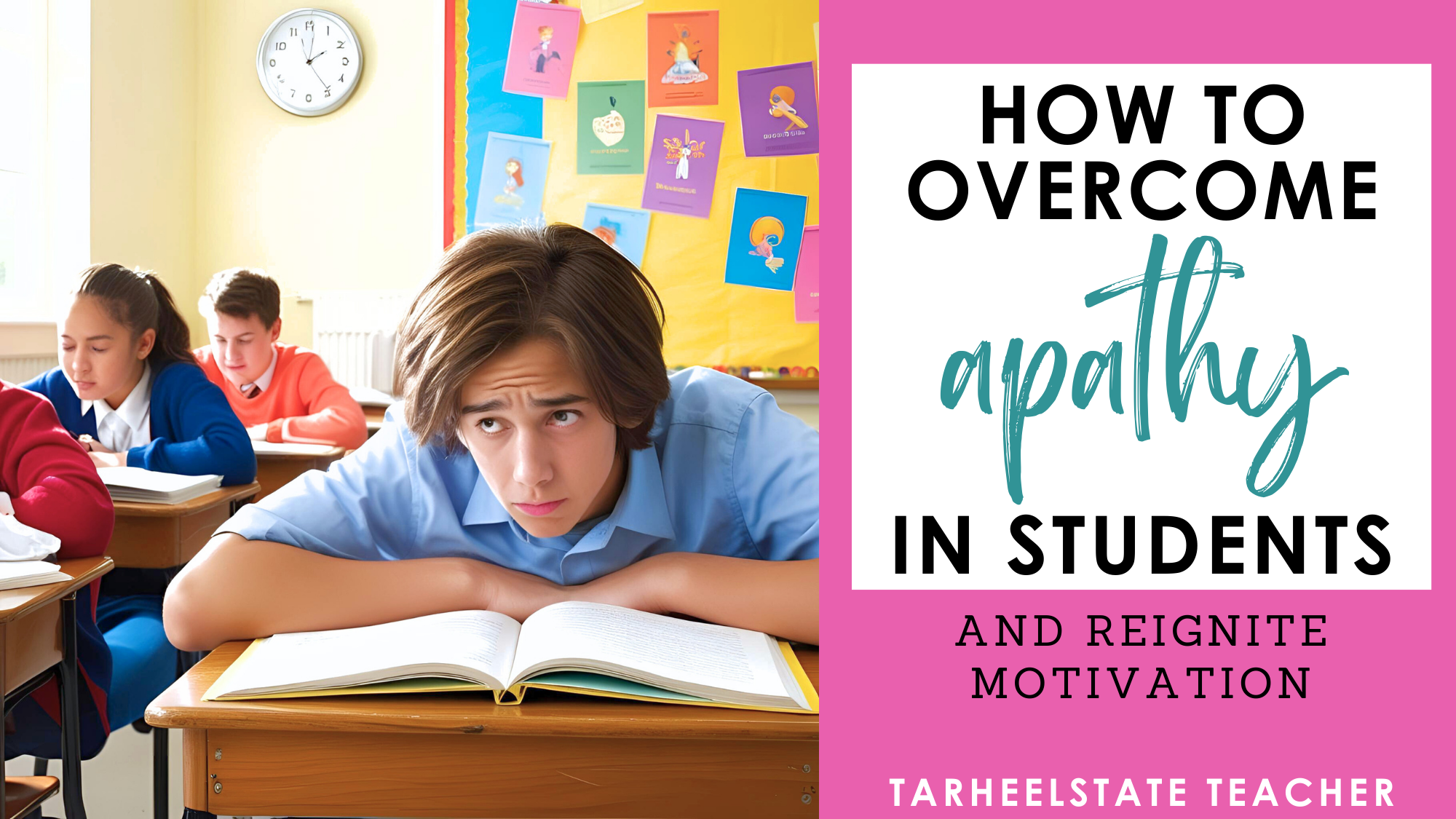
As teachers, we’ve all seen it — the blank stare, the slumped posture, the student who shrugs and says, “I don’t care.” Apathy in students can be one of the most frustrating challenges in the classroom. It’s not just about missing work or low energy — it’s the sense that some students have given up before they’ve even begun. And if left unaddressed, apathy can spread like wildfire, dulling even the most engaging lesson plans.
So how do we as teachers confront this head-on? How do we go beyond surface-level compliance and reignite students’ inner spark? It starts by understanding what apathy really is — and then teaching students the tools and support they need to push through it.
Read on to find out what apathy is, what types of apathy students might experience, and some engaging activities and lesson ideas for addressing apathy with your students.
WHAT IS MEANT BY APATHY?
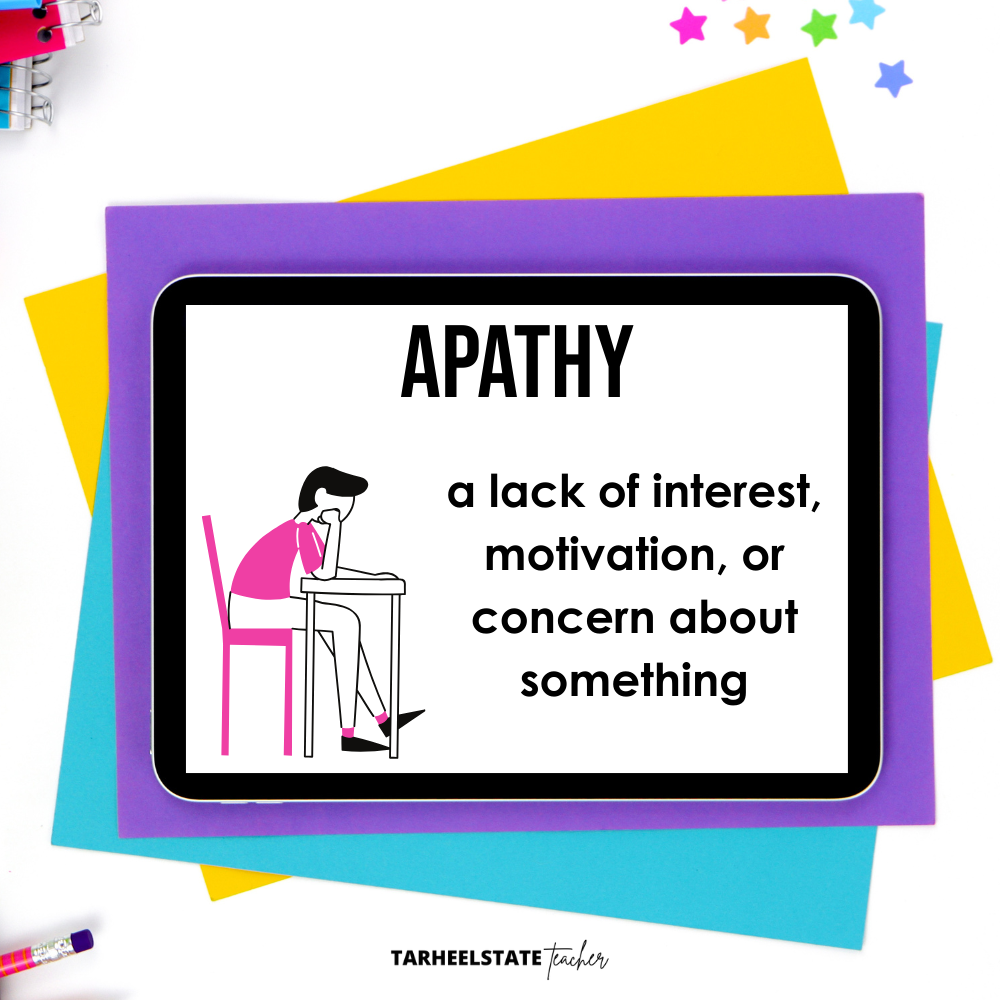
Apathy is more than just laziness or indifference. It’s a lack of motivation, interest, or emotional investment — a feeling that effort doesn’t matter, or that nothing will change even if it’s given.
In school, student apathy might look like incomplete assignments, low participation, or emotionally flat reactions to praise or feedback.
Many students won’t say “I feel apathetic,” but they will say things like:
- “What’s the point?”
- “It doesn’t matter.”
- “I don’t care.”
These comments are signs of deeper disconnection — and that’s something teachers can work to address.
WHAT CAUSES APATHY IN STUDENTS?
Understanding why students shut down is key to helping them re-engage. Student apathy in the classroom often stems from one or more of the following causes:
- Lack of Interest – They simply don’t connect with the topic.
- Feeling Overwhelmed – Too much work or unclear expectations can lead to avoidance.
- Fear of Failure – Rather than risk being wrong, some students would rather not try at all.
- Lack of Purpose – They don’t see the value or real-life connection of what they’re learning.
- Low Confidence – Past struggles can erode belief in their own abilities.
- Boredom – Tasks that are too easy or repetitive can feel pointless.
- Disconnection – Students may feel isolated from their peers, teacher, or school community.
Identifying the root cause allows teachers to respond with intention, not just intervention. In my motivation and apathy SEL unit, I’ve included a handout about apathy that you can share with students.

HOW TO COMBAT APATHY IN STUDENTS
Once we know what we’re dealing with, the next step is to rebuild connection, confidence, and momentum. These strategies not only address apathy in schools but also help promote intrinsic motivation in students — that internal drive that keeps them moving even when things are tough.
 You can do each of these suggested motivation activities for students with a reflection journal and materials you have around the classroom, but if you want some of the work done for you, you can check out my full Intrinsic Motivation SEL unit, complete with lesson plans that make it super easy to implement and enjoy!
1) START WITH STUDENT REFLECTION
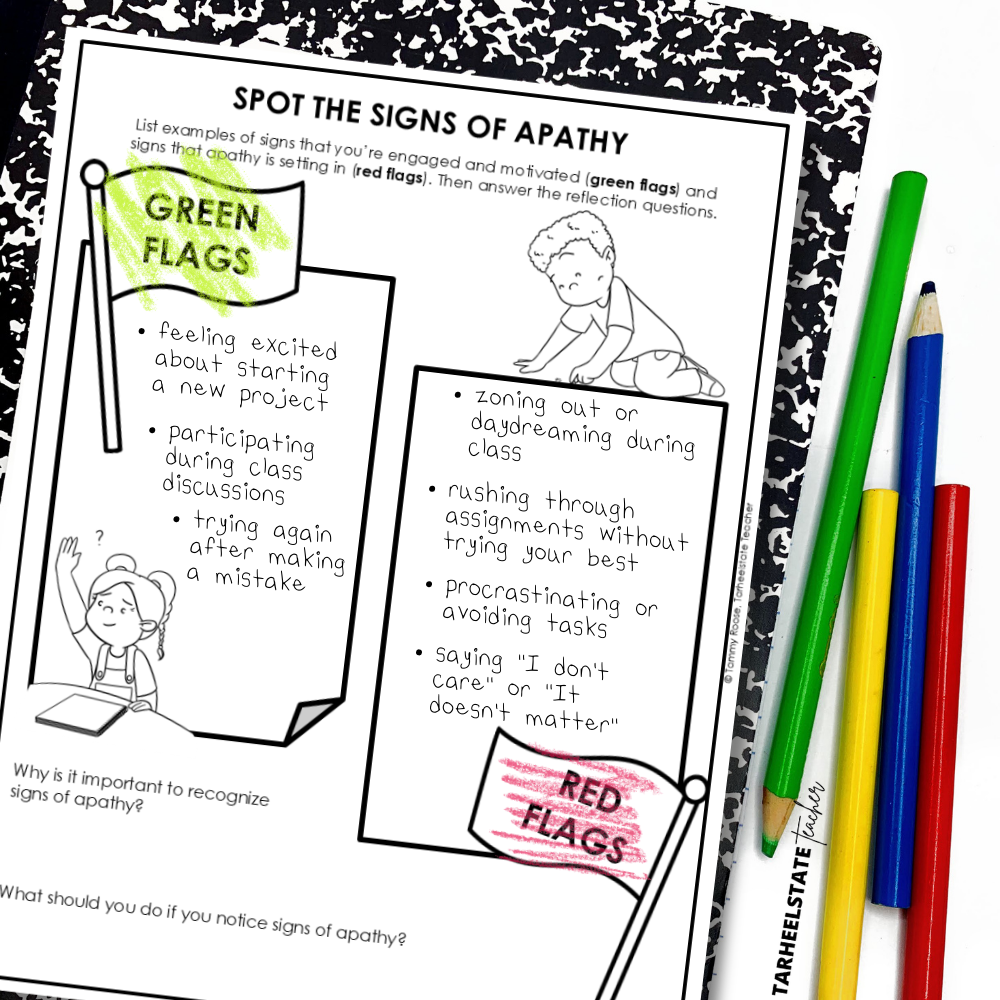
Before jumping into solutions, help students recognize what apathy feels like. One of my favorite activities involves brainstorming signs of motivation vs. signs of apathy. It opens the door for students to reflect on their own patterns and consider what might be getting in their way.
💡Try this: Use a “Spot the Signs” journal page where students write down when they feel most engaged and when they tend to check out. This helps them name the behavior — a crucial first step.
Pairing this reflection with mindfulness and gratitude practices can also help students tune into their thoughts and feelings without judgment, giving them more control over how they respond.
2) BREAK IT DOWN: IDENTIFY THE CAUSE
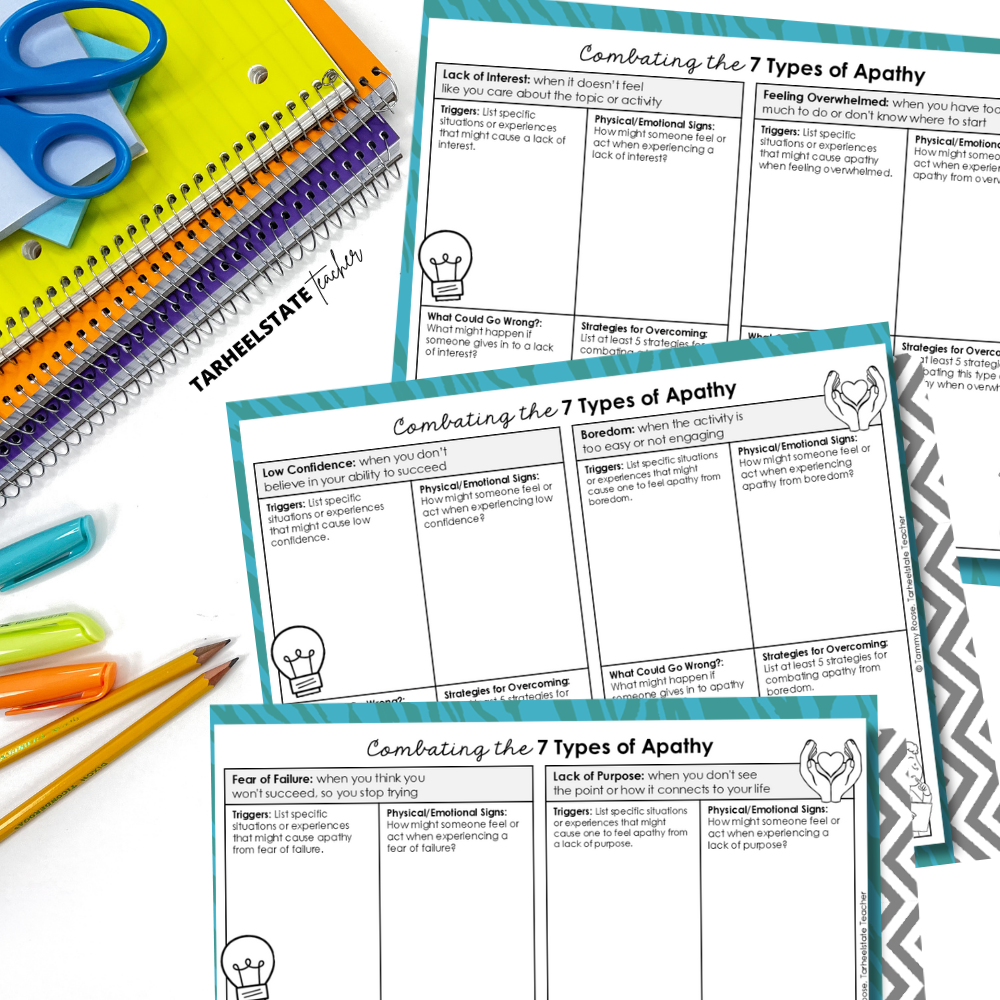
Have students explore the seven most common causes of apathy using a student-friendly chart or anchor display. Once they understand the “why,” it becomes easier to brainstorm the “what now.”
💡Try this: Assign small groups one root cause (like fear of failure or boredom) and have them brainstorm solutions. Then do a gallery walk so everyone gets to learn all the strategies. This gives students ownership over the process.
3) FOCUS ON SMALL WINS
Motivation in the classroom often returns one success at a time. Celebrate effort, not just outcomes. Students who feel like they “can’t do anything right” need opportunities to prove to themselves that they can.
💡Try this: Encourage students to choose one specific cause of apathy they struggle with most. Then, have them brainstorm five personal strategies they could try to overcome it. These lists become a go-to resource when they’re feeling stuck.

4) CREATE SAFE SPACES FOR SHARING
Sometimes, students just need to feel heard. Building peer-to-peer empathy through discussion helps normalize the ups and downs of motivation.
💡Try this: Use advice-column-style writing prompts, like “Dear Spark,” where students respond to fictional letters from peers who feel unmotivated. This creates a low-pressure, reflective way to talk about big feelings and offer support.

5) USE SCENARIOS TO BUILD PROBLEM-SOLVING SKILLS
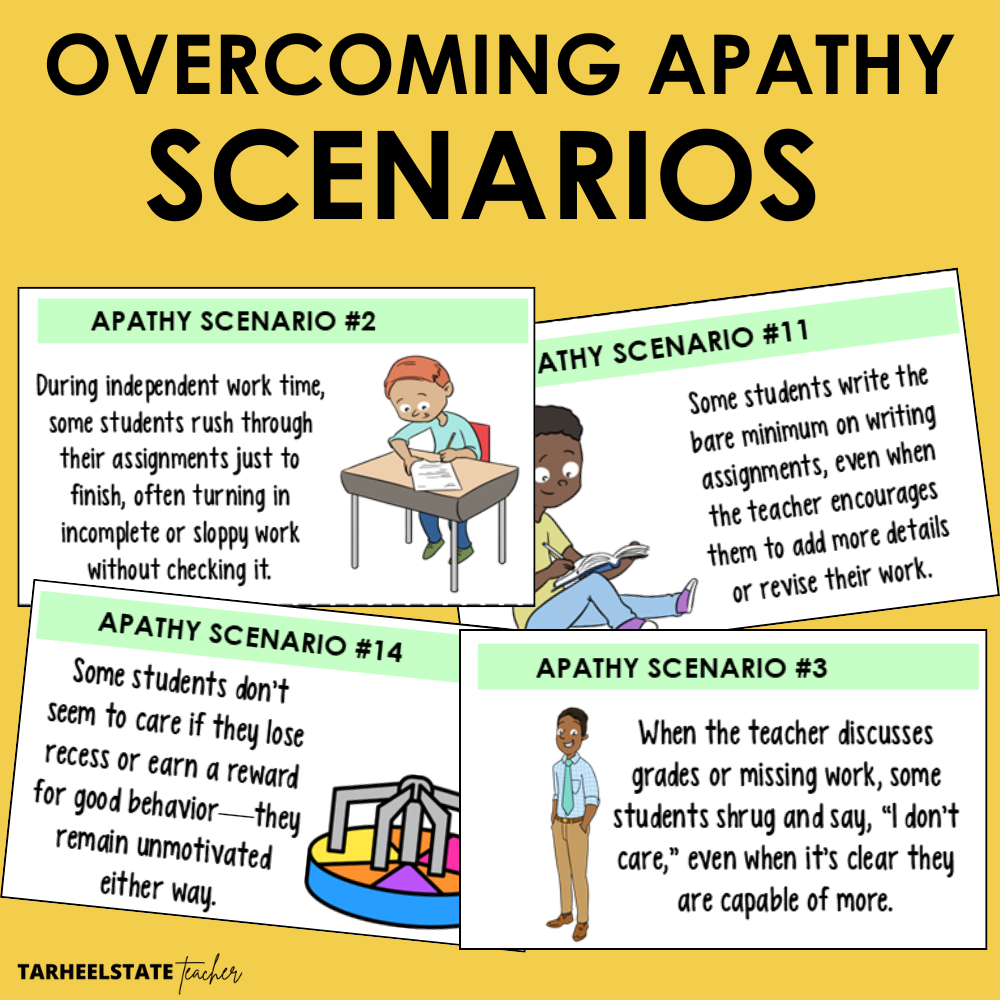
Instead of lecturing students about effort, give them scenarios where they can analyze what’s going on and decide what could help.
💡Try this: Present short apathy scenarios and have students work in groups to identify possible causes and solutions. They’ll begin to see patterns and realize they can change their approach.
6) ALLOW FOR CHOICE AND VOICE
Building intrinsic motivation in the classroom starts with autonomy. Students are far more likely to engage when they feel they have some control over how they show what they know.
💡Try this: Offer low-stakes choice boards, flexible formats for assignments, or opt-in discussion strategies like think-pair-share. For students who feel overwhelmed or disconnected, options reduce pressure and rebuild confidence.
When students feel heard and respected, they become more open to exploring the why behind their lack of motivation. That’s where meaningful reflection comes in. To help students better understand their own apathy—and start to move through it—it can be helpful to have guided tools and structured activities on hand.
If you’re looking for more ways to keep building motivation and combatting apathy with your students, here are some other resources you may be interested in:
- The Long Game: How to Build Intrinsic Motivation in Students explores what it really takes to help students find and sustain their own drive—beyond grades, rewards, and external pressure.
- Positive Self-Talk Activities to Build Intrinsic Motivation in the Classroom gives you ready-made activities that help students reframe their inner voice and use self-talk as a tool for staying motivated when things get tough.
- Complete Intrinsic Motivation SEL Unit for upper elementary—this unit includes all of the activities you see in this post, editable lesson plans, suggested read alouds, student notebooks, and a bulletin board to help your unit make a lasting impression!
NEED A DONE-FOR-YOU INTRINSIC MOTIVATION UNIT?
The Intrinsic Motivation SEL-Morning Meeting unit is a 20 day unit for upper elementary. It includes
 25 Days of Printable & Editable Lesson Plans — includes suggested read alouds, discussion questions, intrinsic motivation and positive self-talk activities, extension ideas, and linked online resources
Student Journals & Activities — motivation-related discussion prompts, self-reflection and goal setting exercises, and social emotional learning worksheets to deepen students’ understanding of intrinsic motivation and positive self-talk, with activities like Intrinsic vs Extrinsic Motivation Scenario Sort, The Power of Positive Self-Talk, Situations That Test Our Motivation & Responding with Drive, Creating a Motivation Playlist, and more!
Intrinsic Motivation Bulletin Board that include important vocabulary like intrinsic motivation, extrinsic motivation, self-talk, self-discipline, and apathy and inspirational quotations for a visual reminder of your intrinsic motivation and positive self-talk lessons
Google Slides — Teacher and student versions to implement this unit digitally or use as visual prompts and discussion starters on your interactive whiteboard