If you’ve ever wondered how to build intrinsic motivation in students, you’re not alone. As teachers, we’ve all felt the pull to offer rewards, prizes, or external praise to keep students on task. But over time, many of us begin to notice that those quick fixes don’t always lead to deeper engagement. So the question becomes: What benefit does intrinsic motivation have on students and learning? And how can we nurture it in ways that last?
Let’s dive into practical, classroom-tested strategies for boosting intrinsic motivation in students—the kind of motivation that comes from within, not from stickers or prize boxes!

 You can do each of these suggested motivation activities for students with a reflection journal and materials you have around the classroom, but if you want some of the work done for you, you can check out my full Intrinsic Motivation SEL unit, complete with lesson plans that make it super easy to implement and enjoy!
1. GIVE STUDENTS VOICE AND CHOICE
One of the most effective ways to foster intrinsic motivation in the classroom is by offering students opportunities to make decisions about their learning. This could be through:
- Letting students choose their independent reading books
- Creating a “genius hour” or passion project time
- Giving different options for how they demonstrate understanding (video, poster, essay, comic, etc.)
- Allowing them to select specific topics within a unit
These small but meaningful opportunities for choice help students feel a sense of ownership—an essential component of motivation in the classroom that encourages them to engage and persist in their learning.
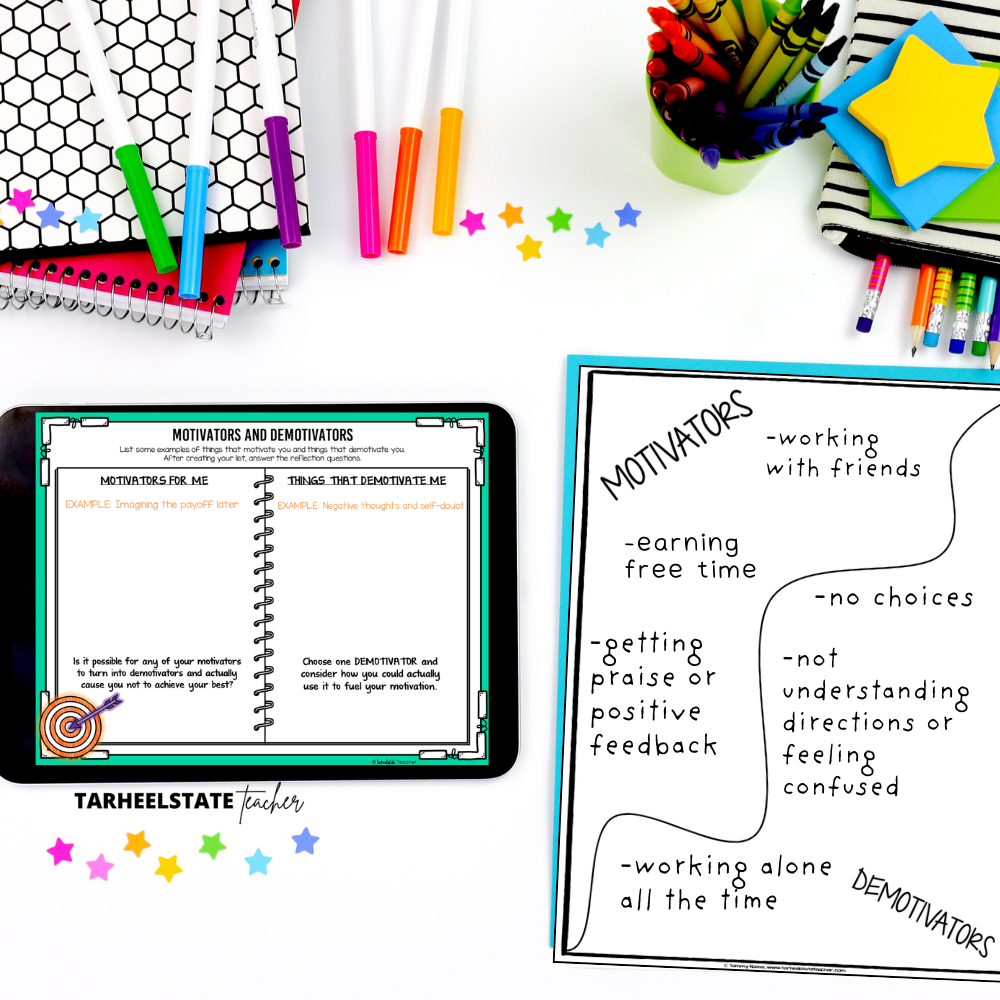
🌟To support this idea more intentionally, I begin my motivation and apathy unit with an activity where students reflect on and identify their personal motivators and demotivators. When students become more aware of what drives them (and what doesn’t), they’re better able to make meaningful choices in their learning that help them connect to their own interests and what keeps them motivated.
2. CREATE DISCOVERY-BASED LEARNING EXPERIENCES
Rather than always explicitly modeling everything, design learning moments where students “discover” concepts on their own with your guidance. When they make connections themselves, the excitement and ownership they feel can be powerful. Pair this with supportive language using “can,” “may,” and “could” instead of “must” or “should,” and watch their confidence grow.
These types of intrinsic motivation activities for students help them develop curiosity, pride in their learning, and a drive that doesn’t rely on external approval.
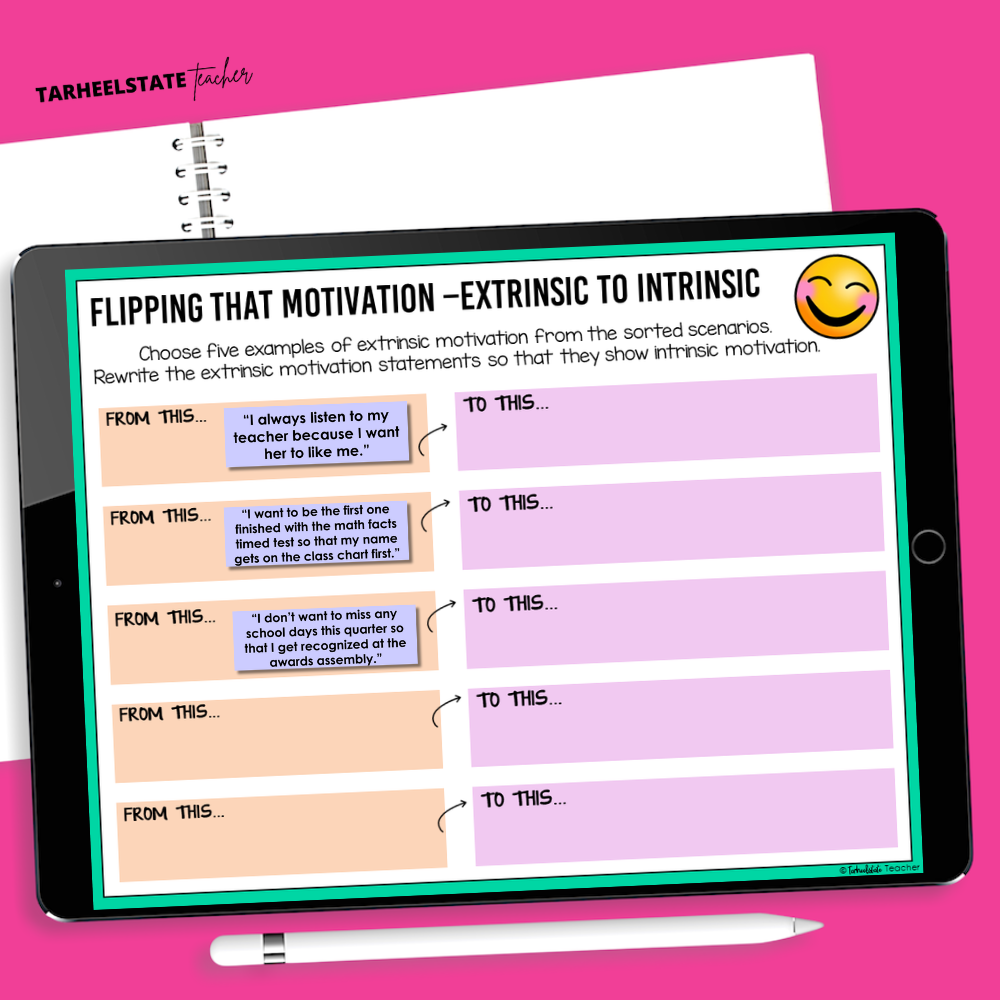
🌟In my motivation unit, I include an activity called Flip That Motivation, where students are presented with real-life situations that might drain their motivation—and they have to brainstorm and discover ways to reframe them positively. It’s always inspiring to see the creative and empowering strategies students come up with on their own when given the space to explore and reflect.
3. OFFER LEADERSHIP OPPORTUNITIES
When students take on classroom or school leadership roles—whether it’s leading a morning meeting, helping to manage classroom materials, mentoring younger students, or organizing a service project—they begin to view themselves as capable, valuable contributors who need to be at school and need to engage.
These intrinsic motivation examples for students show how responsibility and trust can lead to a stronger internal desire to succeed and be part of something bigger than themselves.
4. KEEP INTERESTS AND BACKGROUNDS FRONT AND CENTER
You know your students best. Use that knowledge! Incorporate their personal interests and cultural backgrounds into your instructional planning. If a student loves animals, use that as a springboard into science or nonfiction reading. If another student is into architecture, build that into a math or art lesson.
Tapping into what makes each student tick is one of the most sustainable ways to increase intrinsic motivation in students.
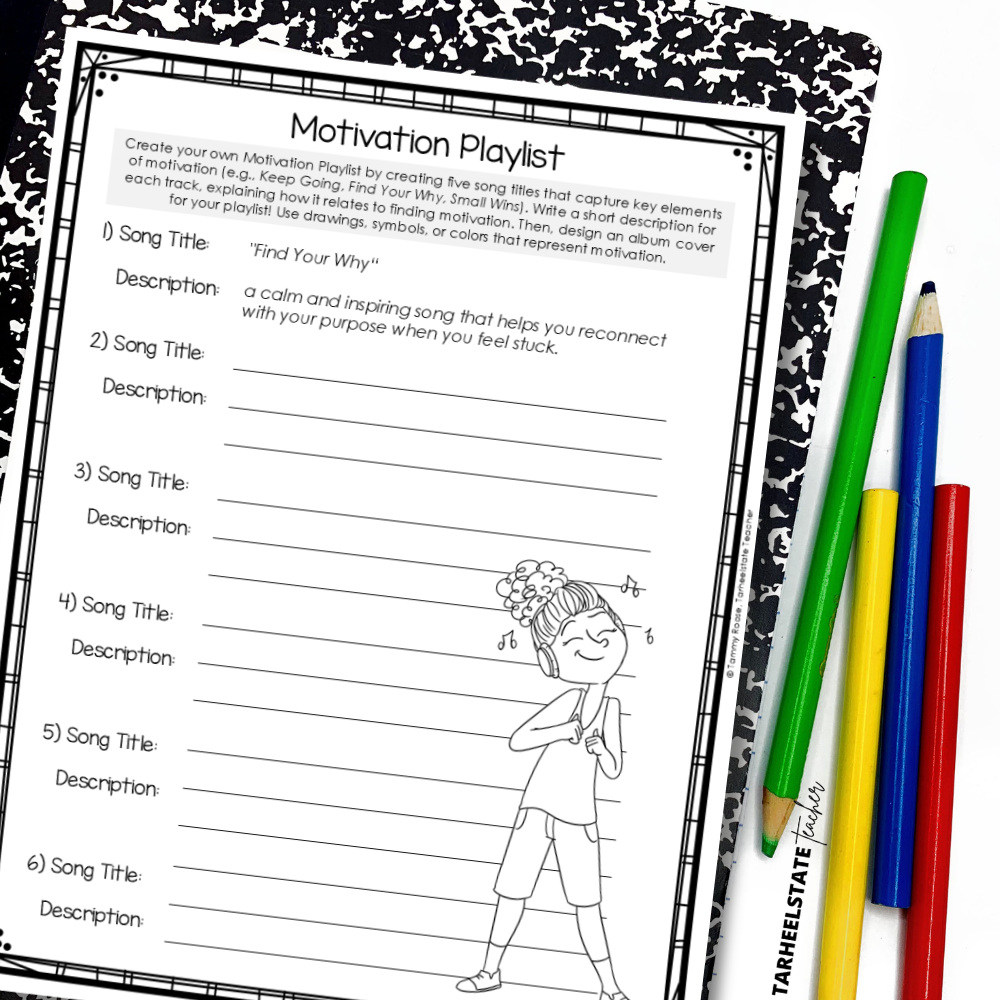
🌟In my SEL lessons on intrinsic motivation, we lean into this by having students create their own Motivation Playlist and design an album cover that reflects what drives them. We also do a fun project where they design a personal Motivation Symbol—something that visually represents what keeps them going. These kinds of intrinsic motivation activities for students help make abstract ideas like perseverance and drive feel concrete.
5. MODEL ENTHUSIASM AND THE JOY OF LEARNING
Students pick up on your energy. When you show genuine curiosity about a topic—or share your excitement about discovering something new—they’re more likely to mirror that enthusiasm.
A classroom filled with energy and curiosity naturally boosts motivation in the classroom because it becomes a place of wonder and joy, not pressure and performance. What are you feeling enthusiastic about learning in your personal life right now? Whether it’s a cucumber popping up in your vegetable garden, making sourdough bread, getting better at shooting a 3-pointer, or volunteering at a local organization, those personal hobbies are ripe with motivational lessons to share with your students!
6. REFRAME THE “BORING” STUFF
Not every topic will instantly hook every student—but that’s where reframing comes in. If a student doesn’t see the value in a math skill, connect it to something real-world and meaningful. A quick Google search can help you show how it’s used in video game design, sports stats, construction or something else your students love.
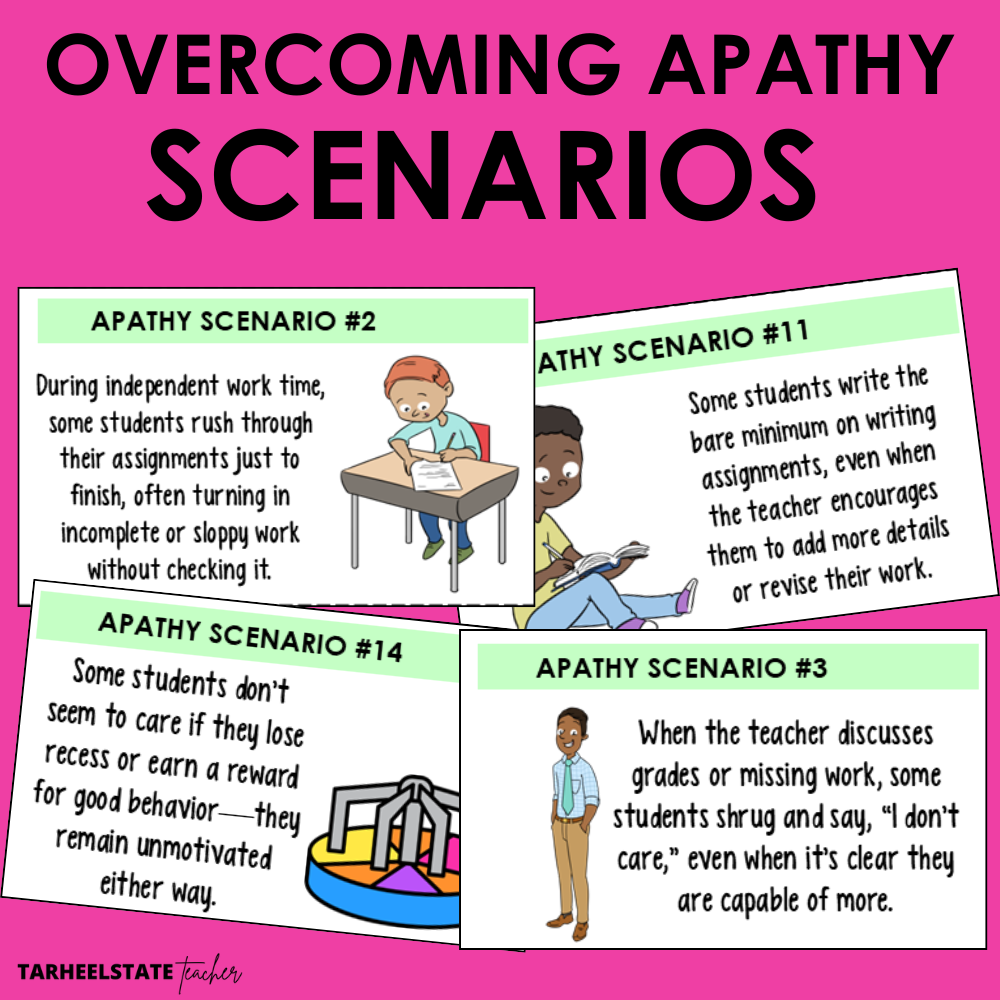
🌟 Sometimes, when a task just doesn’t click, I use a lesson from my Motivation Unit that helps students think through when extrinsic motivation can be useful. Paired with scenarios on overcoming apathy, it gives students practical tools to push through low-interest moments with purpose and allows me the opportunity to teach them that extrinsic motivation does have value for us as humans.
7. FOCUS ON FEEDBACK, NOT JUST GRADES
Timely, positive, and specific feedback can go a long way. Recognize not just what students got “right,” but how they approached the task, what strategies they used, or how they persevered. This builds a classroom culture where growth is valued more than perfection.
Feedback like this supports intrinsic motivation in the classroom because students begin to value effort, progress, and learning itself—not just a score.
8. CELEBRATE ROLE MODELS AND REAL-LIFE INSPIRATION
Highlight people who have worked hard to reach goals similar to your students’. Whether it’s a famous athlete, scientist, artist, or someone from your own community, real-life examples can show students the power of perseverance and passion.
One simple and powerful way to bring this into your classroom is through picture books with meaningful narratives that spotlight personal drive and triumph over setbacks. After reading them aloud, encourage students to reflect: What did this person do that helped them succeed? How can I use those strategies too?
Here are some great ones:
- Salt in His Shoes by Deloris Jordan – Tells the story of Michael Jordan’s determination and patience long before he became a basketball legend.
- Mae Among the Stars by Roda Ahmed – Inspired by the life of Mae Jemison, this book shows how dreaming big and working hard pays off.
- The Oldest Student: How Mary Walker Learned to Read by Rita Lorraine Hubbard – A powerful story of perseverance and lifelong learning.
- Who Says Women Can’t Be Doctors? by Tanya Lee Stone – Introduces students to Elizabeth Blackwell’s groundbreaking journey in medicine.
- Wilma Unlimited by Kathleen Krull – Shares the inspiring story of Wilma Rudolph, who overcame polio to become an Olympic gold medalist.
9. RETHINK REWARDS
While rewards can offer a quick fix, they often fall short when it comes to long-term learning. Research shows that relying too heavily on rewards can actually diminish intrinsic motivation in students—especially when tasks require creative thinking, problem-solving, or persistence.
Instead of aiming for immediate results, focus on the long game. Help students connect with the joy of learning, the pride of accomplishing something hard, and the feeling of growing smarter and stronger over time.
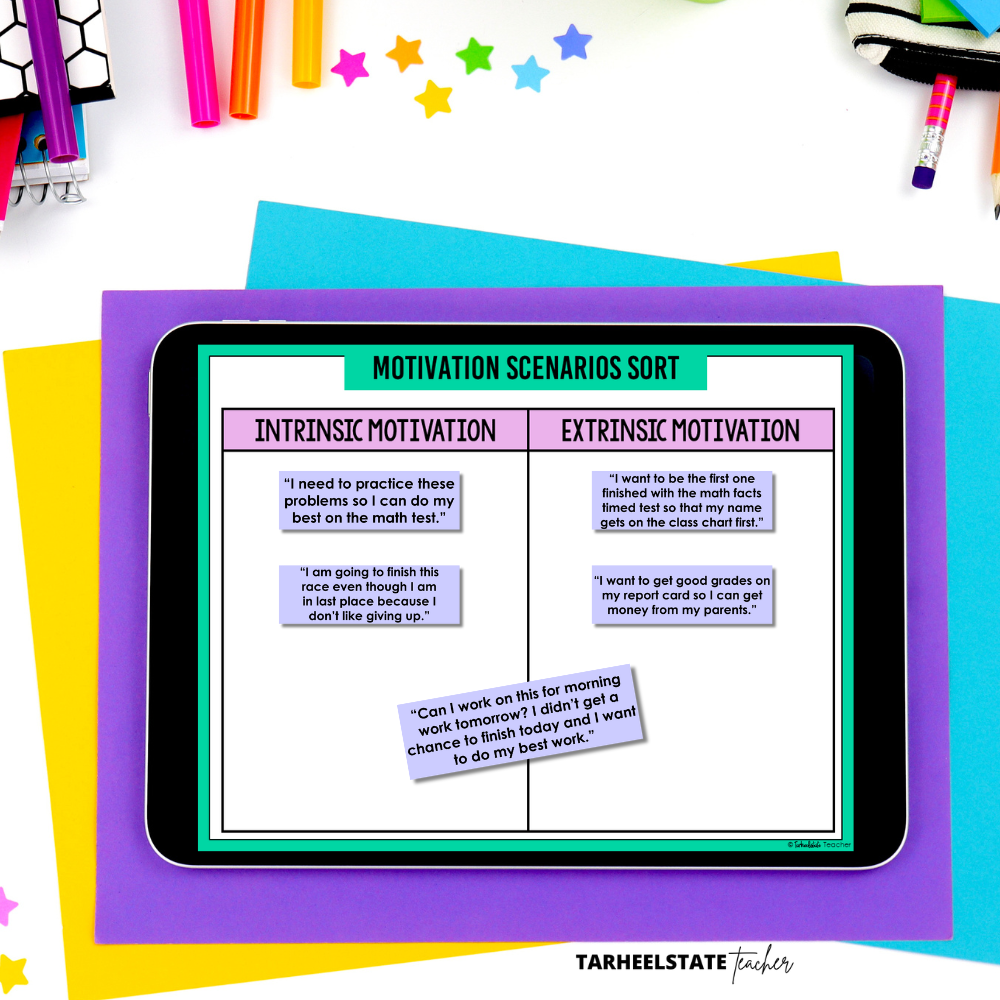
🌟 One of my favorite activities from my Motivation Unit that I like to use with students is having them sort examples of intrinsic and extrinsic motivation. It leads to powerful discussions—especially when we reflect on times extrinsic rewards worked for a while…but didn’t last.
10. TEACHING MOTIVATION DIRECTLY: A GAME-CHANGER
Sometimes, embedding motivation strategies into your classroom culture isn’t enough—especially for students who haven’t yet developed the tools to reflect on what drives them. Sometimes students need explicit, direct teaching—and it’s highly likely that your upper elementary students have never been directly taught about intrinsic motivation! That’s why I created a full Motivation and Apathy Unit to use with my 4th and 5th graders.
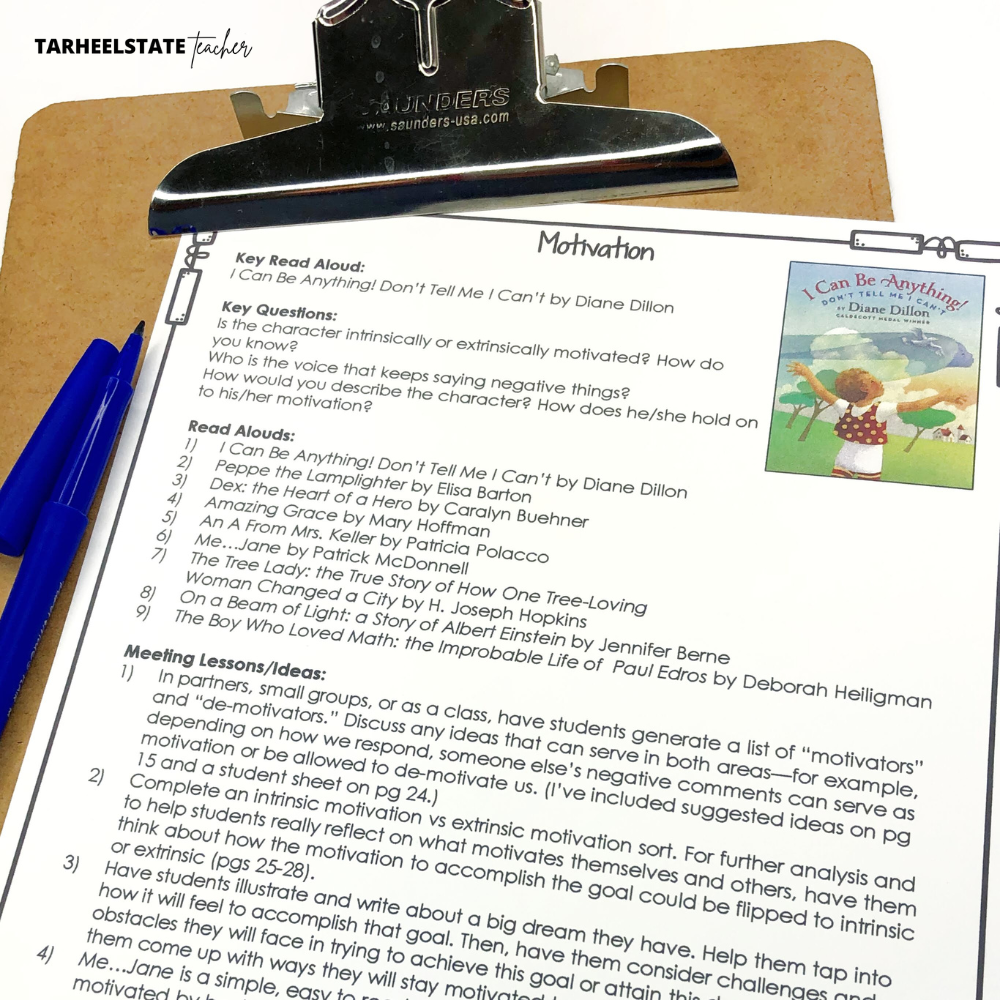
In this unit, students learn the difference between intrinsic and extrinsic motivation, explore their personal motivators, learn the causes of apathy and how to overcome it, discover the power of positive self-talk, and practice strategies for staying focused and driven—even when the work gets tough. We dive into questions like:
- What does motivation look like?
- How can I spot signs of and combat apathy?
- How can I set goals that matter to me?
- What helps me persevere when I feel stuck?
The best part? These lessons help make the invisible visible—giving students the language and tools to talk about and grow their own motivation.
Building intrinsic motivation in students isn’t about a one-time strategy or flashy incentives. It’s about small, consistent teaching choices that lead to a more engaged, confident, and self-driven classroom community.
When students feel seen, heard, and challenged in ways that honor who they are, they begin to develop the kind of motivation that lasts far beyond your classroom…and I’m for one HERE FOR IT!
If you’re looking for more ways to keep building motivation and combatting apathy with your students, here are some other resources you may be interested in:
- Positive Self-Talk Activities to Build Intrinsic Motivation in the Classroom gives you ready-made activities that help students reframe their inner voice and use self-talk as a tool for staying motivated when things get tough.
- How to Overcome Apathy in Students and Reignite Motivation breaks down the root causes of student apathy and shares practical strategies for helping even your most disengaged learners reconnect with their purpose.
- Complete Intrinsic Motivation SEL Unit for upper elementary—this unit includes all of the activities you see in this post, editable lesson plans, suggested read alouds, student notebooks, and a bulletin board to help your unit make a lasting impression!
NEED A DONE-FOR-YOU INTRINSIC MOTIVATION UNIT?
The Intrinsic Motivation SEL-Morning Meeting unit is a 20 day unit for upper elementary. It includes
✨ 25 Days of Printable & Editable Lesson Plans — includes suggested read alouds, discussion questions, intrinsic motivation and positive self-talk activities, extension ideas, and linked online resources
✨ Student Journals & Activities — motivation-related discussion prompts, self-reflection and goal setting exercises, and social emotional learning worksheets to deepen students’ understanding of intrinsic motivation and positive self-talk, with activities like Intrinsic vs Extrinsic Motivation Scenario Sort, The Power of Positive Self-Talk, Situations That Test Our Motivation & Responding with Drive, Creating a Motivation Playlist, and more!
✨ Intrinsic Motivation Bulletin Board that include important vocabulary like intrinsic motivation, extrinsic motivation, self-talk, self-discipline, and apathy and inspirational quotations for a visual reminder of your intrinsic motivation and positive self-talk lessons
✨ Google Slides — Teacher and student versions to implement this unit digitally or use as visual prompts and discussion starters on your interactive whiteboard