Honesty is a cornerstone of personal integrity, yet it can be one of the most challenging traits to nurture in children. As educators, we want to help our students understand why honesty is important and guide them in making choices that build trust and respect in their relationships. However, before we can teach students how to choose integrity, we need to first understand lying and dishonesty as part of their natural development. Lying doesn’t always reflect poor character—rather, it’s often a part of growing up. Through honest conversations and activities like the Broken Trust Jar, we can help students build a foundation for honesty and integrity that will serve them for years to come.

UNDERSTANDING WHY CHILDREN LIE
While I find telling a “white-lie” super uncomfortable or bending the truth to be something that causes me guilt 😳 (hence, I avoid lying at all costs), it’s important for us to remember that it’s common for children to explore lying at various stages in their development. I remember the first time my daughter told a fib around the age of 3. It was playful and cute, but a bit shocking. I also recognized that it was a sign of her growing intelligence and ability to think less literally.
Early on, children may lie because they don’t want to get in trouble, because they want something to be true, or to test boundaries. Later, as they grow, reasons for lying evolve, often involving social circumstances like protecting someone’s feelings or avoiding getting into trouble.
Recognizing these natural developmental stages for students allows educators to approach dishonesty with empathy and understanding and the goal of helping students build their personal integrity and trustworthiness.

EARLY LYING (AGES 2-6)
- Wishful Thinking: They may say something didn’t happen because they want it to be true.
- Testing Boundaries: They might lie to see how adults will react, to avoid consequences, or to see what they can “get away” with.
- Modeling Behavior: If they see siblings or adults lying, they may copy the behavior.
LATER LYING (AGES 7 AND UP)
- Social Skills: They may lie to protect someone’s feelings or avoid hurting a friend.
- Self-Image & Avoiding Trouble: They may lie to seem more likable, avoid embarrassment, or stay out of trouble.
- Understanding Consequences: They start recognizing when lying happens and how it affects relationships.
While lying may be a way for children to navigate social situations, catching them in a lie is also an opportunity to guide them towards integrity and honesty. By helping students recognize why they feel the urge to lie and discussing the impact of dishonesty on our relationships, we can encourage self-reflection and growth.
Teaching integrity means showing students that honesty builds trust, strengthens interpersonal connections, and shapes their character.

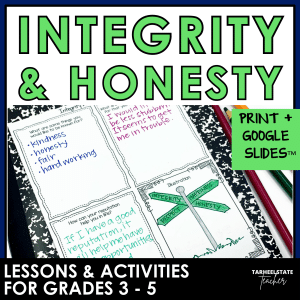
 You can do each of these suggested honesty and integrity activities for students with a reflection journal and materials you have around the classroom, but if you want some of the work done for you, you can check out my full Integrity and Honesty SEL unit, complete with lesson plans that make it super easy to implement and enjoy!
THE BROKEN TRUST JAR: HONESTY ACTIVITY
One of my favorite integrity activities to encourage honesty in students is through a hands-on demonstration that I call the Broken Trust Jar activity. This exercise helps students understand that trust, like marbles in a jar, can be built up with each act of honesty and can be taken away when lies occur.
HERE’S HOW THE BROKEN TRUST JAR WORKS:
- Review the term Honesty: Start by discussing the definition of honesty—telling the truth and doing what’s right, even when it’s difficult.
- Set up the jar: Display a clear jar filled with marbles (or any small object). Tell students that the jar symbolizes the trust we share in relationships.
- Provide example scenarios: Read aloud (or ask students to take turns reading aloud) various examples of honesty and examples of dishonesty. Let students help you decide whether the scenario represents honest words and actions or dishonesty.
- Add and Remove Marbles: For every example of honesty, add ONE marble to the jar. For each dishonesty example, remove TWO marbles. This visual helps students concretely see what lying does to a relationship or friendship and reinforces the importance of maintaining integrity.
Example 1: “Lena told her best friend that she would help clean up after art class. Even though she wanted to go play, she stayed and helped.”
Example 2: “Liam heard a rumor about a classmate and repeated it, even though he wasn’t sure if it was true. The classmate felt hurt and betrayed.”
Find more examples in my Integrity Unit that includes the Broken Trust Jar activity and printable materials.
- Discussion: Ask students what happens when the jar loses too many marbles and how difficult it would be to fill the jar back up.

This conversation highlights the real-life consequences of dishonesty in a relationship and the importance of honesty and integrity.
HONESTY ROLE-PLAYING: PRACTICING INTEGRITY IN REAL-LIFE SITUATIONS
Once students grasp why honesty is important, they need opportunities to practice being honest in tricky situations. I like splitting students into small groups and giving them Honesty Scenario Cards where students act out different examples where honesty is tested.

First, I give each group a handful of scenario cards, and they take turns responding to each situation in two ways—once with a dishonest response and once with an honest one. This contrast helps them see how their choices can lead to very different outcomes for the same situation.
- You spill water on some books but no one sees you do it.
- You see someone shoving another student on the playground at recess.
After performing their responses, we come together for a class discussion. I ask questions like:
- How did the dishonest response affect the situation?
- How did the honest response change things?
- How did each response feel?
Through these role-plays, students experience firsthand how honesty builds trust, while dishonesty can lead to bigger problems. It also gives them a chance to practice making honest choices in a low-pressure setting—helping them feel more confident applying these lessons in real life.
WHY LYING DAMAGES TRUST AND RELATIONSHIPS
While the Broken Trust Jar honesty activity offers a tangible way for students to understand the consequences of dishonesty, it’s also important to talk about the long-term effects of lying and relationships. Why lying is bad extends beyond immediate consequences—it can damage reputations, create guilt, and strain relationships over time.
Students need to understand that once trust is broken, it’s hard to rebuild. This helps them recognize the value of choosing integrity in the face of temptation. Educators can shift this mindset by encouraging students to reflect on their motivations for lying, asking questions like:
- Why do I feel like I need to lie right now?
- What are the possible consequences of this lie?
- How can I handle this situation with honesty and integrity instead?
These reflections foster a growth mindset around honesty and integrity, allowing students to see mistakes as opportunities to grow rather than as failures.
ENCOURAGE INTEGRITY THROUGH REFLECTION
My take on teaching integrity isn’t about shaming students for past dishonesty, but about helping them understand their choices and guiding them toward more honest behaviors. By incorporating integrity activities like the Broken Trust Jar and honesty scenarios for students, teachers can create an environment where honesty and integrity are actively practiced, valued, and discussed.

 Teaching students about integrity and honesty has become one of my favorite SEL units and morning meeting. The conversations are rich and important and help me meet my goal of improving our classroom community, our appreciation and concern for one another, and ultimately a better human race. I appreciate that you landed on this blog post because you are on that journey with me!
If you’re looking for more ways to keep building honesty and integrity with your students, here are some other resources you may be interested in:
- Integrity and Honesty Themed Social Emotional Learning Resources for Character Development gives you a collection of SEL resources designed to help students explore what it means to act with integrity in their everyday lives.
- Teaching Kids About Honesty and Integrity: A Character-Building Homeschool and SEL Workbook for Ages 8-12 offers a structured, workbook-style approach to helping students reflect on honesty and build strong character habits over time.
- Teaching Integrity and Honesty: Activities and Lessons for Upper Elementary Students shares hands-on lessons and discussion-based activities that help students connect the concept of integrity to real choices they face every day.
- Complete Integrity & Honesty SEL Unit for upper elementary—this unit includes all of the activities you see in this post, editable lesson plans, suggested read alouds, student notebooks, and a bulletin board to help your unit make a lasting impression!
Let’s continue helping students grow into honest, principled humans.
NEED A DONE-FOR-YOU INTEGRITY AND HONESTY UNIT?
The Integrity and Honesty SEL Morning Meeting unit is a 20 day unit for upper elementary. It includes
 20 Days of Printable & Editable Lesson Plans — includes suggested read alouds, discussion questions, integrity activities, extension ideas, and linked online resources
Student Journals & Activities — integrity-related discussion prompts, self-reflection and goal setting exercises, and social emotional learning worksheets to deepen students’ understanding of honesty and integrity, with activities like The Broken Trust Jar Demonstration, Examples & Non-Examples of Integrity Sort, Creating a Blueprint for Integrity, “Because I Said I Would…” Pledge Cards, and more!
Integrity Bulletin Board that includes important vocabulary like integrity, honesty principles, and reputation and inspirational quotations for a visual reminder of your honesty and integrity lessons
Google Slides — Teacher and student versions to implement this unit digitally or use as visual prompts and discussion starters on your interactive whiteboard