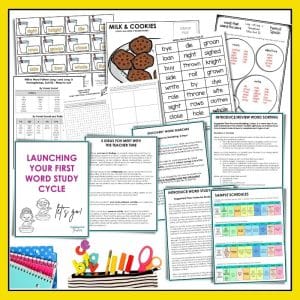
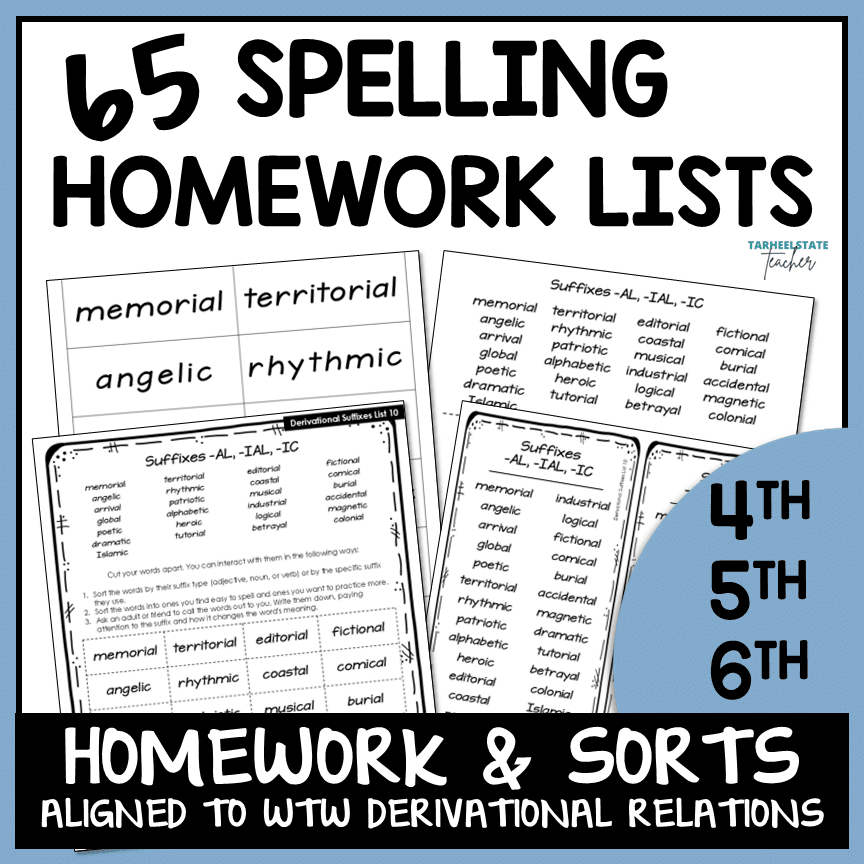
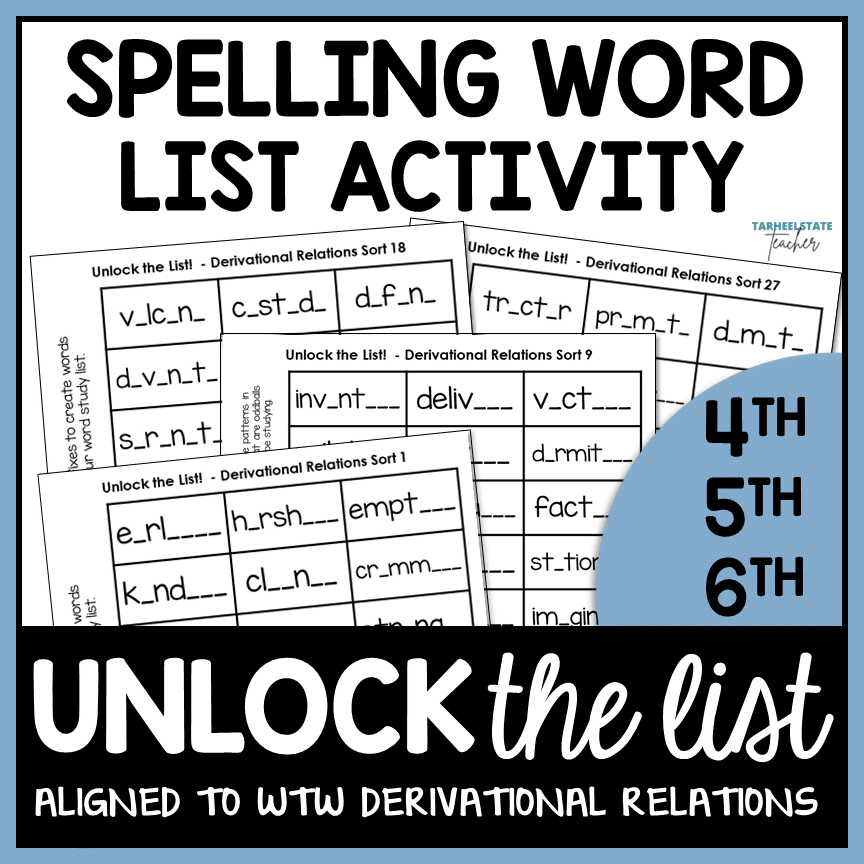
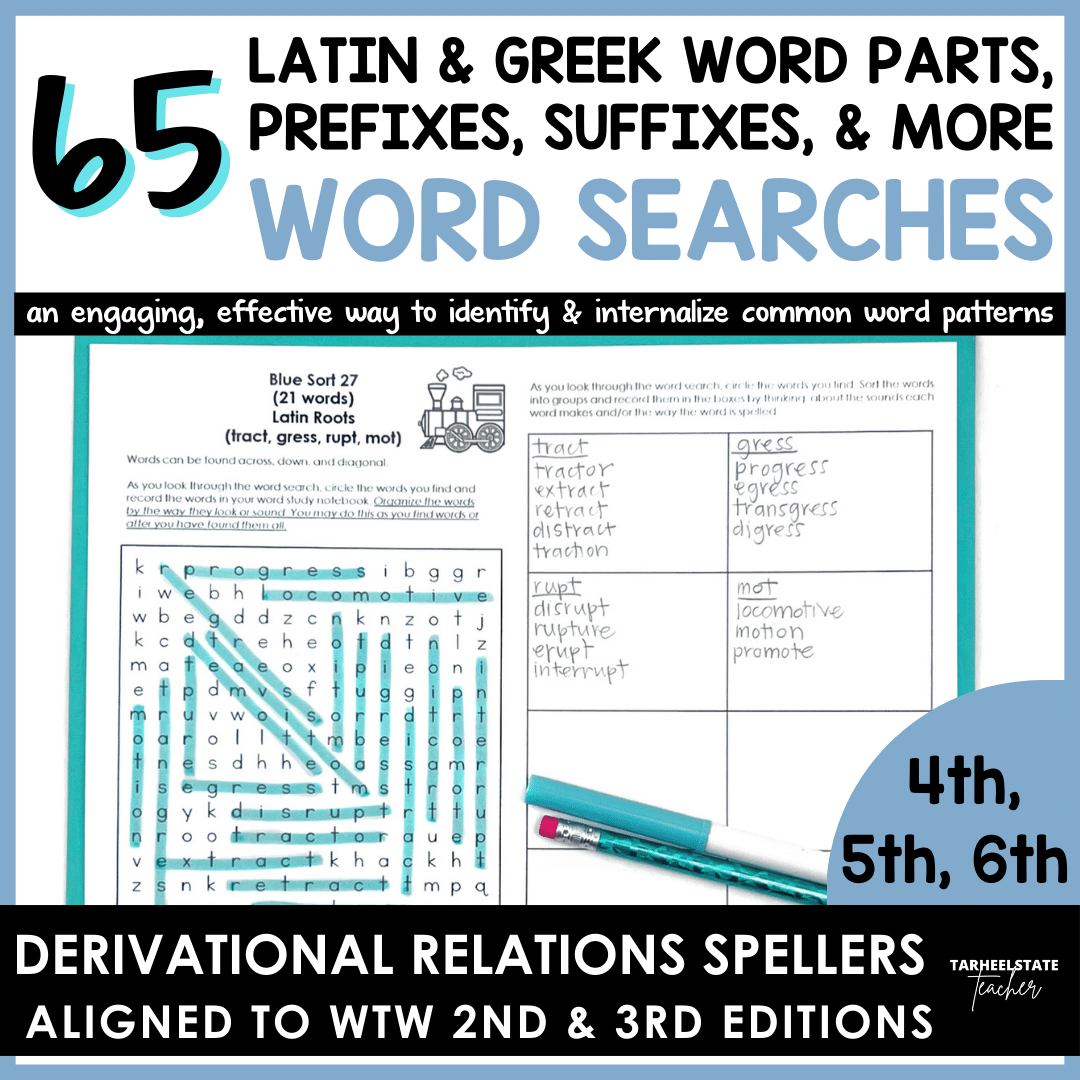
Looking for a comprehensive resource for teaching your Derivational Relations spellers? You’ve come to the right place! Whether you are focusing on derivational suffixes, the suffix –ion, consonant and vowel alternations, spelling-meaning patterns, or Latin & Greek roots and word parts, you’ll find helpful strategies as you make plans for direct instruction, differentiated small groups, and independent practice for your Derivational Relations spellers.
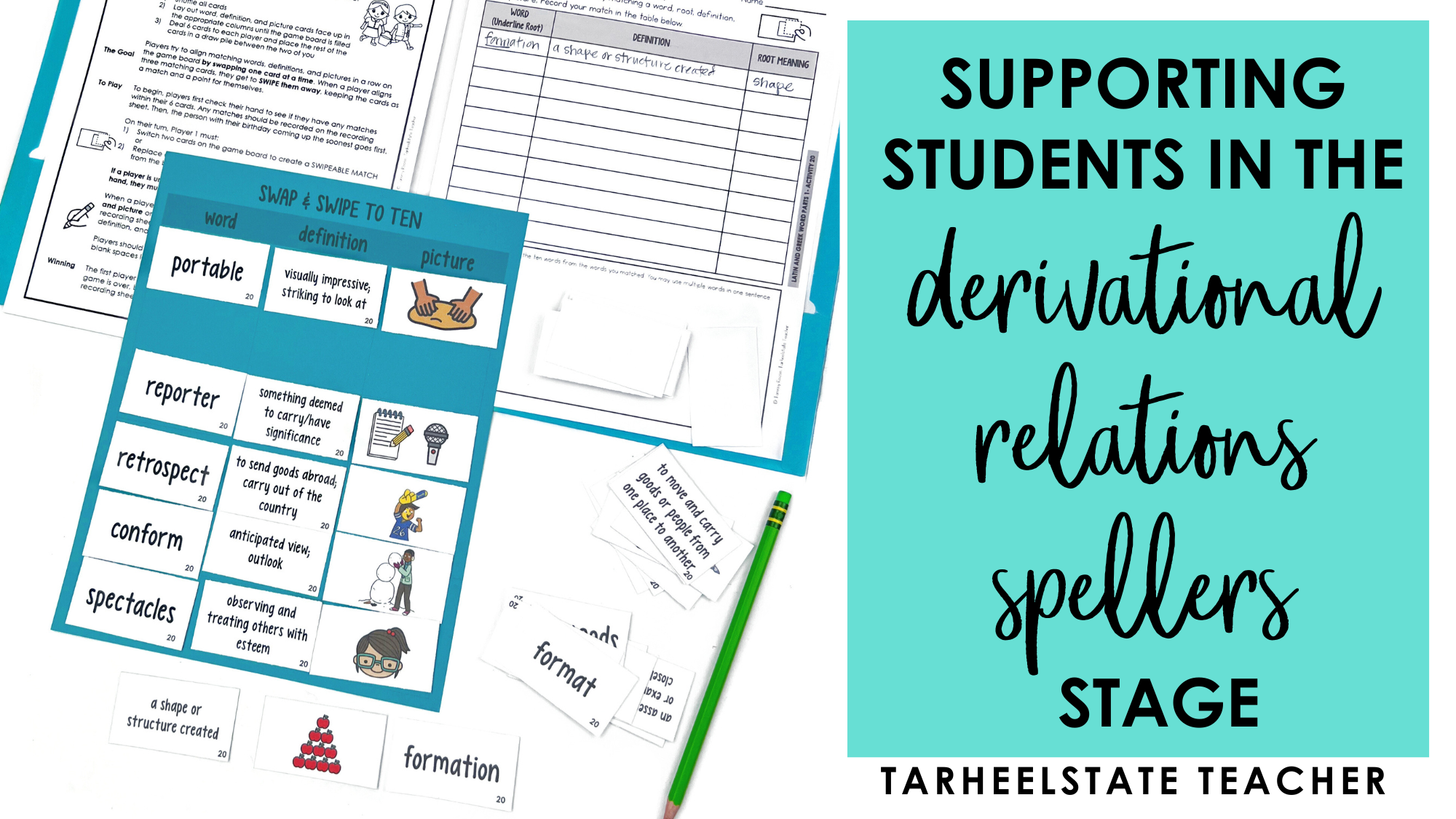
WHAT IS THE DERIVATIONAL RELATIONS STAGE?
Students who fall into the Derivational Relations stage of word study are skilled spellers with more advanced errors that require a deeper understanding of spelling and vocabulary. Since they have a strong foundation in word knowledge, their word study focuses on both vocabulary and spelling development. They delve into the structure of words, examining how prefixes, suffixes, base words, and word roots combine to influence meaning.
WHAT GRADE IS THE DERIVATIONAL RELATIONS STAGE?
The words in the Words Their Way Derivational Relations stage are suitable for upper elementary to early middle grades, but often not because of the spelling difficulty of the words. Rather, students will often already know the spelling and meaning of many of the words highlighted but have typically not yet been challenged to view the connections between words when focusing on roots and affixes.
WHY IS THE DERIVATIONAL RELATIONS STAGE IMPORTANT?
A focus on roots and affixes is important to students’ study of spelling and language as more than 60% of all words in the English language contain Greek or Latin roots. In the fields of Science and Technology, that figure rises to over 90%. It is estimated that the meaning of 60% of the multisyllabic words upper elementary students may encounter can be partially or fully interpreted by chunking the word into morphemes (Whissell-Turner & Fejzo).
Therefore, students need many opportunities to practice identifying these common roots and affixes and analyzing how they affect the base words they are being added to. Through many exposures in a variety of settings, students can solidify their understanding of the meaning and impact of the roots and affixes highlighted in this stage and transfer those skills to reading and writing.
WHAT WORD PATTERNS DO STUDENTS FOCUS ON IN THE DERIVATIONAL RELATIONS STAGE?
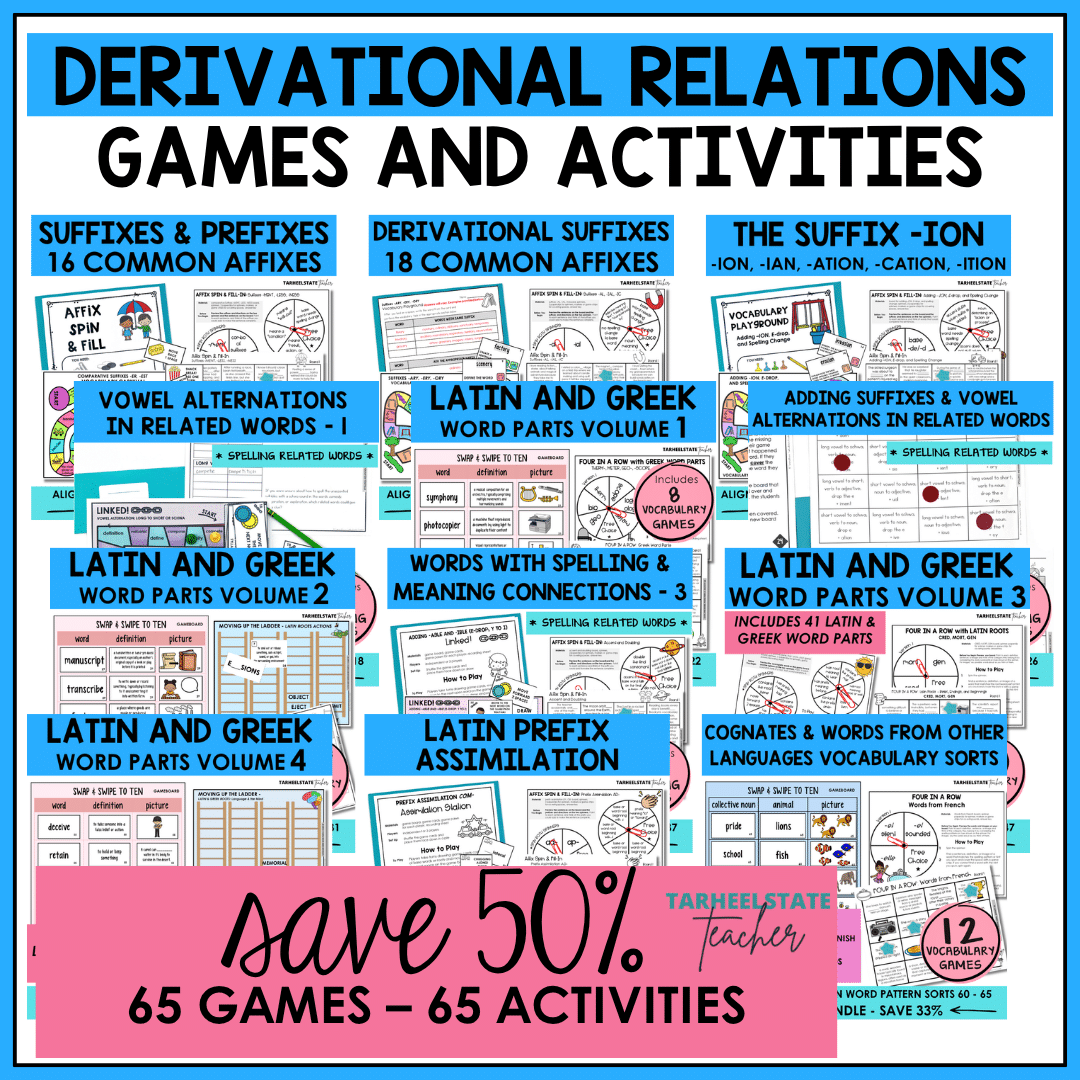
Students in this stage study
- suffixes and prefixes
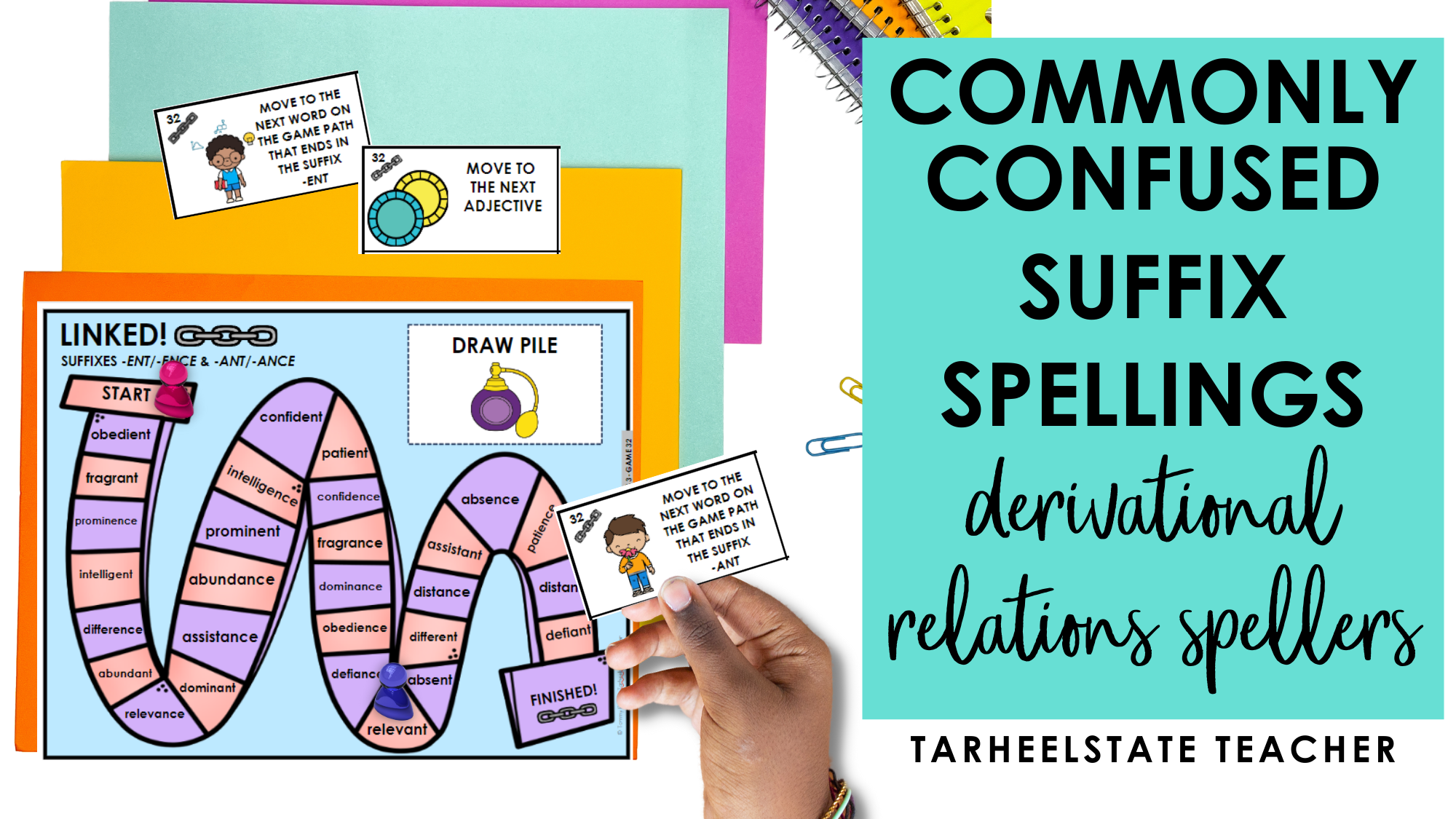
- derivational suffixes
- the suffix -ion
- spelling-meaning patterns
- consonant and vowel alternation
- Latin & Greek roots and word parts
- and prefix assimilation.
If you are new to the Derivational Relations stage, or it’s been awhile since you’ve taught students that fall into this group, I highly recommend and welcome you to bookmark the following blog posts.
These are handy go-to guides that provide quick definitions, examples, common mistakes to expect students to make, and specific activity ideas that support each concept:
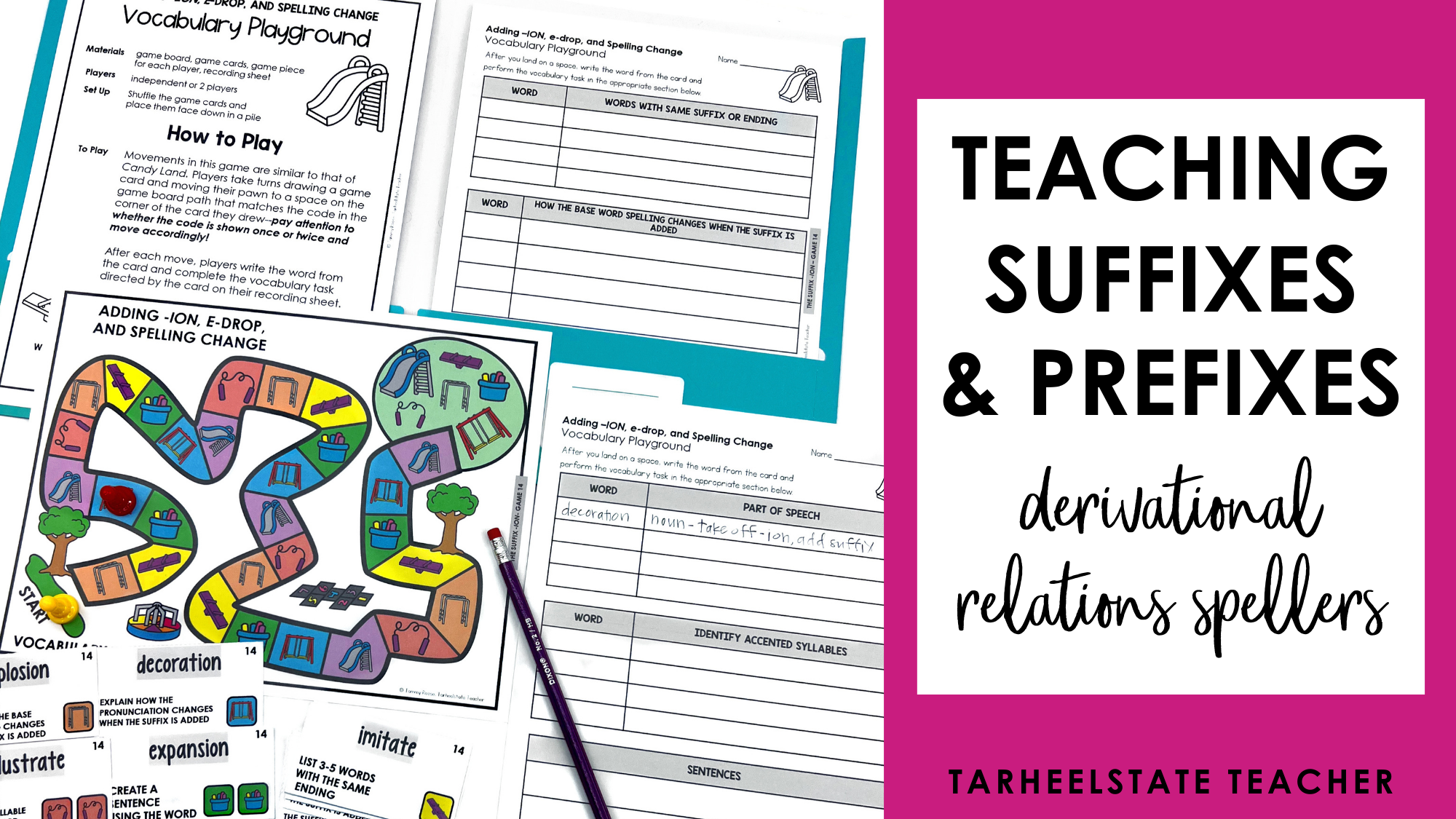
Teaching Suffixes and Prefixes
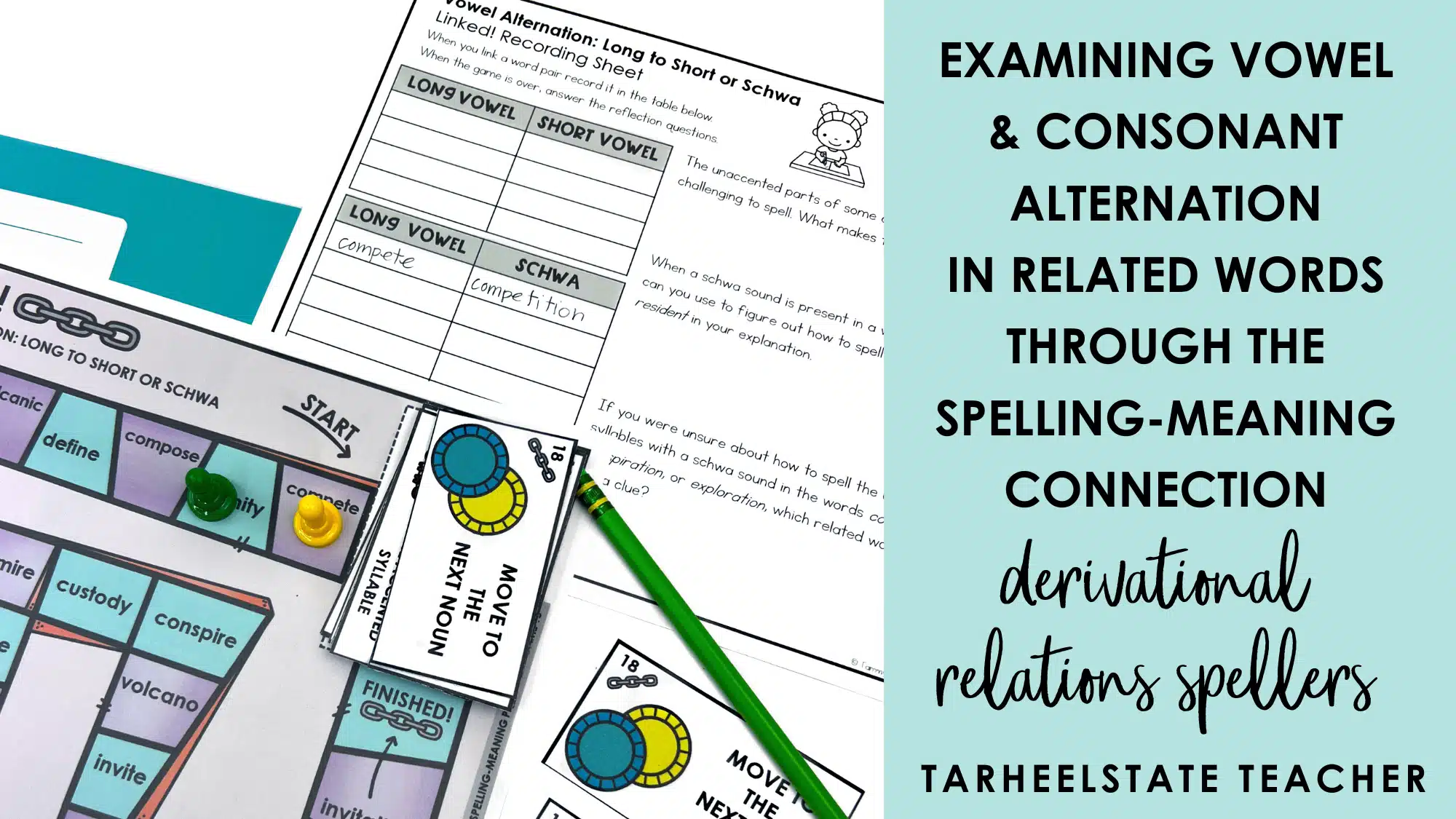
Examining Vowel and Consonant Alternation in Related Words through the Spelling-Meaning Connection
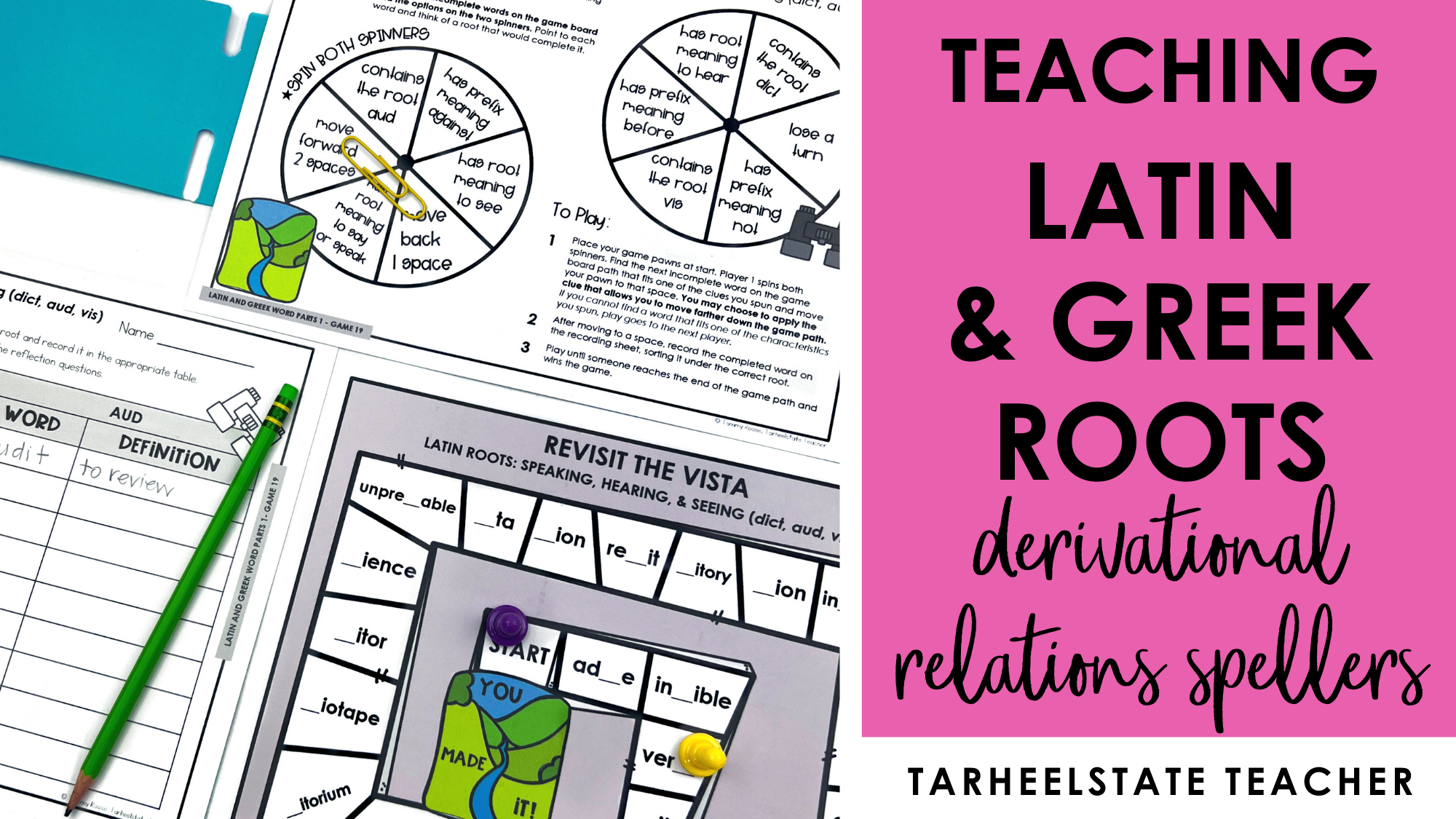
Teaching Latin and Greek Roots
HOW DO I BEST SUPPORT STUDENTS IN THE DERIVATIONAL RELATIONS SPELLERS STAGE DURING MY WORD STUDY BLOCK?
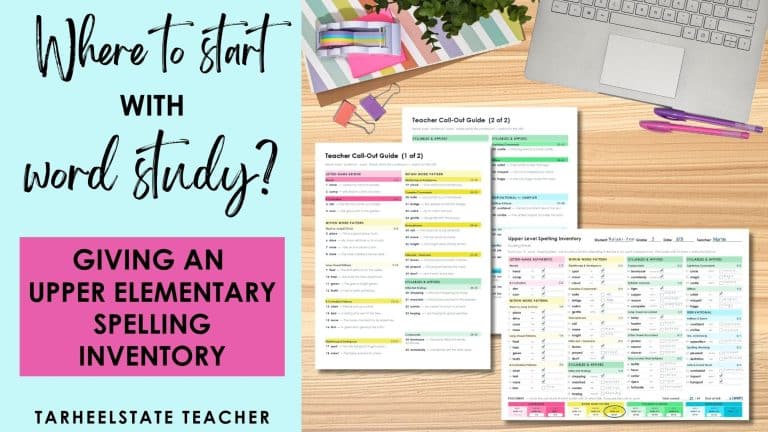
At the upper elementary level, I believe a successful spelling and word study block incorporates both direct instruction, delivered in small, differentiated groups (based on a developmental spelling assessment like my free Engaged Spelling Inventory, which is designed as an expanded alternative to the traditional Words Their Way Spelling Inventory) and opportunities for students to independently practice and apply what they have learned.
ARE YOU READY FOR THIS?
In each of the posts linked below, I share an explanation of the spelling/word pattern concepts, examples of words with the patterns, common mistakes we’ll see from students working on that concept, and suggested activities for providing developmentally-appropriate practice within the derivational relations concepts. Seriously, these posts are chock-full of helpful information!